Explore Paris Like a Local
Skip the Eiffel Tower queue at least once and climb Montmartre's steps instead, where narrow lanes wind past the white domes of Sacre-Coeur and street artists still set up easels in Place du Tertre the way they have for over a century. The Seine cuts the city in two, and an evening walk along its banks past Notre-Dame's rebuilt silhouette and the green bouquiniste stalls selling secondhand books remains one of the best free things to do anywhere in Europe. The Louvre is so vast that trying to see everything in one visit is a mistake -- pick a single wing, follow it slowly, and let the rest wait for next time. Paris rewards travelers who wander without a fixed itinerary just as much as those chasing a checklist of icons.
Paris Landmarks & Walking Course Map
Click any marker to preview the landmark, or select a course below to trace its step-by-step route on the map.
Recommended Walking & Transit Courses in Paris
Follow ready-made routes with exact walking distances, transit lines, and estimated durations.
An Emperor's Line of Sight
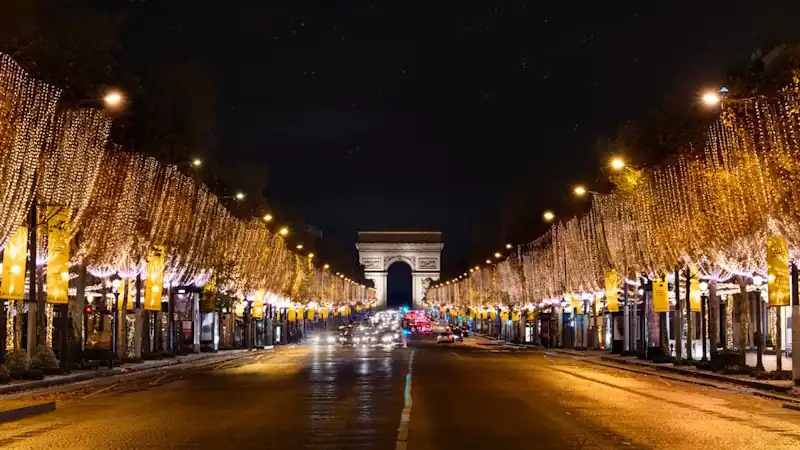
Champs-Élysées → Arc de Triomphe → Palais de Chaillot → Eiffel Tower
Where Paris Reads and Wanders
Musee d'Orsay → Musee Rodin → Saint-Germain-des-Pres → Luxembourg Gardens → Pantheon
Stone Kings and Quiet Courtyards
Sainte-Chapelle → Notre-Dame Cathedral → Centre Pompidou → Le Marais District → Place des Vosges
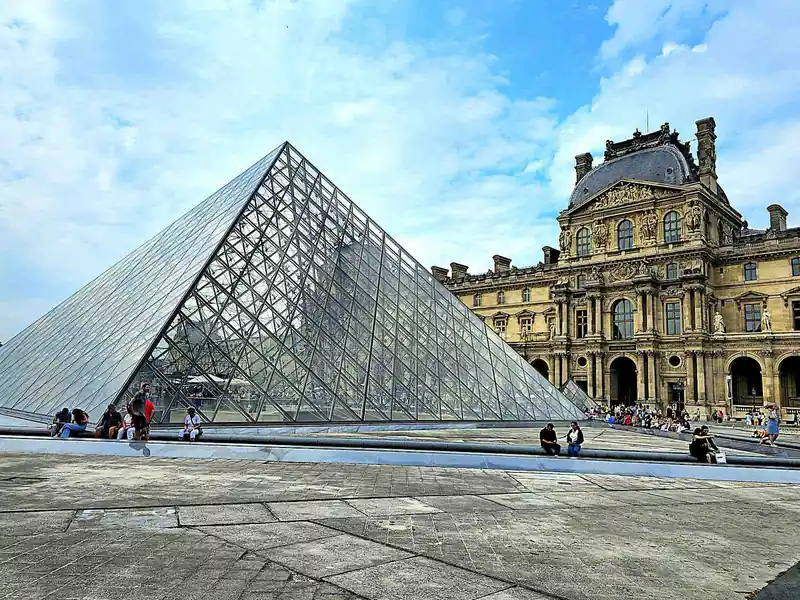
Masterpieces and a Hidden Garden
Louvre Museum → Palais-Royal Garden
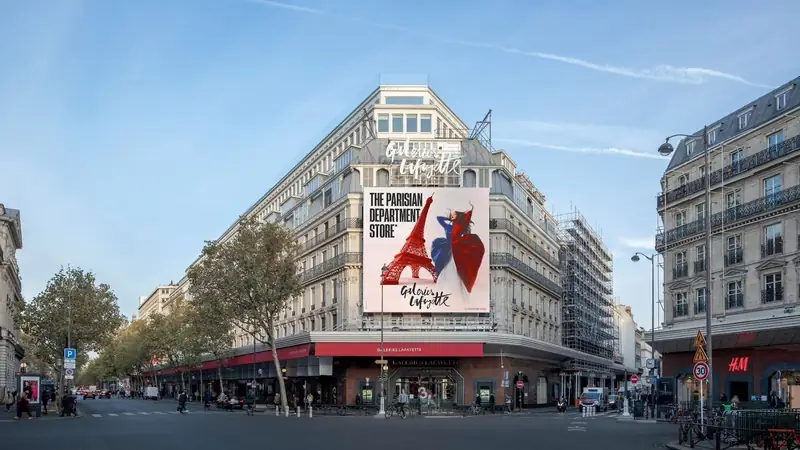
From Chandeliers to Windmills
Galeries Lafayette Haussmann → Opera Garnier → Montmartre → Moulin Rouge
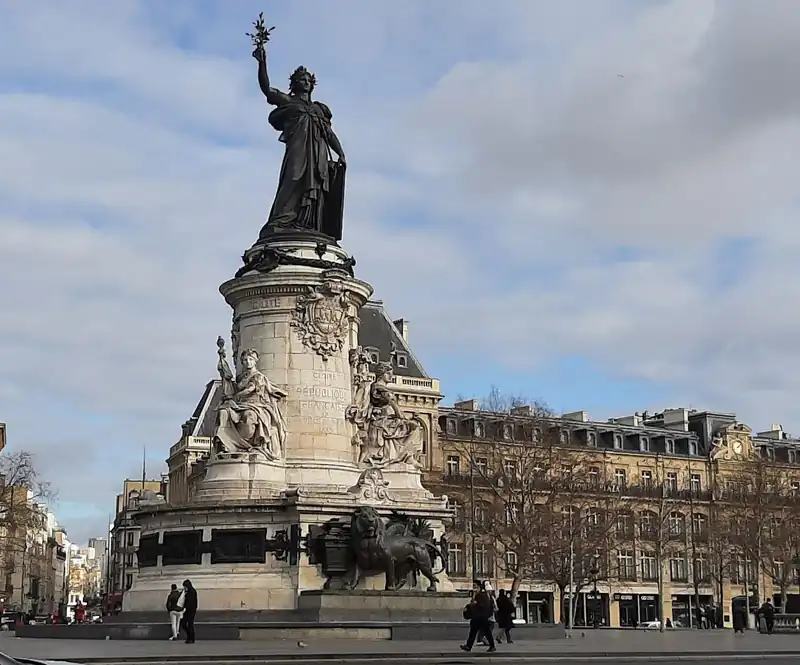
Where the City Gathers and Drifts
Place de la Republique → Canal Saint-Martin
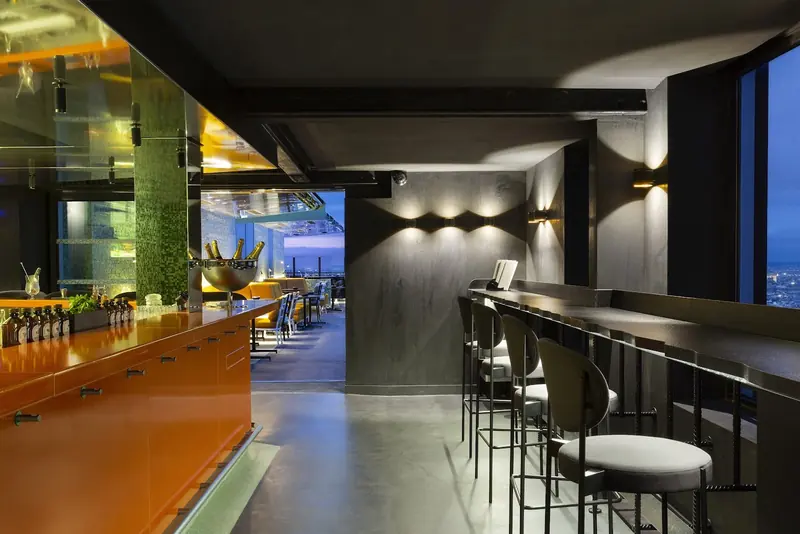
Skyline and Silence
Tour Montparnasse → Montparnasse Cemetery → Catacombs of Paris
Places to Visit in Paris (31)
Click any landmark for opening hours, ticket prices, walking routes, and nearby attractions.
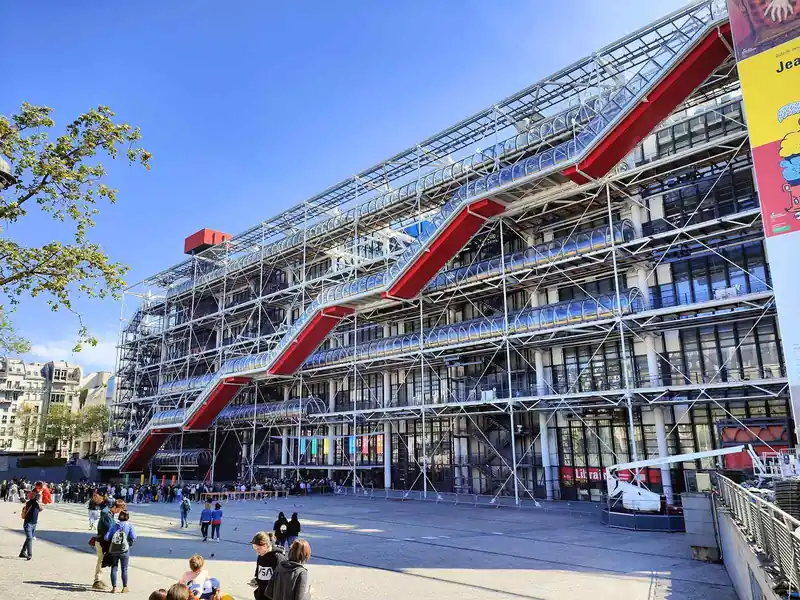
Centre Pompidou
Opened in 1977 and named for President Georges Pompidou, who championed the project, the Centre Pompidou startled Paris on arrival with its inside-out architecture: structural beams, escalators, and color-coded service pipes (blue for air, green for water, yellow for electricity, red for movement) run along the exterior rather than being hidden inside, a radical design by architects Renzo Piano and Richard Rogers that freed the interior into vast, column-free, endlessly reconfigurable exhibition floors. That interior houses the Musee National d'Art Moderne, one of the largest collections of 20th and 21st century art in the world, spanning Matisse, Picasso, Kandinsky, and generations of contemporary practice, alongside a major public library and a lively plaza out front that has long attracted street performers and skateboarders. The building's exposed escalator tube, climbing diagonally up the facade in a transparent glass caterpillar, doubles as an informal observation deck, offering one of the more surprising rooftop panoramas over the Right Bank rooftops toward Sacre-Coeur.
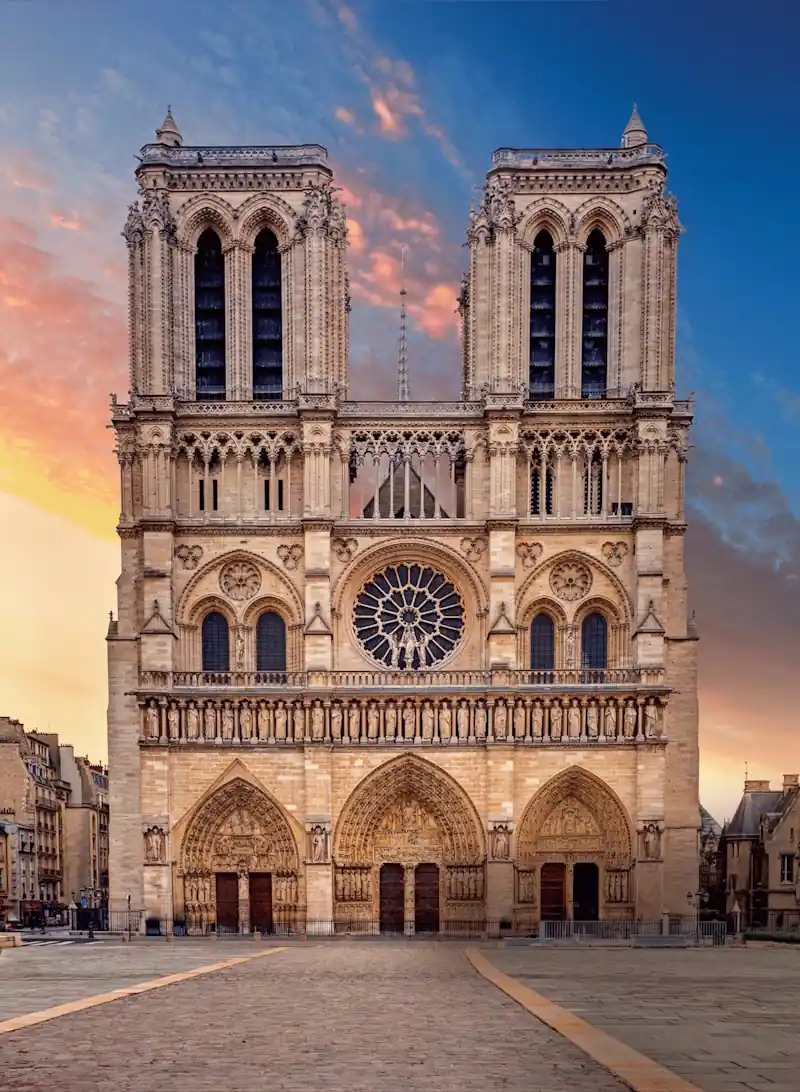
NotreDameCathedral
Notre-Dame Cathedral is one of the finest examples of French Gothic architecture, famous for its twin towers, intricate sculptures, and stunning stained glass windows, and it remains a symbol of Paris’s history, resilience, and cultural heritage despite the devastating fire in 2019.
Sainte-Chapelle
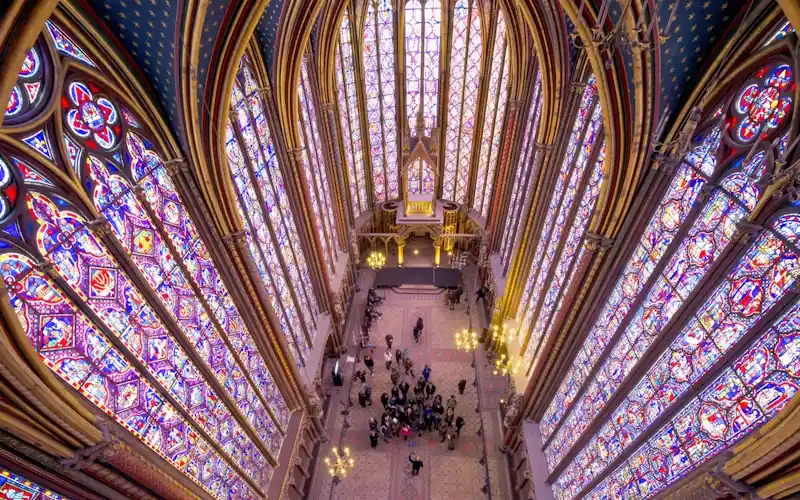
Sainte-Chapelle is a stunning Gothic chapel famous for its towering stained glass windows that fill the interior with vibrant colors and light, originally built to house religious relics, and it offers one of the most visually striking and intimate architectural experiences in Paris.
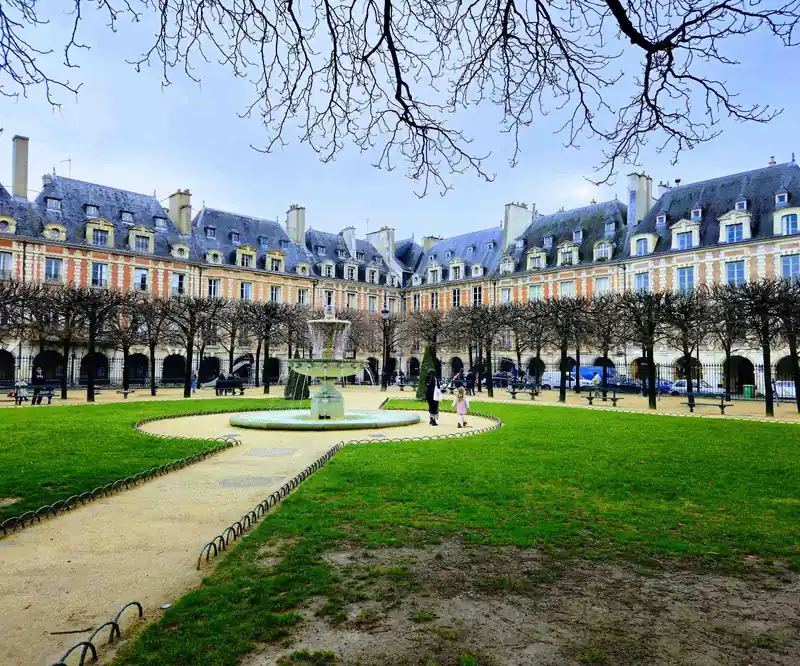
Le Marais District
Le Marais is one of the most vibrant and historically layered neighborhoods in Paris — a remarkably well-preserved medieval quarter on the Right Bank of the Seine whose narrow streets and magnificent Renaissance mansions (hotels particuliers) survived the great 19th-century modernization of Paris that demolished most of the medieval city, leaving the Marais as an irreplaceable repository of Paris's pre-Haussmann urban fabric. The district's history spans the full arc of Parisian life — it was the aristocratic heart of Paris during the 16th and 17th centuries, when the nobility built the elegant mansions that still line its streets and gathered around the Place des Vosges, the oldest planned square in Paris, built by Henri IV in 1612 and still one of the most beautiful urban spaces in France. The Jewish Quarter centered on the Rue des Rosiers has been a center of Parisian Jewish life since the 13th century, and despite the devastation of the Holocaust, it retains its character as a living Jewish neighborhood with synagogues, kosher restaurants, and bakeries that make it one of the most authentic Jewish quarters in Western Europe. Today the Marais is also celebrated as one of the most creative and fashionable neighborhoods in Paris — its galleries, concept stores, vintage shops, and cutting-edge restaurants draw visitors from across the city and around the world, while its significant LGBTQ+ community has made it the cultural center of gay Paris for decades. The Marais is home to some of Paris's finest museums including the Musee Carnavalet (the history of Paris), the Musee Picasso, and the Musee de la Chasse et de la Nature, all housed in magnificent historic mansions that are themselves as interesting as the collections within.
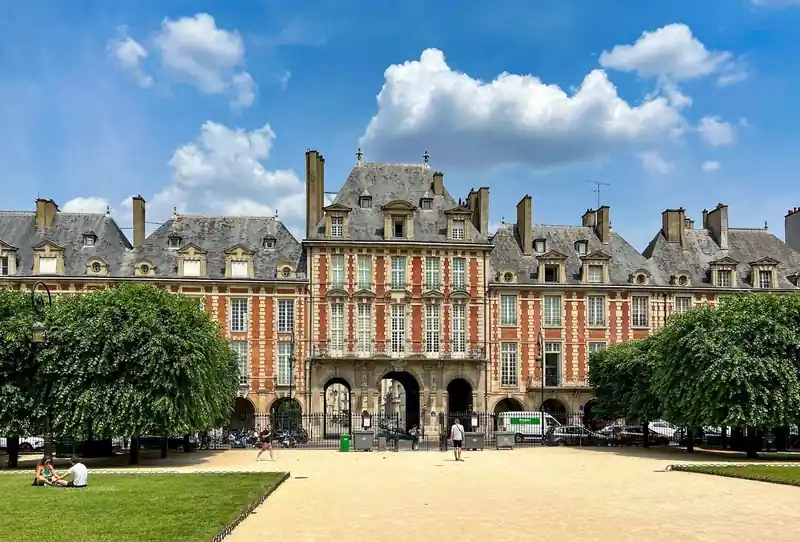
Place des Vosges
Built by King Henri IV in the early 17th century and completed in 1612, Place des Vosges is the oldest planned square in Paris, a perfect quadrangle of 36 nearly identical townhouses in red brick and pale stone joined by a continuous arcaded gallery at street level. It was originally called Place Royale and served as a fashionable address for nobility, a stage for royal celebrations, and even a dueling ground before it was renamed after the Vosges region during the Revolutionary era as a reward for the first department to pay its taxes in full. Victor Hugo lived at number 6 for sixteen years, and his apartment is now a small museum preserving period rooms and manuscripts. The central garden, with its clipped lime trees, fountains, and gravel paths, remains one of the quietest and most elegant public spaces in the Marais, a favorite spot for Parisians to read, picnic, or simply sit beneath the arcades away from the bustle of the surrounding streets.
Louvre Museum
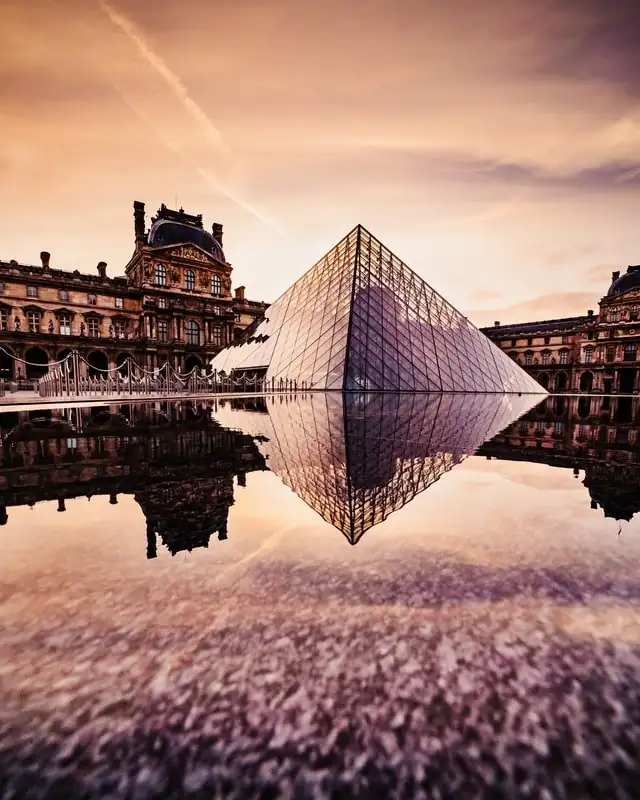
The Louvre Museum in Paris is the largest art museum in the world and one of the greatest cultural institutions in human history — a former royal palace whose vast galleries contain some 380,000 works of art spanning 8,000 years of human civilization, from prehistoric artifacts and ancient Egyptian masterpieces to the greatest paintings of the Renaissance, Baroque, and neoclassical periods, including Leonardo da Vinci's Mona Lisa, the Venus de Milo, and Winged Victory of Samothrace, making it the single most concentrated collection of cultural achievement anywhere on earth. The museum's history spans eight centuries — from its origins as a medieval fortress built by Philip II in the late 12th century, through its transformation into a royal palace under Francis I and subsequent centuries of expansion and embellishment, to its revolutionary-era conversion into a public museum in 1793, making it one of the first great public art museums in the world. The iconic glass pyramid designed by I.M. Pei, added to the main courtyard in 1989, caused controversy when it was built but is now beloved as the principal entrance to the museum and as a symbol of the productive dialogue between ancient history and modern architecture that defines the Louvre's character as an institution. The Mona Lisa, Leonardo da Vinci's small panel painting of an unidentified Florentine noblewoman, is the most visited work of art in the world — a crowd of hundreds gathers around it at any hour of the museum's operation, drawn by a combination of genuine artistic quality, centuries of scholarly attention, and the irresistible pull of its reputation as the most famous painting ever made. With over 9 million visitors annually, the Louvre is the most visited museum in the world.
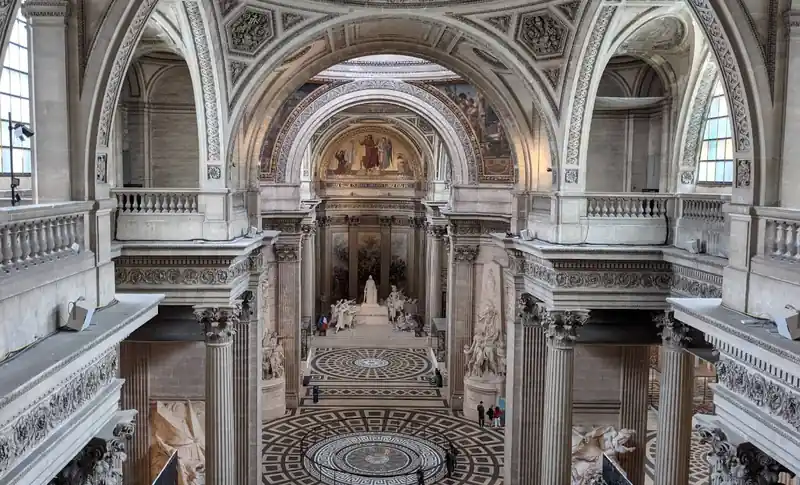
Panthéon
The Panthéon is a grand neoclassical monument in Paris originally built as a church and later transformed into a mausoleum honoring some of France’s most distinguished figures, featuring a massive dome, impressive frescoes, and the famous Foucault pendulum that demonstrates the rotation of the Earth.
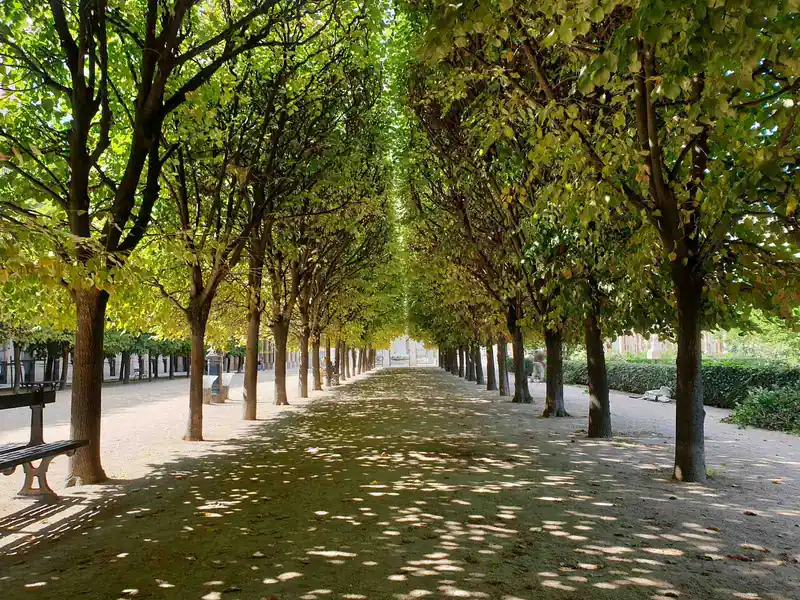
Palais-Royal Garden
Tucked directly behind the Louvre and laid out in the 17th century for Cardinal Richelieu before passing to the royal family, the Palais-Royal Garden is a rectangular formal garden enclosed on three sides by uniform arcaded galleries that once housed some of Paris's most fashionable shops, gambling dens, and cafes, making the complex a center of Parisian social and political life in the 18th century, including gatherings in its cafes that helped spark the storming of the Bastille in 1789. Today the arcades hold a quieter mix of antique dealers, perfumers, and small boutiques, while the garden itself, lined with clipped lime trees, a central fountain, and rose beds, offers one of the most sheltered and peaceful green spaces in central Paris, largely unknown to visitors who pass right by its unassuming entrances. At the courtyard nearest the Comedie-Francaise, the sculptor Daniel Buren's 1986 installation of black-and-white striped columns of varying heights, known as Les Deux Plateaux, remains a favorite spot for children to climb and photographers to frame, a piece of contemporary public art set against 17th-century stone.
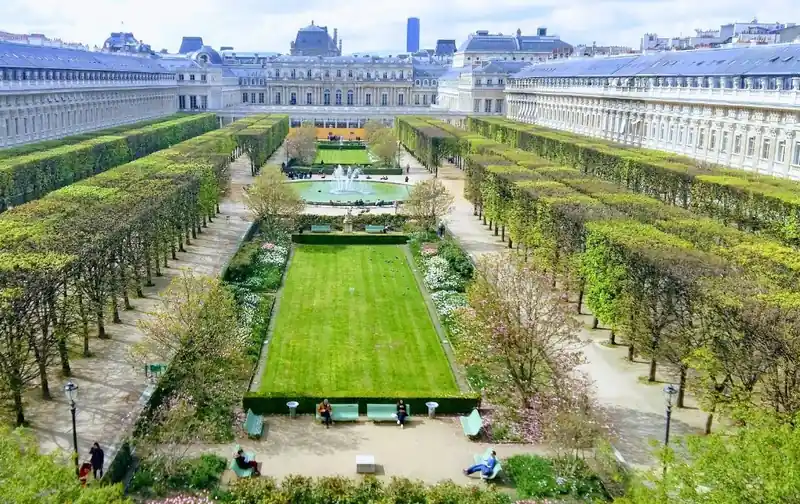
Palais-Royal Garden
Palais-Royal Garden is a refined and elegant courtyard garden in central Paris, known for its symmetrical layout, peaceful atmosphere, and the iconic black-and-white striped columns of the Colonnes de Buren, offering a quiet and artistic escape just steps away from the busy city streets.
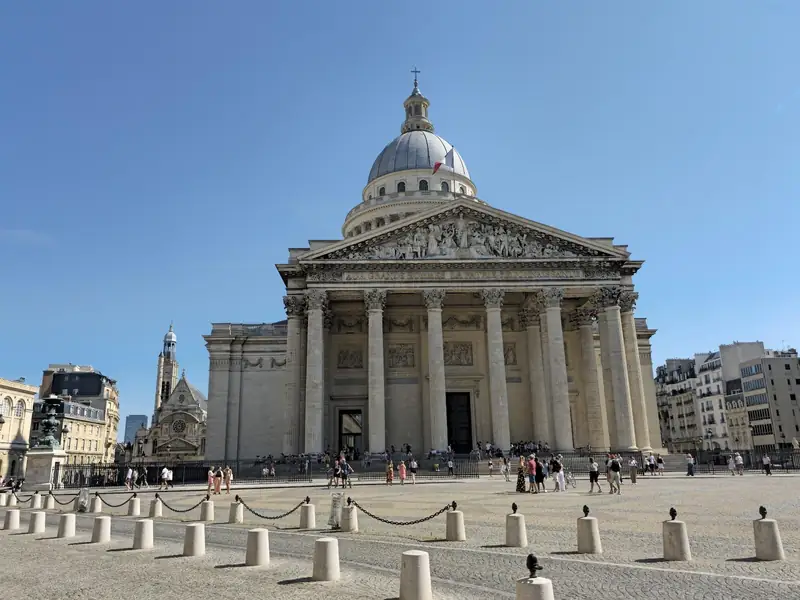
Pantheon
Commissioned by King Louis XV as a church dedicated to Sainte-Genevieve, the patron saint of Paris, and completed in the years just before the Revolution, the Pantheon was converted almost immediately into a secular mausoleum for France's great citizens, a purpose it has served, with a few political reversals back to a church and forward again, ever since. Its vast neoclassical dome and columned portico, modeled on Rome's own Pantheon and St. Paul's Cathedral in London, shelter a crypt holding the remains of Voltaire, Rousseau, Victor Hugo, Emile Zola, Marie Curie (the first woman interred there on her own merit), and resistance figures Jean Moulin and, more recently, Josephine Baker. Inside, a working reproduction of Leon Foucault's original 1851 pendulum still swings from the dome, the experiment that first offered visual proof of the Earth's rotation to a watching public. The building's motto carved above the entrance, 'Aux grands hommes, la patrie reconnaissante' (To great men, a grateful homeland), sums up its enduring role as France's secular hall of national memory.
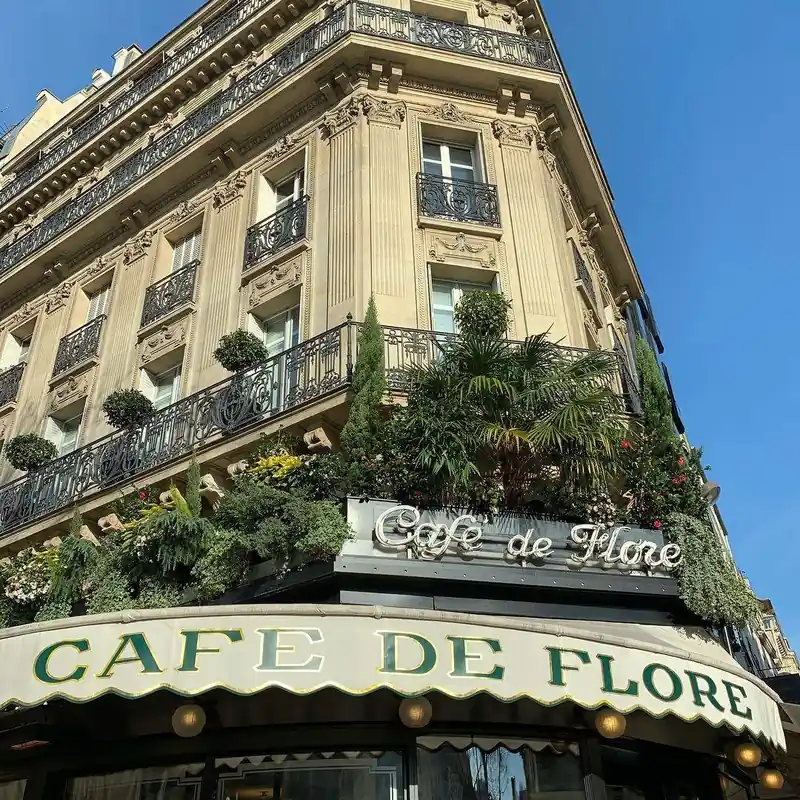
Saint-Germain-des-Pres
Saint-Germain-des-Pres is the legendary intellectual and artistic heart of Paris — a neighborhood on the Left Bank whose cafes, bookshops, art galleries, and ancient abbey have made it one of the most celebrated addresses in the history of Western culture, synonymous with the existentialist philosophy that Jean-Paul Sartre and Simone de Beauvoir developed at corner tables in the Cafe de Flore and Les Deux Magots in the years after World War II. The neighborhood's intellectual tradition stretches back centuries — Voltaire, Rousseau, and other Enlightenment philosophers gathered in the cafes of Saint-Germain, and in the early 20th century the neighborhood became the center of the Paris art world when Picasso, Matisse, and other modernist artists settled in its studios. The jazz clubs of Saint-Germain became legendary in the 1950s and 1960s, when American musicians including Miles Davis, Chet Baker, and Sidney Bechet found appreciative audiences in the neighborhood's smoky basement clubs, creating a Franco-American jazz culture that was central to the postwar cultural renaissance of Paris. Today Saint-Germain-des-Pres has become one of the most fashionable and expensive neighborhoods in Paris — its historic cafes now serve tourists and well-heeled locals, its bookshops compete with luxury fashion boutiques, and its galleries show works priced for collectors rather than starving artists — but the neighborhood retains a distinct intellectual atmosphere and its ancient Romanesque abbey church, one of the oldest in Paris, remains a serene oasis in the midst of the busy streets.
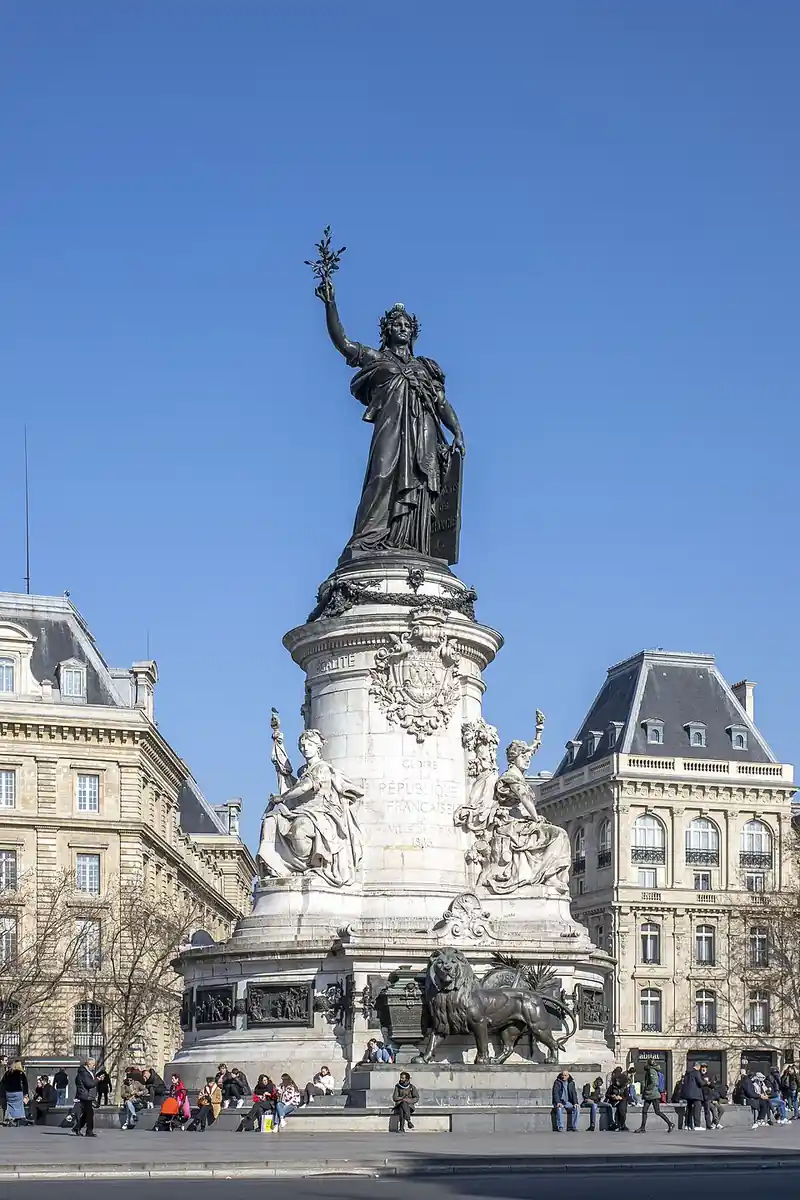
Place de la République
Place de la République is a large and dynamic public square in Paris centered around the Statue of the Republic, known for its open pedestrian space, cultural events, and gatherings, offering a modern urban atmosphere that contrasts with the city’s historic landmarks while still reflecting its social and political life.
Place de la Republique
Created in the 1850s when Baron Haussmann's renovation of Paris cut wide new boulevards through the city, Place de la Republique is one of the largest squares in Paris, anchored by a towering bronze statue of Marianne, the female personification of the French Republic, holding an olive branch and standing atop a pedestal ringed by allegorical reliefs of Liberty, Equality, and Fraternity and guarded by bronze lions. Unveiled in 1883, the monument replaced an earlier plan for an equestrian statue of Louis XIV and deliberately consolidated the square's identity as a symbol of republican, rather than royal, France. Since the late 20th century the square has become the default staging ground for the country's largest political demonstrations, spontaneous vigils, and national mourning gatherings, its open plaza large enough to hold tens of thousands and its central statue serving as a natural focal point and meeting spot. Beyond its political role, the square today functions as a busy transit hub and pedestrianized public space with a large reflecting pool, informal seating, and easy access on foot to the trendy bars and canal-side cafes of the surrounding 10th and 11th arrondissements.
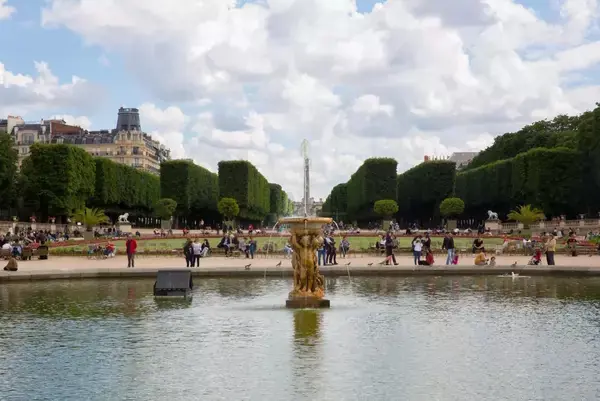
Luxembourg Gardens
Luxembourg Gardens is one of the most beloved parks in Paris, known for its beautifully maintained lawns, fountains, statues, and the Luxembourg Palace, offering a relaxing environment where visitors can stroll, sit by the pond, and experience everyday Parisian life in a scenic setting.
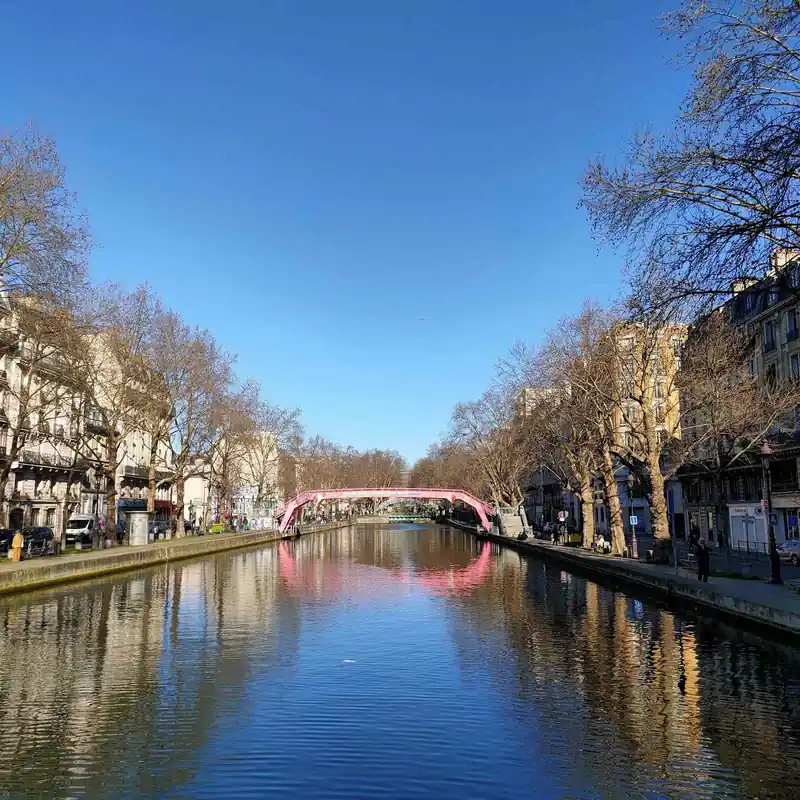
Canal Saint-Martin
Ordered by Napoleon Bonaparte in 1802 to bring cleaner drinking water into central Paris and to shorten barge traffic on the looping Seine, the Canal Saint-Martin runs for roughly 4.5 kilometers, much of it visible above ground through the 10th and 11th arrondissements before disappearing underground near the Bastille to join the river. Its most distinctive stretch is lined with iron footbridges arching over the water and a series of locks that still raise and lower barges and pleasure boats today, mechanisms that became internationally recognizable after starring in the 2001 film Amelie. Once a working industrial waterway bordered by warehouses, the canal's banks have transformed since the 1990s into one of Paris's most fashionable neighborhoods, its tree-lined quays now filled on warm evenings with young Parisians picnicking on the cobblestones, wine bottles balanced beside them, while the surrounding streets hold an eclectic mix of independent boutiques, record shops, and casual restaurants that give the area a distinctly bohemian, unhurried character rare in the more formal parts of central Paris.
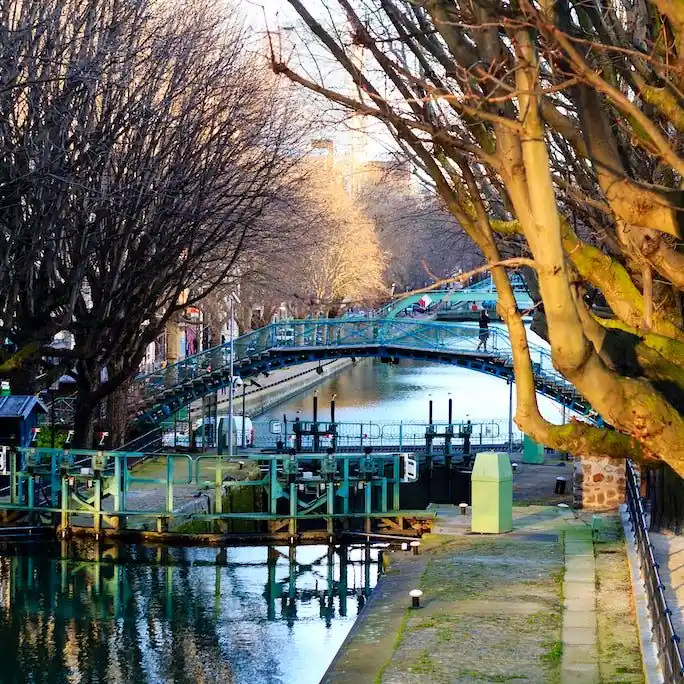
Canal Saint-Martin
Canal Saint-Martin is a trendy and scenic waterway in Paris known for its iron footbridges, tree-lined banks, and relaxed local atmosphere, where visitors can enjoy cafés, picnics, and leisurely walks while experiencing a more authentic and less touristy side of the city.
Musee d'Orsay
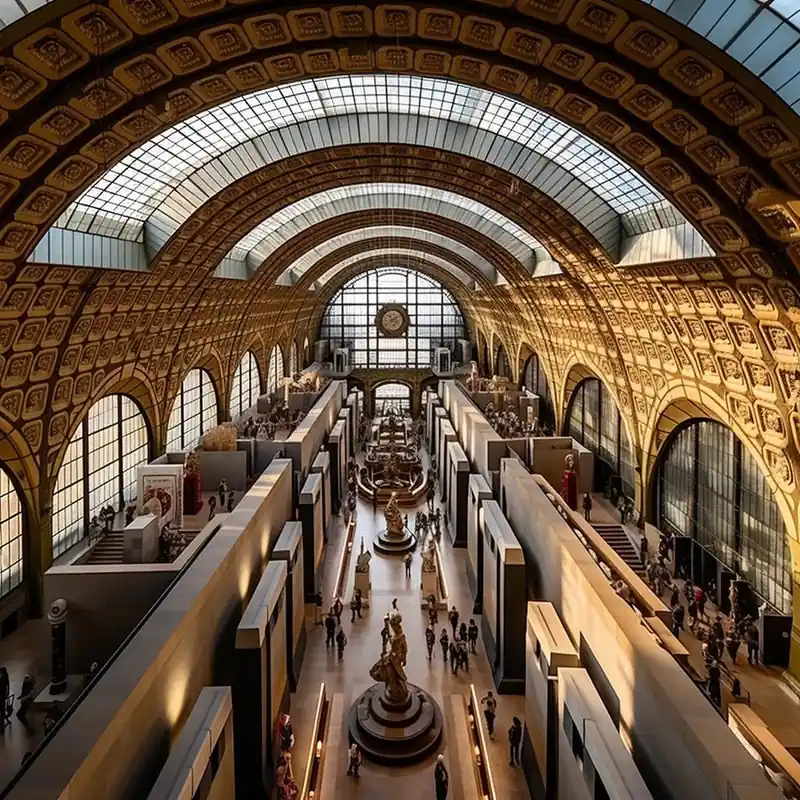
The Musee d'Orsay in Paris is the greatest collection of Impressionist and Post-Impressionist art in the world — a magnificent museum housed in a converted Beaux-Arts railway station on the banks of the Seine whose soaring glass roof, ornate ironwork, and monumental spaces provide a spectacular setting for the greatest concentration of works by Monet, Renoir, Degas, Pissarro, Sisley, Manet, Van Gogh, Gauguin, Cezanne, Seurat, and their contemporaries that can be found anywhere on earth. The museum occupies the former Gare d'Orsay, built for the 1900 Paris Universal Exhibition, whose operational life as a railway station ended in 1939 and which fell into disrepair until its conversion into a museum in 1986 — the transformation is one of the most successful museum conversions in history, with the station's original architecture preserved and celebrated while the spaces have been reorganized to create a series of galleries that move visitors through the development of Western art from 1848 to 1914. The Impressionist collection on the top floor — natural light flooding through the glass roof, the works arranged to show the development of the movement from its origins in Barbizon painting through its flowering in the canvases of the 1870s and 1880s to the Post-Impressionist explorations of Cezanne and Van Gogh — is one of the most extraordinary sequences of gallery rooms in any museum in the world, a sustained encounter with the greatest period of innovation in the history of Western painting. Among its greatest individual works are Manet's Olympia and Dejeuner sur l'herbe, Van Gogh's Self-Portrait, Whistler's Arrangement in Grey and Black No. 1 (Whistler's Mother), and Renoir's Dance at Le Moulin de la Galette.
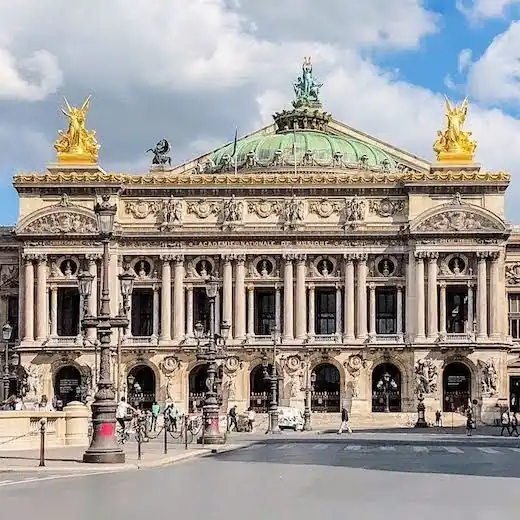
Opera Garnier
The Opera Garnier (Palais Garnier) is the most opulent theatre building in the world and the supreme achievement of Second Empire architecture — a magnificent palace of the arts built between 1861 and 1875 by the architect Charles Garnier whose Grand Staircase, Grand Foyer, auditorium, and facade represent the highest expression of 19th-century French decorative arts, combining marble, gilded bronze, painted ceilings, crystal chandeliers, and elaborately carved stone in an interior of such concentrated luxury that even in an era of extravagant public buildings it was recognized as something extraordinary. The opera was commissioned by Napoleon III as part of Baron Haussmann's comprehensive rebuilding of Paris, and Garnier won the competition for its design at the age of 35 with a proposal that rejected the severe neoclassicism of his competitors in favor of an eclectic synthesis of styles that Garnier called Napoleon III style — a combination of Baroque exuberance, Renaissance grandeur, and 19th-century theatrical fantasy that proved immediately controversial and enduringly beloved. The Grand Staircase is perhaps the most famous single room in any theatre building in the world — a double staircase rising through a space of marble columns, gilded balustrades, and painted ceilings where the audience itself becomes part of the spectacle as they ascend to their boxes, the whole arrangement conceived by Garnier as a theatre in which the social rituals of the opera-going public would be performed as conspicuously as the performances on stage. The building is perhaps most famous internationally through Gaston Leroux's 1910 novel The Phantom of the Opera, which used its underground lake, labyrinthine backstage passages, and Gothic atmosphere as the setting for one of the most enduringly popular romantic horror stories in literature.
Galeries Lafayette Haussmann
Founded in 1893 as a small haberdashery shop and expanded into its current flagship location beside the Opera Garnier in the early 20th century, Galeries Lafayette Haussmann is one of the most architecturally striking department stores in the world, built around a soaring Belle Epoque atrium topped by a stained-glass dome roughly 43 meters overhead, installed in 1912 in an Art Nouveau style of swirling ironwork and colored glass that remains the store's centerpiece regardless of the fashions sold beneath it. Spread across multiple connected buildings and floors devoted to womenswear, menswear, gourmet food, and luxury brands, the store has functioned since its founding as a showcase for French fashion and craftsmanship as much as a retail destination, and its window displays at Christmas remain a Parisian tradition drawing crowds regardless of whether they intend to shop. A free rooftop terrace, accessible without any purchase required, offers one of the more unexpected panoramic views in central Paris, looking directly across at the gilded dome of the Opera Garnier and out toward the rooftops of the surrounding grand boulevards.
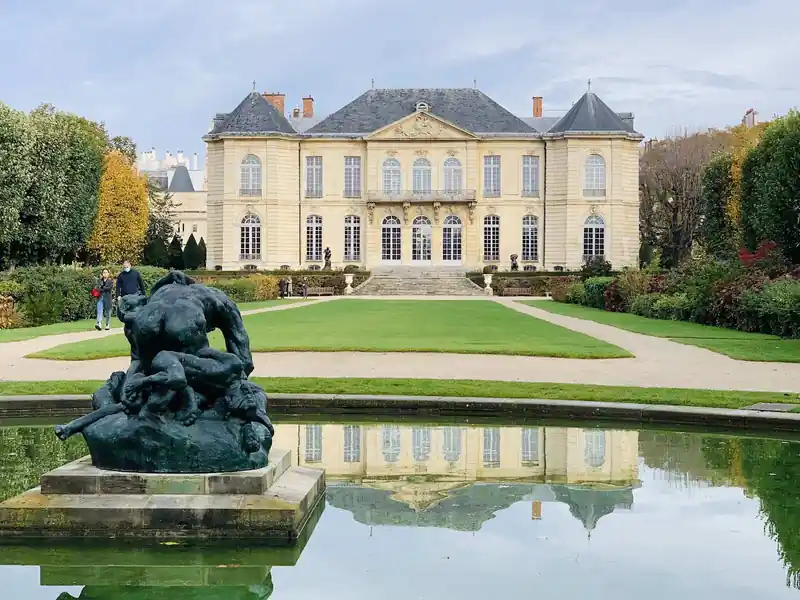
Musee Rodin
The Musee Rodin in Paris is one of the most beautiful and intimate museum experiences in the world — a magnificent 18th-century mansion set in a lush sculpture garden that houses the greatest collection of works by Auguste Rodin, the sculptor who revolutionized Western art in the late 19th century and whose powerfully expressive bronze and marble figures redefined what sculpture could communicate about the human condition. The museum occupies the Hotel Biron, a gracious rococo mansion in the 7th arrondissement where Rodin rented studios in the final decade of his life, surrounded by a three-hectare garden that is one of the loveliest outdoor spaces in Paris — a formal French garden of clipped hedges, rose arbors, and reflective pools where Rodin's most famous works are displayed in the open air, including The Thinker, The Gates of Hell, The Burghers of Calais, and Balzac, each set in the garden's greenery where natural light and seasonal change create constantly shifting contexts for these extraordinary sculptures. Inside the mansion, the collection traces the full arc of Rodin's career from his early academic works through the revolutionary pieces of his mature period — The Kiss, The Age of Bronze, and the hundreds of studies and preparatory works that reveal the extraordinary creative process behind his masterpieces. The museum also preserves works by Camille Claudel, Rodin's student, collaborator, and lover, whose own sculptural genius is increasingly recognized as having been unjustly overshadowed by her relationship with the more famous artist.
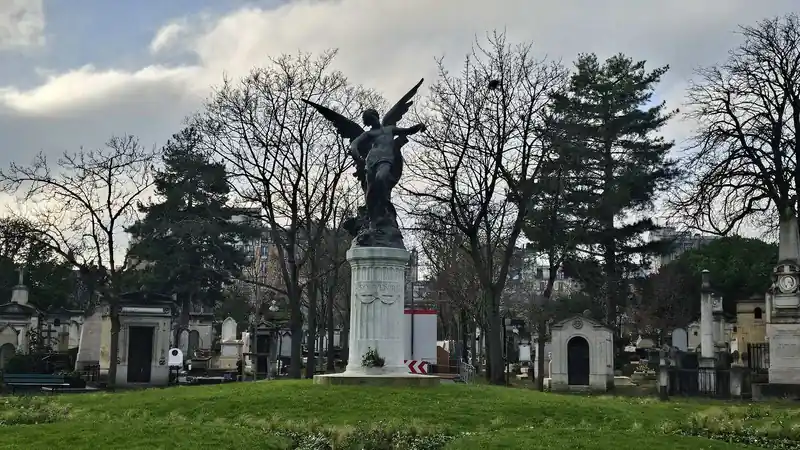
Montparnasse Cemetery
Opened in 1824 on the southern edge of central Paris as one of the city's grand 19th century cemeteries, Montparnasse Cemetery grew alongside the Left Bank's identity as an intellectual and artistic quarter, and its winding tree-lined pathways now hold the graves of an unusually dense concentration of writers, philosophers, and artists rather than aristocracy or clergy. Jean-Paul Sartre and Simone de Beauvoir share a single simple grave, still visited by admirers leaving metro tickets and small notes, while nearby lie the poet Charles Baudelaire, the playwright Samuel Beckett, the photographer Man Ray, and the singer Serge Gainsbourg, whose grave is regularly covered in cabbages, cigarette packets, and metro tickets left by fans referencing his songs. The cemetery's most theatrical monument is a bronze sculpture by Niki de Saint Phalle marking the grave of critic Ricardo Menon, while a working windmill, a relic of the area's rural past before Montparnasse was absorbed into the city, still stands near the cemetery's edge. Unlike the more visited Pere Lachaise across town, Montparnasse remains comparatively quiet, offering a more intimate walk through the resting places of some of the 20th century's most influential minds.
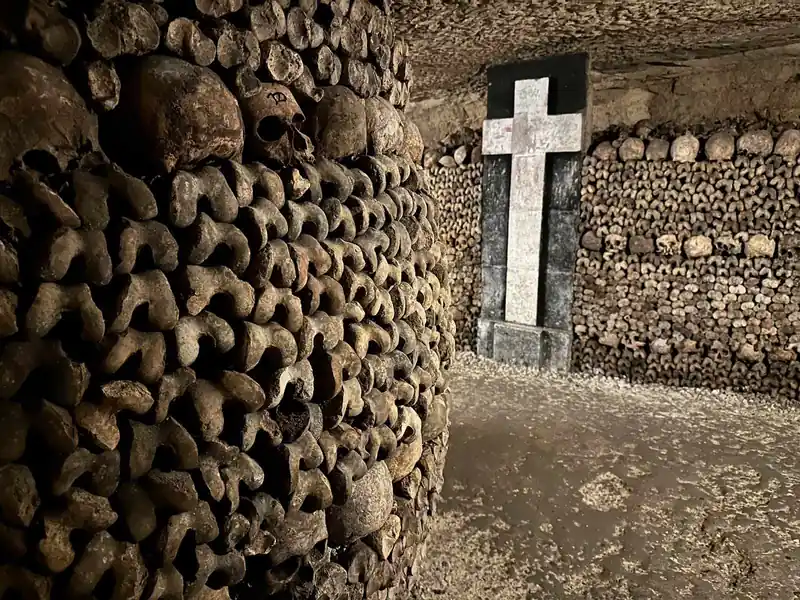
Catacombs of Paris
Opened to organized visits in 1874, the Catacombs of Paris occupy a small public section of a vast network of former limestone quarries tunneled beneath the city over centuries to supply the stone used to build much of Paris above, including Notre-Dame and the Louvre. In the late 18th century, as overflowing cemeteries in the city center became a public health crisis, authorities began the grim task of exhuming millions of skeletons and transporting them by torch-lit cart at night to these disused quarries, where workers eventually arranged the bones into decorative walls of stacked skulls and femurs rather than simply piling them, creating what became known as the Empire of the Dead. The public route winds roughly 1.5 kilometers through narrow, cool, dimly lit tunnels lined with the remains of an estimated six million Parisians, considerably more people than currently live in the city above, with carved inscriptions marking which cemetery each section of bones originally came from. Beyond the official tour, the wider unlit network of tunnels, known informally as the Catacombs by urban explorers even though only a fraction actually contains bones, has developed its own semi-legendary subculture of illegal exploration, though the public museum route remains the only legal and safe way to experience this singular underground monument.
Tour Montparnasse
The Tour Montparnasse is Paris's tallest skyscraper and its most controversial building — a 210-meter glass-and-steel tower completed in 1973 that so shocked Parisians with its incongruous presence on the city's skyline that it prompted the city to ban further high-rise construction in central Paris, making it the last major tower built within the capital's historic core. Despite its contentious aesthetics, the Tour Montparnasse offers what many consider the best panoramic view of Paris available — from its 56th-floor observation deck and open-air rooftop terrace, visitors can see the entire city spread below in 360 degrees, including, crucially, the Eiffel Tower in all its glory — a view impossible from the tower itself, which can be seen from the Trocadero but not from its own summit. The view encompasses all of the great monuments of Paris — Notre-Dame, the Sacre-Coeur, the Louvre, the Grand Palais, the Arc de Triomphe — laid out across the city's gentle topography with the Seine winding through the center, and on clear days extends to the hills of Montmartre to the north, the Bois de Boulogne to the west, and the distant suburbs of the Ile-de-France. The tower also houses a popular bar and restaurant on its upper floors, making it a destination for dining with exceptional views, and its fast elevators reach the observation deck in just 38 seconds, making the transition from street level to the Paris skyline almost instantaneous.
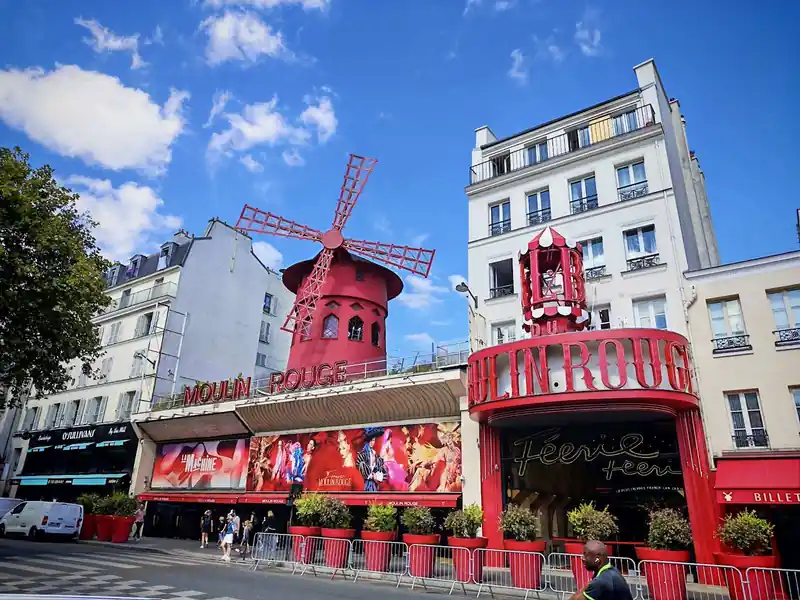
Moulin Rouge
Opened in 1889 at the foot of Montmartre, the same year the Eiffel Tower rose across the city, the Moulin Rouge is the cabaret that essentially invented modern cabaret as a genre, instantly recognizable by the red windmill turning above its entrance on Boulevard de Clichy. It was here that the can-can, previously a somewhat disreputable working-class dance, was reworked into a dazzling, high-kicking stage spectacle that scandalized and thrilled Belle Epoque Paris in equal measure, and here that the painter Henri de Toulouse-Lautrec became a fixture, immortalizing its dancers and atmosphere in posters and paintings that remain some of the most recognizable images of the era. The original building burned down in 1915 and was rebuilt, and while the neighborhood around it in Pigalle has cycled through reputations from bohemian to raunchy to gentrified over the decades, the cabaret itself has continued nightly performances of elaborate feathered revues for well over a century, making it one of the longest continuously operating entertainment venues in the world and, alongside the film that borrowed its name, one of the most internationally recognized symbols of Parisian nightlife.
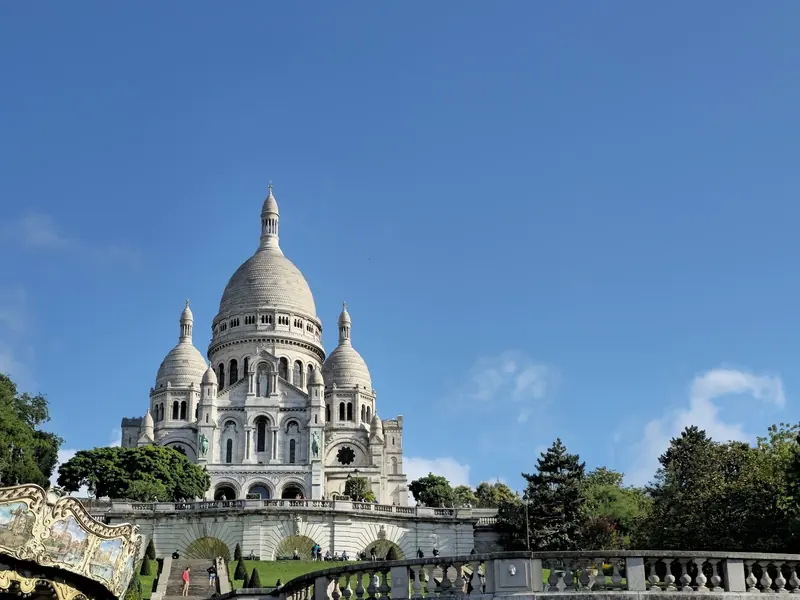
Montmartre
Montmartre is the most famous and beloved of Paris's historic quarters — a hill rising 130 meters above the city in the 18th arrondissement whose distinctive village character, winding cobblestone streets, vineyards, windmills, and the gleaming white domes of the Sacre-Coeur basilica create a landscape unlike anywhere else in Paris, and whose extraordinary history as the bohemian capital of the world from the 1880s through the 1920s established it as the most significant quarter in the history of modern art. Between 1880 and 1940, Montmartre was home to many of the greatest artists of the modern era — Toulouse-Lautrec, who immortalized its cabarets and can-can dancers in his posters for the Moulin Rouge; Van Gogh, who painted its streets and vineyards; Picasso, who created Cubism in the Bateau-Lavoir studio on the Place Emile Goudeau; Modigliani, Utrillo, Braque, and dozens of others whose work defined the trajectory of 20th-century art. The Sacre-Coeur Basilica, built between 1875 and 1914 on the highest point of the hill, is one of the most distinctive buildings in Paris — its Romano-Byzantine domes of gleaming white travertine, designed to be visible from much of the city, and its position commanding views over the entire Paris basin make it both a major pilgrimage site and the defining visual landmark of the Montmartre hill. The Place du Tertre, the central square of the old village, is today crowded with portrait artists and tourist shops but retains enough of its original character to convey the atmosphere of the village within the city that made Montmartre so attractive to generations of painters and writers.
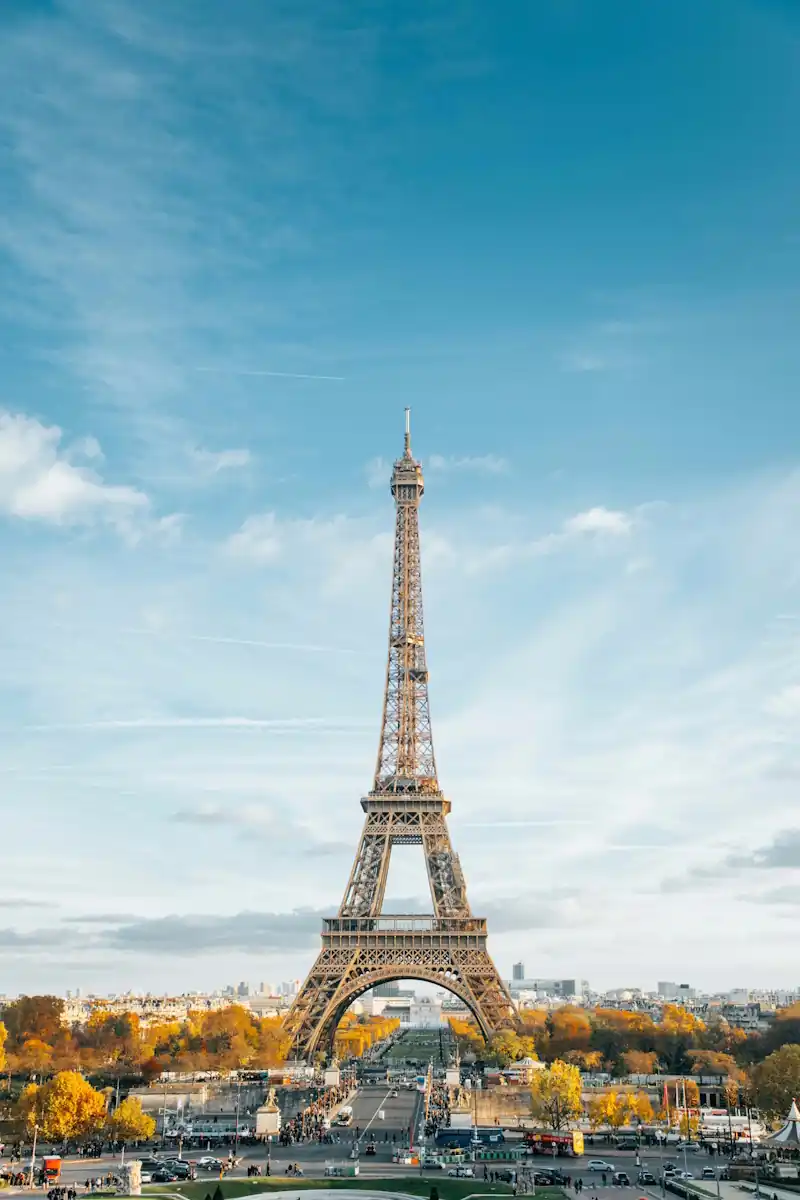
EiffelTower
The Eiffel Tower is the most iconic landmark in Paris and one of the most famous monuments in the world, originally built for the 1889 Exposition Universelle and now admired for its elegant iron structure, panoramic city views, and unforgettable presence on the Paris skyline.
ChampsÉlysées
Champs-Élysées is one of the most famous avenues in the world, stretching from Place de la Concorde to the Arc de Triomphe, and it is known for its luxury shops, theaters, cafés, and vibrant atmosphere that represents the elegance and energy of Paris.
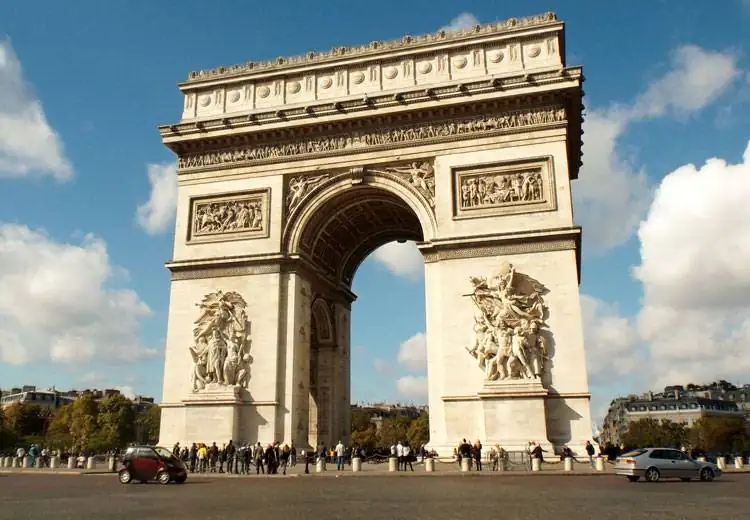
ArcdeTriomphe
The Arc de Triomphe is one of Paris’s most famous monuments, built to honor those who fought for France, and it stands at the center of a major traffic circle at the end of the Champs-Élysées, offering visitors panoramic views of the city from its rooftop.
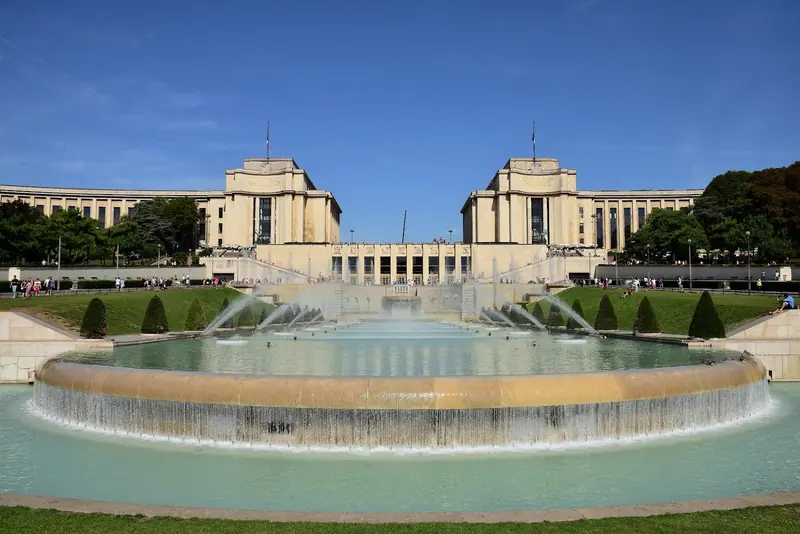
Palais de Chaillot
The Palais de Chaillot on the Trocadero hill in Paris offers what is widely regarded as the single finest view of the Eiffel Tower in the entire city — the sweeping terrace between the palace's two curved wings frames the tower perfectly across the Seine, creating an iconic vista that has made the Trocadero esplanade one of the most photographed locations in the world and an obligatory stop for every visitor to Paris. Built for the 1937 World's Fair on the site of an earlier palace constructed for the 1878 exposition, the Palais de Chaillot is a masterwork of Art Deco architecture whose monumental scale, golden inscriptions, and graceful curves make it one of the finest examples of the interwar architectural style in France. The palace houses several of Paris's most important museums — the Cite de l'Architecture et du Patrimoine, with its extraordinary collection of architectural casts and models documenting the history of French building; the Musee de l'Homme, exploring human evolution and cultural diversity; and the Musee National de la Marine, dedicated to French naval history — making Chaillot a cultural destination of remarkable breadth beyond its celebrated view. The fountains and pools of the Trocadero gardens cascade down the hillside toward the Seine, and at night the illuminated fountains create a spectacular foreground for the glittering Eiffel Tower, making the Trocadero one of the great nocturnal spectacles of Paris.
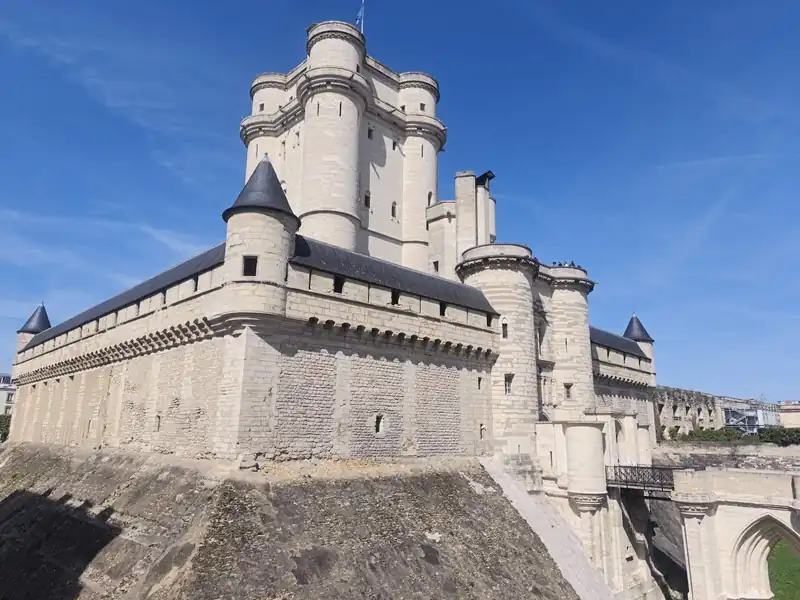
Chateau de Vincennes
The Chateau de Vincennes on the eastern edge of Paris is one of the finest and best-preserved medieval royal fortresses in France — a massive 14th-century castle whose soaring 52-meter keep is the tallest surviving medieval tower in Europe, and whose moated enclosure, royal chapel, and formidable walls preserve an authentic picture of royal medieval architecture that is all the more remarkable for its location within the modern city of Paris. The castle was built in stages over the 14th century as a royal residence by the Valois kings, and it served as the principal seat of French royal power before Versailles was developed — several kings of France were born, died, or spent significant portions of their reigns at Vincennes, including Henry V of England who died here in 1422 while campaigning in France. The Sainte-Chapelle within the castle enclosure is a Gothic masterpiece begun by King Charles V in 1379 and completed in the early 16th century, whose elaborate sculpted facade and magnificent rose window demonstrate the extraordinary quality of late medieval artistic patronage at the French royal court. The castle later served as a state prison — Diderot was imprisoned here, as was the Marquis de Mirabeau — before becoming an arsenal and military facility in the Napoleonic era, a role it continued until the 20th century when it was finally opened to the public as one of the most important medieval monuments in the Paris region.
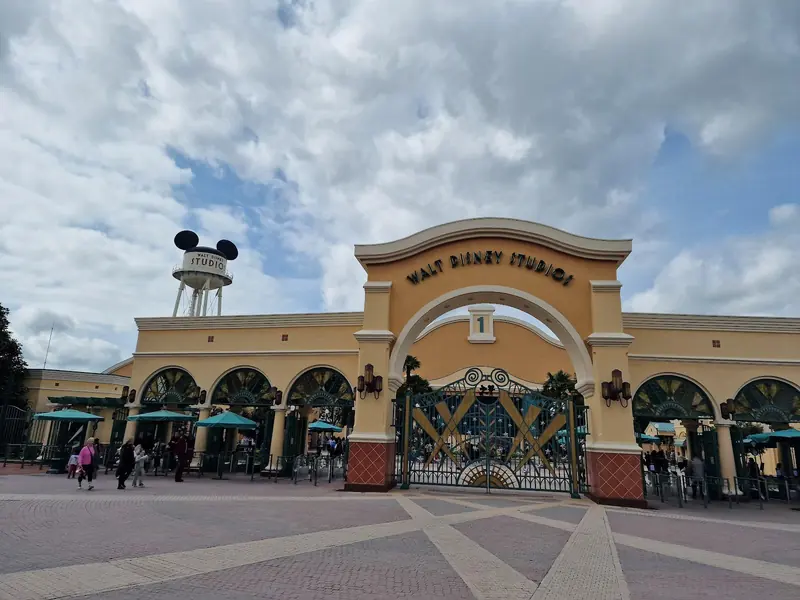
Disneyland Paris
Disneyland Paris is Europe's most visited tourist attraction and the largest Disney resort outside the United States — a magical entertainment destination 32 kilometers east of Paris that has welcomed over 375 million visitors since its opening in 1992 and transformed the Marne-la-Vallee area into one of the most important tourism destinations on the continent. The resort encompasses two theme parks — Disneyland Park with its iconic Sleeping Beauty Castle at the center, and Walt Disney Studios Park dedicated to the art of filmmaking and entertainment — along with seven Disney hotels, a shopping and entertainment district, and extensive convention facilities, creating a self-contained resort world of extraordinary scale and attention to detail. Disneyland Park's five themed lands — Main Street U.S.A., Fantasyland, Frontierland, Adventureland, and Discoveryland — re-create the same dream landscape as the original Disneyland in California but with distinctly European touches and some attractions unique to the Paris park, including the atmospheric Phantom Manor, a Gothic haunted mansion that tells a darker and more elaborate story than its American counterpart. The park's setting within the flat agricultural plain of the Ile-de-France required the creation of an entirely artificial landscape of hills, lakes, and forest, a transformation accomplished with such thoroughness that the resort feels like a complete world unto itself, insulated from the surrounding French countryside. For European families, Disneyland Paris represents a childhood rite of passage comparable to the original California park for American families, and the resort's ability to deliver consistent magic and wonder across decades of operation has made it one of the most enduring success stories in the history of entertainment.
