Paris Recommended Course

Where Paris Reads and Wanders

Where Paris Reads and Wanders — Paris: Musee d'Orsay → Musee Rodin → Saint-Germain-des-Pres → Luxembourg Gardens → Pantheon.

⏱ Total Duration: 6h 14m 📍 5 Stops 🚶 Total Route Distance: 6.0 km
Follow Route on iOS App Follow Route on Android App
Where Paris Reads and Wanders
Interactive Route Map

Course Route Map (5 Stops · 6h 14m)

Step-by-Step Route

Course Itinerary & Walking / Transit Directions

Tap any landmark to check full opening hours, admission fees, and nearby spots.

Musee d'Orsay

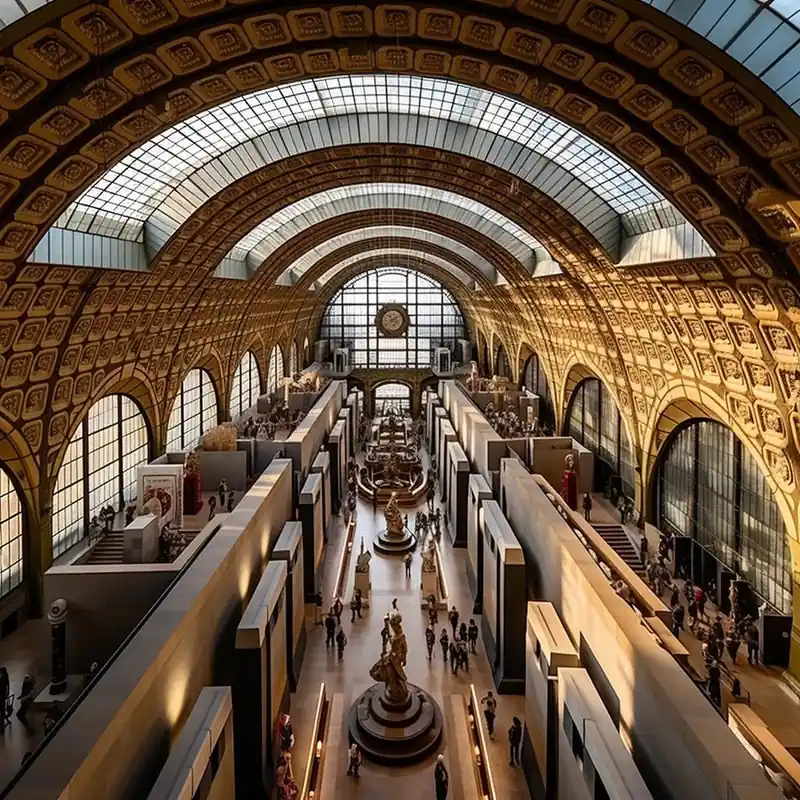
The Musee d'Orsay in Paris is the greatest collection of Impressionist and Post-Impressionist art in the world — a magnificent museum housed in a converted Beaux-Arts railway station on the banks of the Seine whose soaring glass roof, ornate ironwork, and monumental spaces provide a spectacular setting for the greatest concentration of works by Monet, Renoir, Degas, Pissarro, Sisley, Manet, Van Gogh, Gauguin, Cezanne, Seurat, and their contemporaries that can be found anywhere on earth. The museum occupies the former Gare d'Orsay, built for the 1900 Paris Universal Exhibition, whose operational life as a railway station ended in 1939 and which fell into disrepair until its conversion into a museum in 1986 — the transformation is one of the most successful museum conversions in history, with the station's original architecture preserved and celebrated while the spaces have been reorganized to create a series of galleries that move visitors through the development of Western art from 1848 to 1914. The Impressionist collection on the top floor — natural light flooding through the glass roof, the works arranged to show the development of the movement from its origins in Barbizon painting through its flowering in the canvases of the 1870s and 1880s to the Post-Impressionist explorations of Cezanne and Van Gogh — is one of the most extraordinary sequences of gallery rooms in any museum in the world, a sustained encounter with the greatest period of innovation in the history of Western painting. Among its greatest individual works are Manet's Olympia and Dejeuner sur l'herbe, Van Gogh's Self-Portrait, Whistler's Arrangement in Grey and Black No. 1 (Whistler's Mother), and Renoir's Dance at Le Moulin de la Galette.
🕒 Tue-Sun 9:30am-6pm (Thu until 9:45pm), closed Mon 🎟 https://www.musee-orsay.fr/en/visit Place Guide →
🚶 Walking 28 min · 2.0 km
Musee Rodin

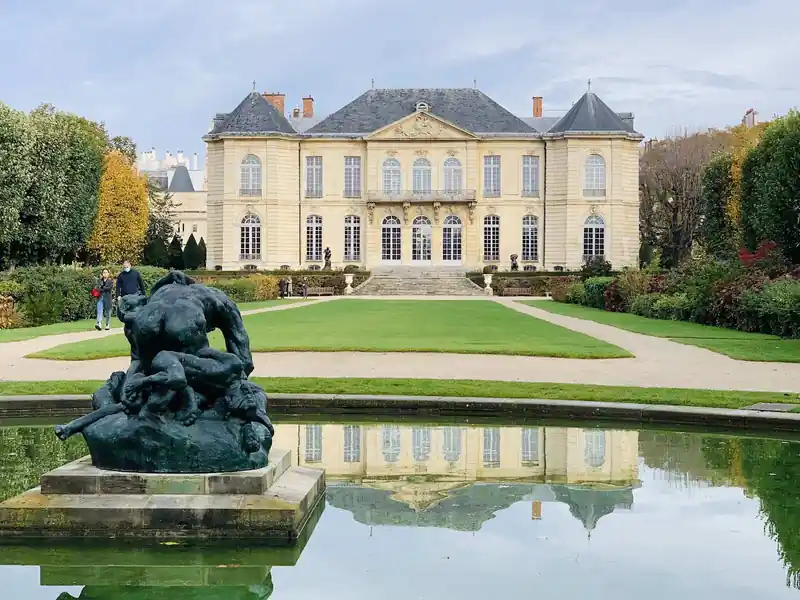
The Musee Rodin in Paris is one of the most beautiful and intimate museum experiences in the world — a magnificent 18th-century mansion set in a lush sculpture garden that houses the greatest collection of works by Auguste Rodin, the sculptor who revolutionized Western art in the late 19th century and whose powerfully expressive bronze and marble figures redefined what sculpture could communicate about the human condition. The museum occupies the Hotel Biron, a gracious rococo mansion in the 7th arrondissement where Rodin rented studios in the final decade of his life, surrounded by a three-hectare garden that is one of the loveliest outdoor spaces in Paris — a formal French garden of clipped hedges, rose arbors, and reflective pools where Rodin's most famous works are displayed in the open air, including The Thinker, The Gates of Hell, The Burghers of Calais, and Balzac, each set in the garden's greenery where natural light and seasonal change create constantly shifting contexts for these extraordinary sculptures. Inside the mansion, the collection traces the full arc of Rodin's career from his early academic works through the revolutionary pieces of his mature period — The Kiss, The Age of Bronze, and the hundreds of studies and preparatory works that reveal the extraordinary creative process behind his masterpieces. The museum also preserves works by Camille Claudel, Rodin's student, collaborator, and lover, whose own sculptural genius is increasingly recognized as having been unjustly overshadowed by her relationship with the more famous artist.

🕒 Tue-Sun 10am-6:30pm 🎟 14 euros adults Place Guide →
🚶 Walking 8 min · 630 m
🚇 69 (Bourgogne → Rue du Bac - René Char) · 2 min (642 m)
🚶 Walking 8 min · 578 m
Saint-Germain-des-Pres

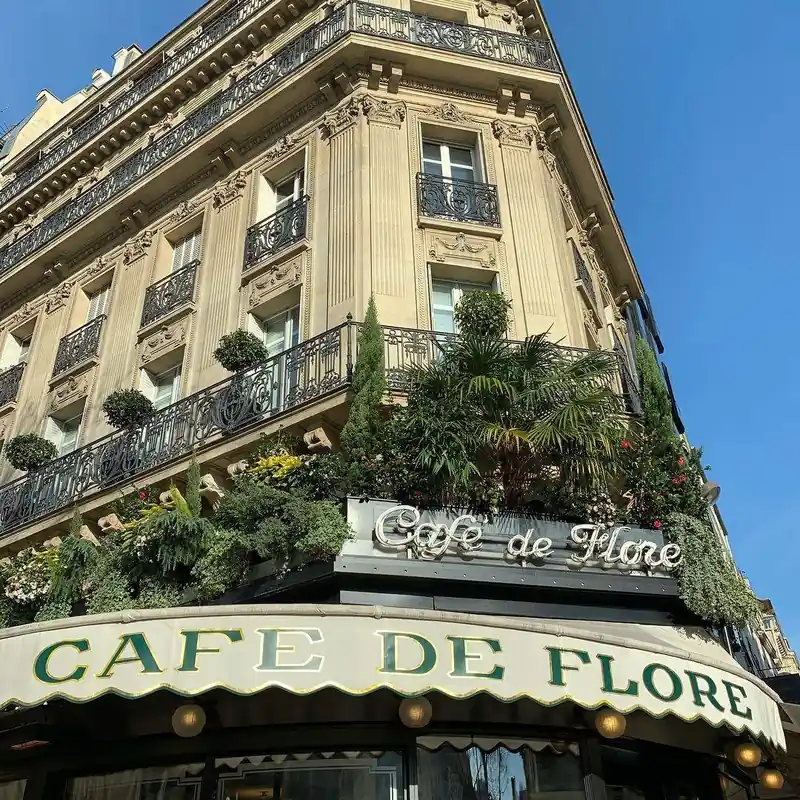
Saint-Germain-des-Pres is the legendary intellectual and artistic heart of Paris — a neighborhood on the Left Bank whose cafes, bookshops, art galleries, and ancient abbey have made it one of the most celebrated addresses in the history of Western culture, synonymous with the existentialist philosophy that Jean-Paul Sartre and Simone de Beauvoir developed at corner tables in the Cafe de Flore and Les Deux Magots in the years after World War II. The neighborhood's intellectual tradition stretches back centuries — Voltaire, Rousseau, and other Enlightenment philosophers gathered in the cafes of Saint-Germain, and in the early 20th century the neighborhood became the center of the Paris art world when Picasso, Matisse, and other modernist artists settled in its studios. The jazz clubs of Saint-Germain became legendary in the 1950s and 1960s, when American musicians including Miles Davis, Chet Baker, and Sidney Bechet found appreciative audiences in the neighborhood's smoky basement clubs, creating a Franco-American jazz culture that was central to the postwar cultural renaissance of Paris. Today Saint-Germain-des-Pres has become one of the most fashionable and expensive neighborhoods in Paris — its historic cafes now serve tourists and well-heeled locals, its bookshops compete with luxury fashion boutiques, and its galleries show works priced for collectors rather than starving artists — but the neighborhood retains a distinct intellectual atmosphere and its ancient Romanesque abbey church, one of the oldest in Paris, remains a serene oasis in the midst of the busy streets.

🕒 Open year-round 🎟 Free Place Guide →
🚶 Walking 16 min · 1.1 km
Luxembourg Gardens

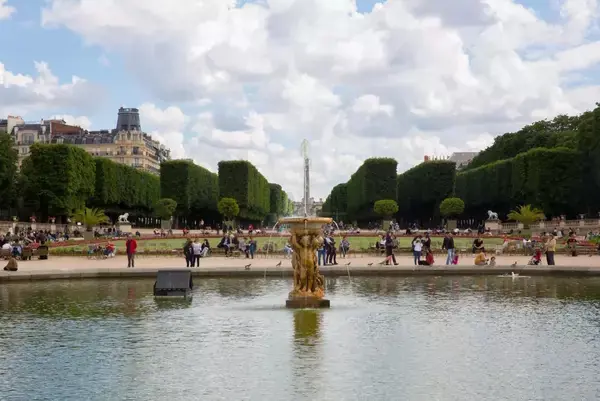
Luxembourg Gardens is one of the most beloved parks in Paris, known for its beautifully maintained lawns, fountains, statues, and the Luxembourg Palace, offering a relaxing environment where visitors can stroll, sit by the pond, and experience everyday Parisian life in a scenic setting.

🕒 Open daily 🎟 Free Place Guide →
🚶 Walking 14 min · 975 m
Pantheon

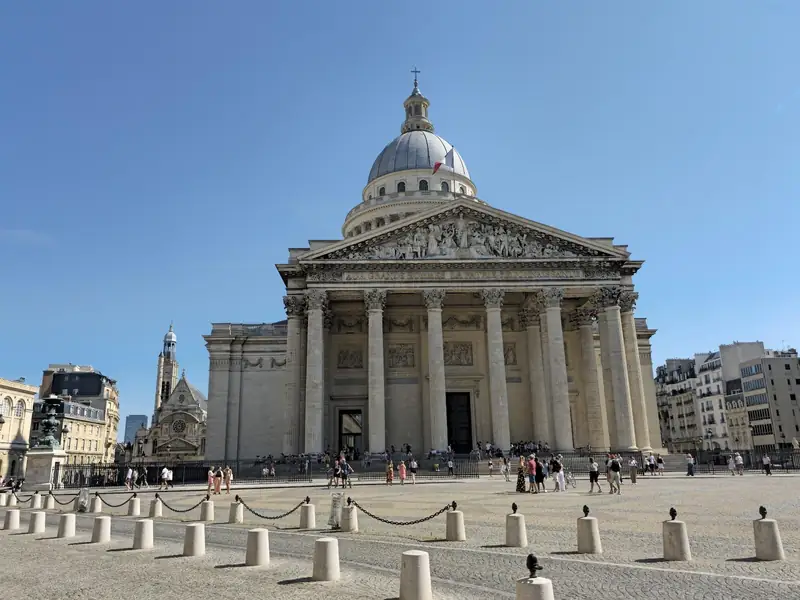
Commissioned by King Louis XV as a church dedicated to Sainte-Genevieve, the patron saint of Paris, and completed in the years just before the Revolution, the Pantheon was converted almost immediately into a secular mausoleum for France's great citizens, a purpose it has served, with a few political reversals back to a church and forward again, ever since. Its vast neoclassical dome and columned portico, modeled on Rome's own Pantheon and St. Paul's Cathedral in London, shelter a crypt holding the remains of Voltaire, Rousseau, Victor Hugo, Emile Zola, Marie Curie (the first woman interred there on her own merit), and resistance figures Jean Moulin and, more recently, Josephine Baker. Inside, a working reproduction of Leon Foucault's original 1851 pendulum still swings from the dome, the experiment that first offered visual proof of the Earth's rotation to a watching public. The building's motto carved above the entrance, 'Aux grands hommes, la patrie reconnaissante' (To great men, a grateful homeland), sums up its enduring role as France's secular hall of national memory.

🕒 Open daily 🎟 EUR 16 (~$17 USD) Place Guide →
More Itineraries

Other Recommended Courses in Paris

Back to Paris Guide →

Plan & Navigate Your Trip with MyGuide

Explore 1,500+ cities, 10,000+ landmarks, step-by-step walking & transit itineraries, and chat with verified local tour hosts in 16 languages.