Explore Bangkok Like a Local
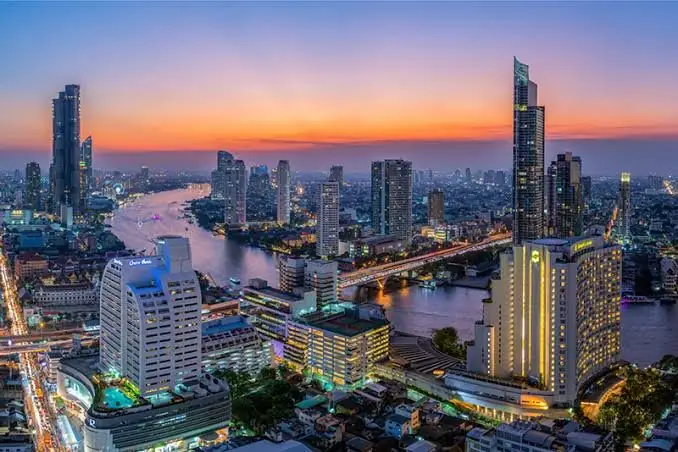
Bangkok layers golden temple spires over gridlocked traffic and glass-tower skylines, a city that refuses to slow down to explain itself. Step through the gates of the Grand Palace and Wat Phra Kaew, where the Emerald Buddha sits inside room after room of gilded, mirror-tiled excess, then take a longtail boat down the Chao Phraya River past teak stilt-houses and floating vendors still doing business the way they did a century ago. After dark, Yaowarat's Chinatown turns into one long open-air kitchen, wok flames lighting up sidewalks packed with people eating standing up. Bangkok rewards travelers willing to trade a tidy itinerary for genuine sensory overload, the temples, the traffic, the food carts, and the humidity all arriving at once.
Bangkok Landmarks & Walking Course Map
Click any marker to preview the landmark, or select a course below to trace its step-by-step route on the map.
Recommended Walking & Transit Courses in Bangkok
Follow ready-made routes with exact walking distances, transit lines, and estimated durations.
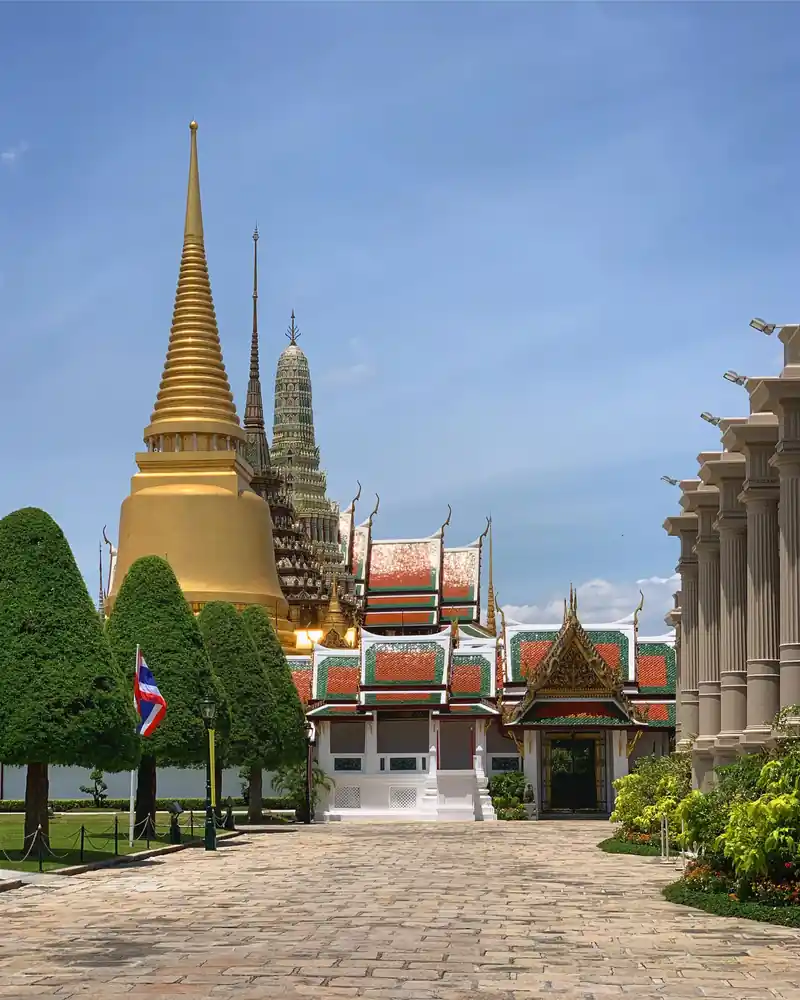
Emerald and Gold Inside the Walls of the Kingdom's Holiest Square Mile
Wat Phra Kaew (Temple of the Emerald Buddha) → Grand Palace → Wat Pho
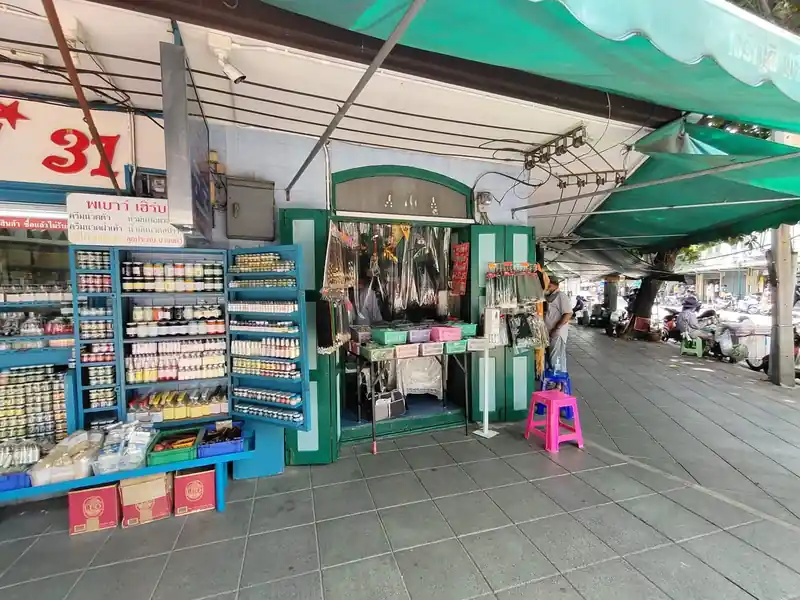
From Pocket-Sized Faith to a Golden Mount Rising Over the Old City
Amulet Market Bangkok → Bangkok National Museum → Wat Saket (Golden Mount) → Wat Ratchanatdaram (Loha Prasat – Metal Castle) → Wat Suthat Thepwararam
Gold Buddha, Neon Dragons, and a 300-Year-Old Courtyard Where Descendants Still Live
Yaowarat Road (Chinatown Bangkok) → Wat Traimit (Temple of the Golden Buddha) → So Heng Tai House
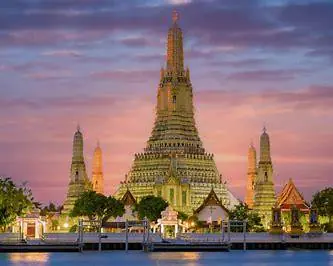
Across the River, from the Temple of Dawn to a Portuguese Catholic Village
Wat Arun (Temple of Dawn) → Santa Cruz Church Kudi Chin
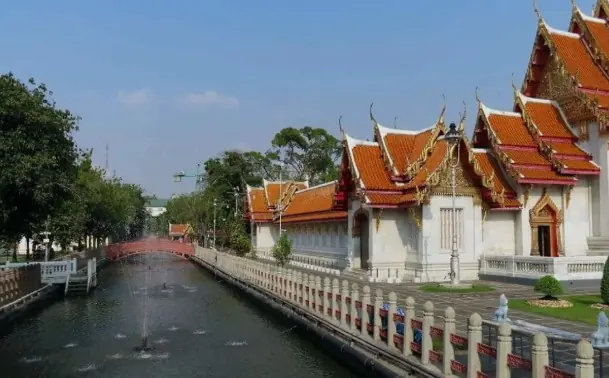
Marble, Teak, and a King Who Built Siam to Look Western
Wat Benchamabophit (The Marble Temple) → Ananta Samakhom Throne Hall → Vimanmek Mansion
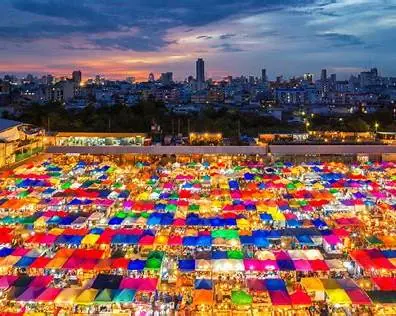
Two Markets Facing Each Other, One for Tourists, One for Everyone Else
Chatuchak Weekend Market (also “JJ Market”) → Or Tor Kor Market
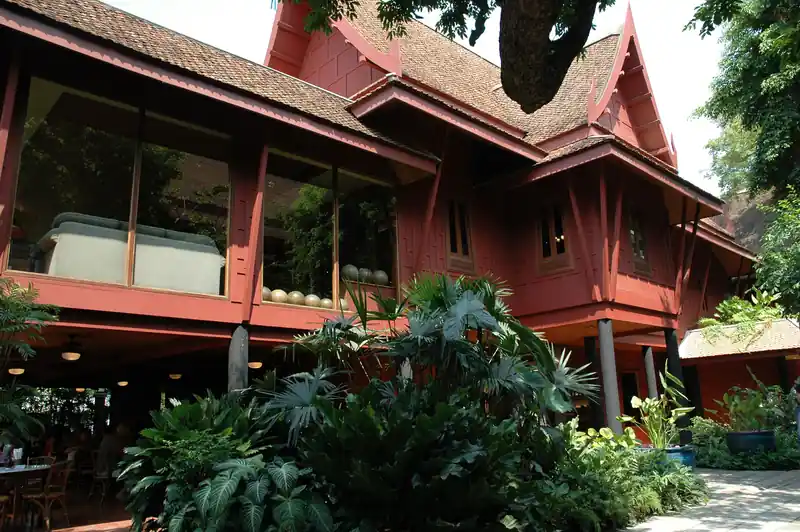
Silk, Spirits, and Contemporary Art Along Bangkok's Busiest Sidewalks
Jim Thompson House → Erawan Shrine → Bangkok Art and Culture Centre (BACC)
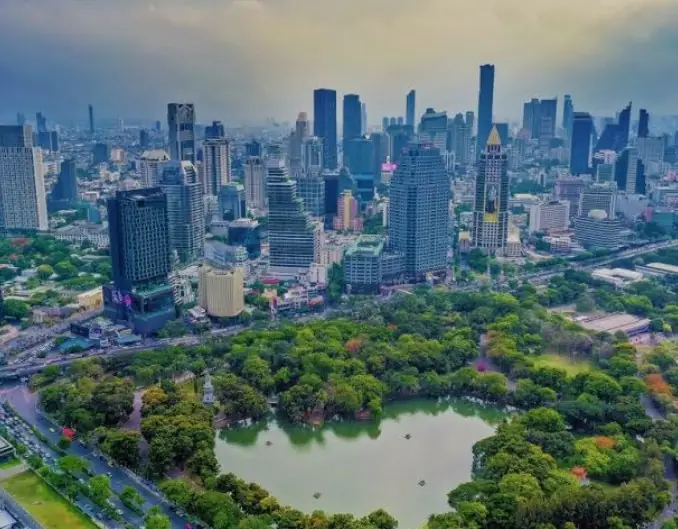
Two Parks Breathing Space Into a City Built on Concrete
Lumphini Park → Benjakitti Forest Park
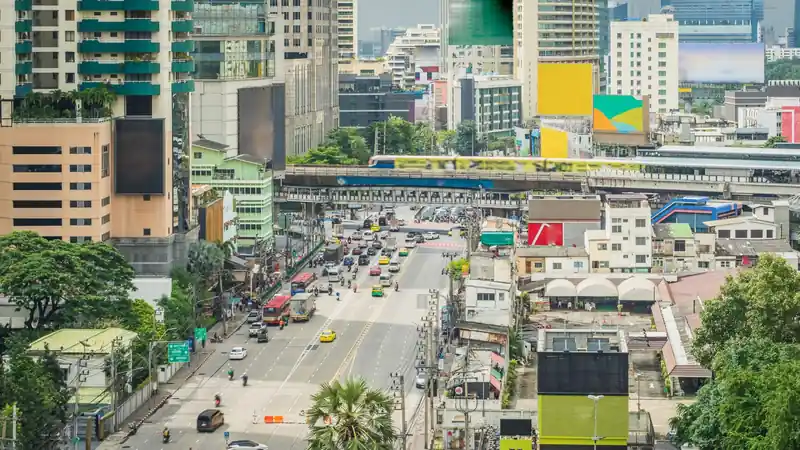
Crossing the City Above the Traffic, from One Glass Walkway to the Next
Asok Skywalk → Mahanakhon SkyWalk
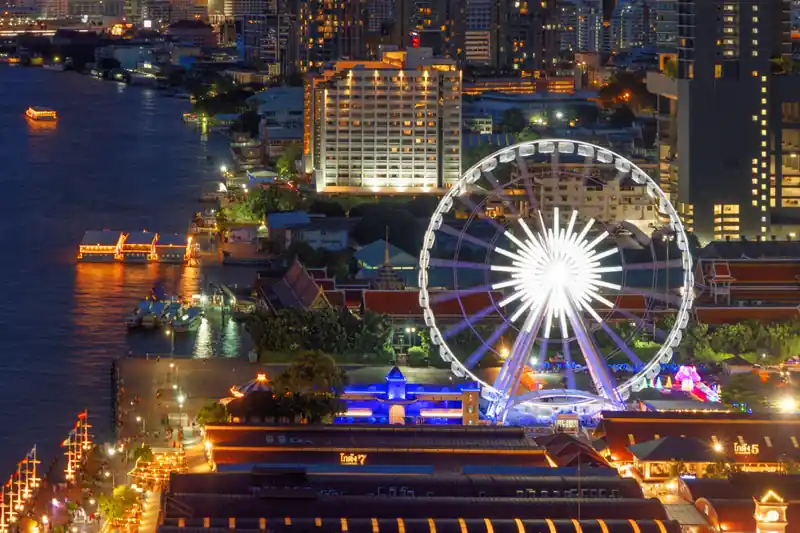
Two Riverfronts Reinvented as Shopping Destinations, Linked by Boat and Train
Asiatique The Riverfront → ICONSIAM
Places to Visit in Bangkok (28)
Click any landmark for opening hours, ticket prices, walking routes, and nearby attractions.
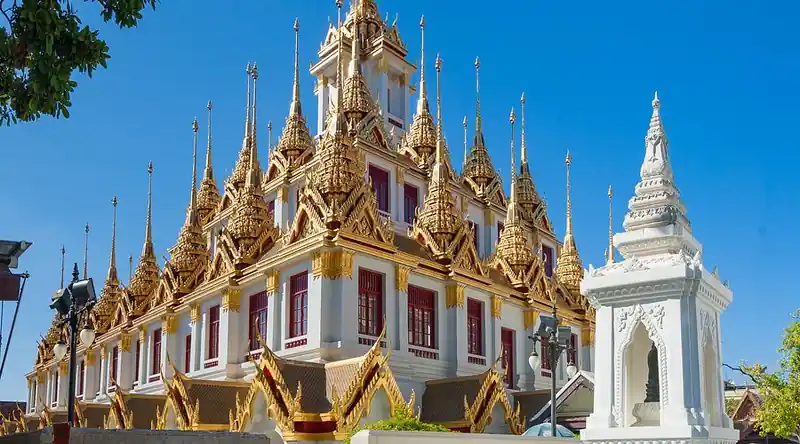
Wat Ratchanatdaram (Loha Prasat – Metal Castle)
One of Only Three Metal Castles Ever Built, and the Only One Still Standing -- The multi-tiered spire rising from Wat Ratchanatdaram is called the Loha Prasat, or Metal Castle, and belongs to an extremely rare building type: structures built almost entirely of metal rather than stone or brick, of which only three are recorded in history, in Sri Lanka, India, and Thailand, with the Thai example the only one still intact today. Commissioned by King Rama III in the 1840s, the structure rises through several receding tiers topped by 37 metal spires, a number chosen to represent the 37 virtues a Buddhist practitioner cultivates on the path to enlightenment. A narrow internal staircase spirals up through the tiers to a viewing platform near the top, one of the few points in old Bangkok where visitors can climb inside a centuries-old religious monument rather than simply view it from outside.
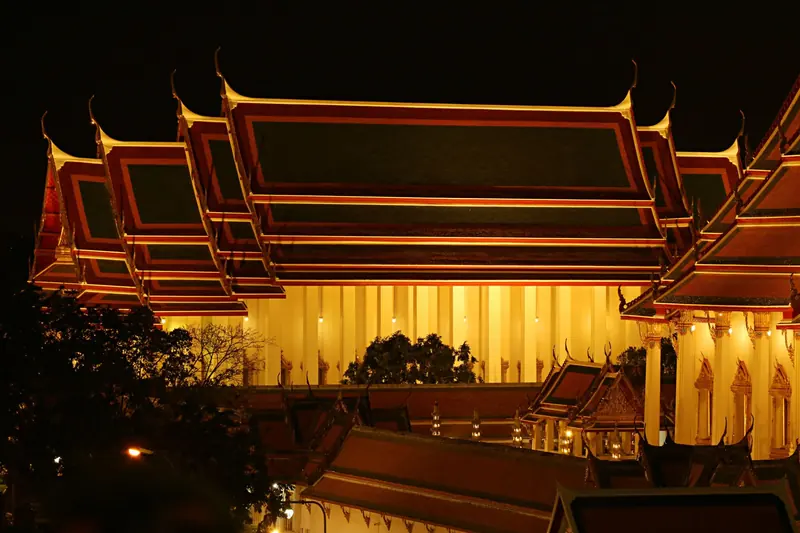
Wat Suthat Thepwararam
A Towering Swing that was Banned after it Killed Too Many Participants -- In front of Wat Suthat stands the Sao Ching Cha, a pair of tall red teak pillars that once held Thailand's giant ceremonial swing, used in an annual Brahminic ritual called the Triyampawai. In the ceremony, participants swung on a long rope and attempted to grab a bag of silver coins with their teeth from a pole some 15 meters in the air, a feat that produced a steady toll of fatal falls over the years. King Rama VII finally banned the swinging portion of the ceremony in the 1930s after yet another death, leaving the towering red frame standing as a monument to a tradition too dangerous to continue. The temple behind it houses one of Thailand's largest Buddha images and one of its most important collections of Thai mural paintings, overshadowed in most visitors' memories by the empty swing frame out front.
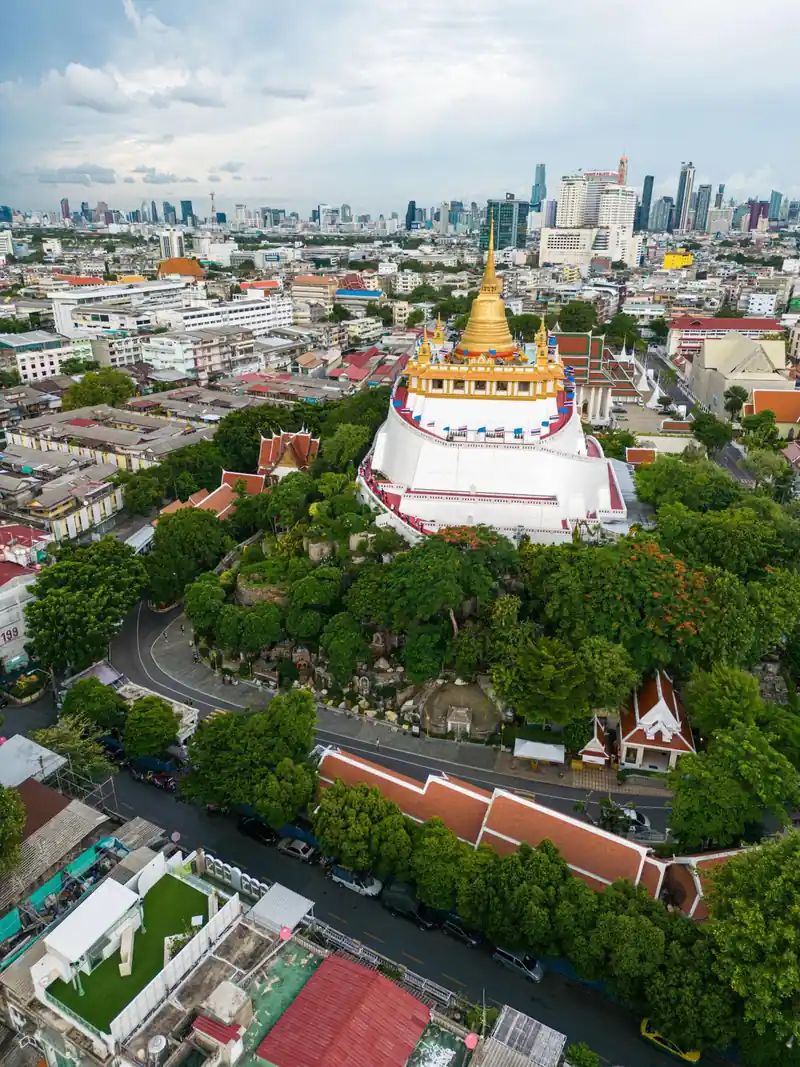
Wat Saket (Golden Mount)
A Golden Mount Born from a Construction Collapse, Rebuilt into a Religious Landmark -- The Golden Mount at Wat Saket is an artificial hill, not a natural one, and its origin traces to a construction failure: King Rama III ordered a large chedi built here in the early 1800s, but the soft Bangkok soil could not support the structure's weight, and it collapsed into a mound of brick and plaster rather than standing as planned. Rather than clear the debris, later builders under Rama IV and Rama V built directly on top of the ruined mound, eventually topping it with a golden chedi that now holds a relic of the Buddha said to have been given by the Indian government. Visitors climb 318 steps spiraling around the hill to reach the summit, which offers one of the few unobstructed panoramic views over Bangkok's older districts.
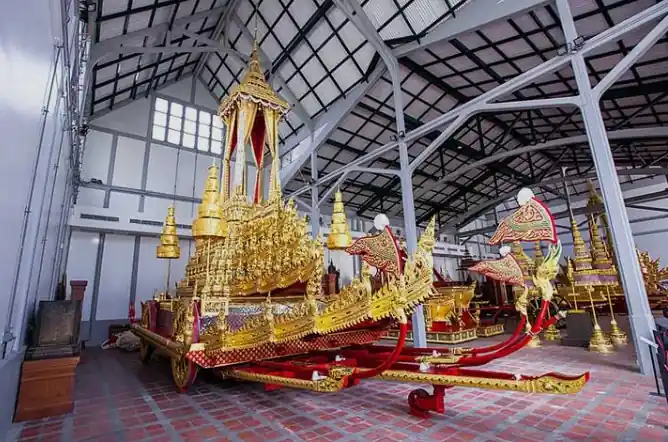
Bangkok National Museum
Thailand's Largest Museum, Housed in a Palace Built for a Rival 'Second King' -- The Bangkok National Museum occupies the former Wang Na, or Front Palace, a complex built in the late 18th century to house the Siamese monarchy's 'second king,' a formal deputy ruler position that existed alongside the main king during the early Chakri dynasty before being abolished in 1885. After the position ended, the palace grounds were converted into Thailand's national museum, now the largest in the country, holding collections that range from prehistoric artifacts to Buddhist sculpture. Among its most striking holdings are the royal funeral chariots, elaborately carved and gilded wooden vehicles built to carry the bodies of deceased kings and queens in cremation processions, still brought out of storage and used for state funerals today.
Wat Phra Kaew (Temple of the Emerald Buddha)
A Jade Statue the King Himself Re-Dresses Three Times a Year -- Despite its name, the Emerald Buddha enshrined at Wat Phra Kaew is carved not from emerald but from a single block of green jasper or jadeite, and its early history is as uncertain as its material: the most repeated legend places its discovery in 1434 in Chiang Rai, when lightning cracked open an unremarkable stucco stupa to reveal the green image hidden inside. The statue then passed through Lampang, Chiang Mai, Laos, and Vientiane over centuries of wars and royal successions before arriving in Bangkok in 1784. Today it sits at the ceremonial center of the Thai monarchy: the king personally presides over a ritual three times a year, at the change of each season, to switch the statue's gold costume between its summer, rainy-season, and winter sets.
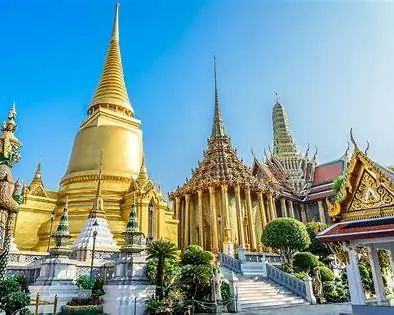
Grand Palace
A Palace Built to Announce a New Capital, Mixing Thai Temple Architecture with European Throne Halls -- The Grand Palace complex was built in 1782 when King Rama I moved the Siamese capital across the river from Thonburi to Bangkok, and its grounds still house Wat Phra Kaew, the temple of the Emerald Buddha, the kingdom's most sacred image. While the oldest buildings follow traditional Thai temple design, later 19th-century kings added European-style halls with domed roofs and columned facades, a deliberate blending that signaled Siam's modernization and its engagement with Western powers without ceding its own throne. The complex served as the official royal residence for roughly 150 years, and even though the king no longer lives there, it remains the ceremonial center of the monarchy, hosting coronations and state functions.
Amulet Market
A Street Market Where Tiny Clay Talismans Sell for More Than Fine Art -- The Amulet Market sprawls through the narrow lanes beside Wat Mahathat and Thammasat University, a dense warren of stalls where vendors sell phra kruang, small Buddhist amulets believed to grant protection, luck, or wealth to whoever carries them, examined by collectors through jeweler's loupes with the same intensity usually reserved for appraising gemstones. Most amulets sell for a few hundred baht, but rare examples, especially older pieces blessed by famous monks decades or centuries ago, can trade for sums running into the millions of baht, placing this cramped, unglamorous street market among the most valuable per-square-meter trading floors in the city, hidden in plain sight next to one of Thailand's most sacred temples. Buyers here range from monks and taxi drivers seeking everyday spiritual protection to serious collectors chasing specific molds and monk-blessings the way others chase vintage watches, making the market a rare place where religious devotion and speculative investment trade in the exact same tiny objects.
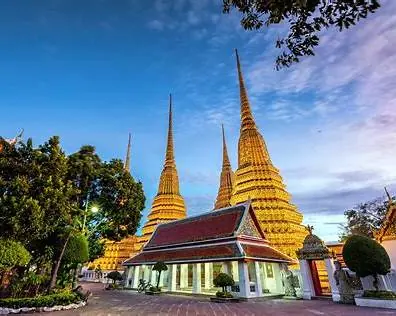
Wat Pho
Older Than Bangkok Itself, and the Birthplace of Traditional Thai Massage Education -- Wat Pho existed as a temple on this site before Bangkok became the capital in 1782, making it one of the city's oldest structures, and its grounds hold a reclining Buddha measuring 46 meters long and 15 meters high, so large that visitors walk alongside it rather than viewing it from a distance. Beyond its statuary, the temple functions as Thailand's traditional center for teaching Thai massage, a role formalized under King Rama III, who had medical and massage texts inscribed on stone tablets throughout the complex; UNESCO later recognized this inscribed body of knowledge as part of the Memory of the World. The massage school still operating on the grounds today traces its lineage directly back to that royal-era documentation effort.
Wat Benchamabophit (The Marble Temple)
The Only Major Bangkok Temple Built from Italian Marble -- Wat Benchamabophit was commissioned by King Rama V in the late 19th century after his tours of Europe, and he deliberately broke with tradition by having the entire ordination hall clad in white Carrara marble imported from Italy rather than the plastered brick typical of Thai temple construction, earning it the common name the Marble Temple. The building layers European engineering onto a Thai temple form: its windows are fitted with stained glass depicting scenes from Buddhist cosmology rather than Christian iconography, and its courtyard gallery houses over fifty Buddha images cast or copied from historic originals across Thailand, assembled as a kind of study collection of regional styles. The temple remains closely tied to the royal family, serving as the site of royal cremations and ceremonies.
Wat Arun (Temple of Dawn)
Named for the God of Dawn, Decorated with Broken Chinese Porcelain Used as Ship Ballast -- Wat Arun takes its name from Aruna, the Hindu god of dawn, yet despite the name it is not necessarily best viewed at sunrise -- many visitors find the temple's silhouette most striking from across the river at sunset, when its central prang catches the fading light. The spires are covered entirely in fragments of Chinese porcelain and seashells, a decorative technique born of practicality: Chinese ships arriving in Bangkok once used porcelain as ballast, and once unloaded, the broken or surplus pieces were donated to the temple rather than discarded. What looks like an elaborate ceramic mosaic designed from the start was actually assembled piecemeal from material that would otherwise have gone to waste.
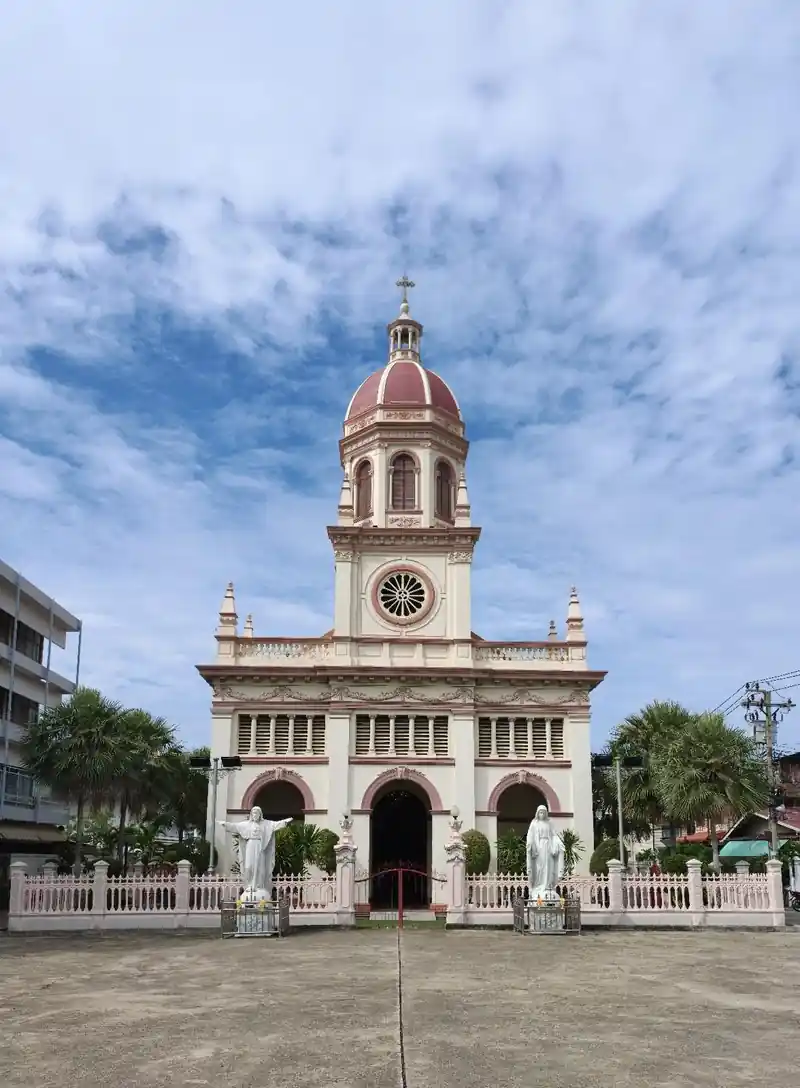
Santa Cruz Church
A 300-Year-Old Portuguese Cake Still Baked in a Catholic Quarter of a Buddhist Capital -- Santa Cruz Church anchors the Kudi Chin neighborhood, Thailand's oldest Catholic parish, established in the late 18th century on land granted by Thai King Taksin to Portuguese-descended soldiers who had fought alongside him against Burmese invaders after the fall of Ayutthaya, their reward a riverside plot where they could build their own church and keep their own faith inside an overwhelmingly Buddhist kingdom. Their descendants still live in the neighborhood today, and the community's signature food tradition, a dense, chewy cake called khanom farang kudi chin baked in a wood-fired brick oven using a recipe passed down largely unchanged since the Portuguese traders who first settled along the Chao Phraya in the 16th and 17th centuries, survives as one of the few living culinary links in Thailand to the earliest European contact with the kingdom, baked in the shadow of a church built by soldiers rewarded with religious freedom for fighting someone else's war.
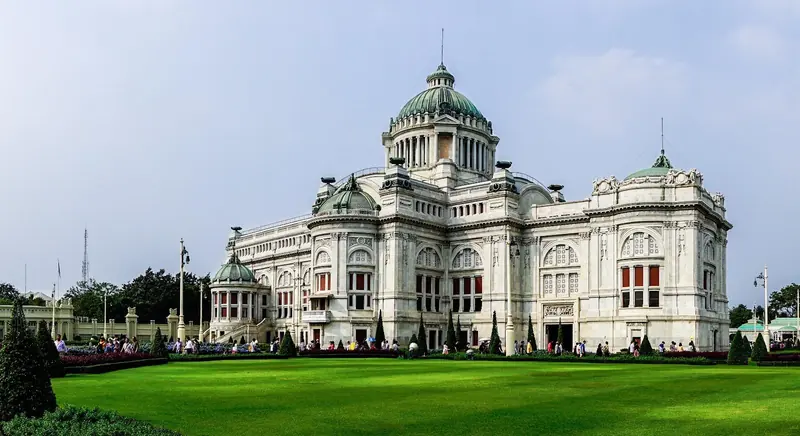
Ananta Samakhom Throne Hall
A Thai Royal Throne Hall Deliberately Built to Look Western, as a Defense Against Colonization -- Ananta Samakhom Throne Hall was commissioned by King Rama V and completed in 1915, an Italian Renaissance-style domed marble hall built using imported Carrara marble and designed by Italian architects, a building that looks, at first glance, as though it could stand in Rome or Vienna rather than Bangkok. The choice was deliberate and strategic rather than purely aesthetic: built during an era when Britain and France were actively carving up Southeast Asia into colonies, Rama V and his successors used European-style architecture, European-educated advisors, and a modernized government apparatus to present Siam as already civilized and modern by Western standards, making the kingdom harder to justify colonizing. The strategy worked, at least in part, since Thailand remains the only country in Southeast Asia never formally colonized by a European power, meaning this marble hall, built to resemble someone else's monarchy, stands today as physical evidence of a deliberate political performance that helped keep the kingdom independent.
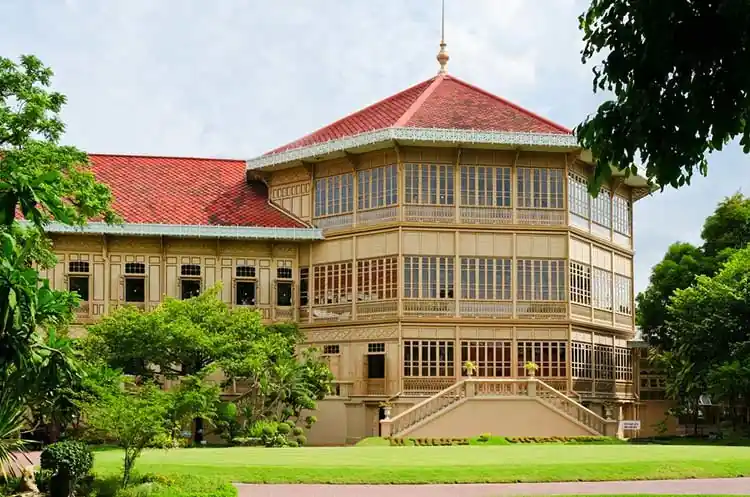
Vimanmek Mansion
The World's Largest Golden Teak Building, Assembled Without a Single Nail, and Also a Royal Residence that Once Floated Down a River -- Vimanmek Mansion was built in 1901 for King Rama V entirely out of golden teak wood, making it the largest teak building on Earth, and its construction relies not on a single nail but on traditional wooden joinery, with pegged and interlocking joints holding together three stories and dozens of rooms. The building itself has a history of movement rather than permanence, originally constructed on Koh Si Chang island, then entirely dismantled piece by piece, floated up the Chao Phraya River by barge, and reassembled on its current site in Dusit, meaning this royal residence physically migrated across Thailand before it ever hosted a single resident. King Rama V reportedly used it as his primary residence for several years while overseeing the construction of nearby Dusit Palace, before moving on, leaving behind a building that is simultaneously a carpentry marvel, a piece of relocated architecture, and today a museum of royal history.
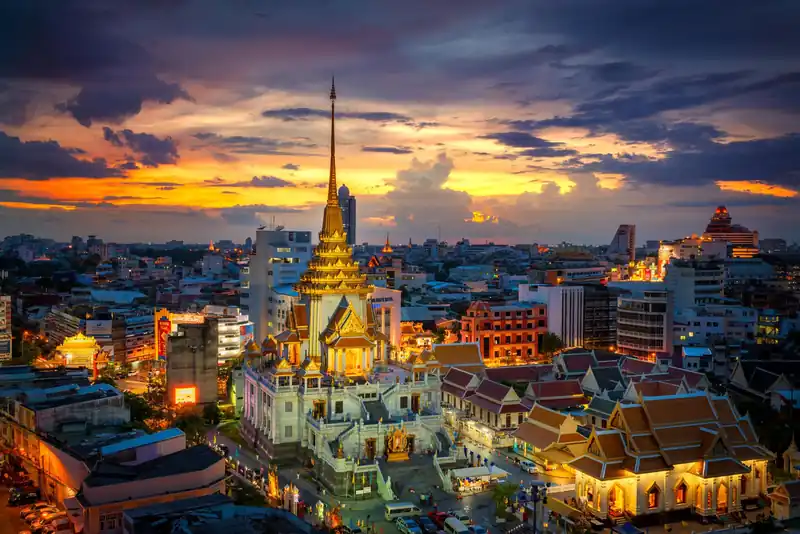
Wat Traimit (Temple of the Golden Buddha)
A Five-and-a-Half-Ton Gold Buddha That Hid Inside Plaster for Two Centuries -- Wat Traimit's main attraction is a seated Buddha image cast from roughly 5.5 tons of solid gold, but for most of its known history the statue was coated in a thick shell of stucco and colored glass, giving it the appearance of an unremarkable plaster image. Historians believe the disguise was deliberately applied, likely to protect the gold from looting during the Burmese sack of Ayutthaya in the 18th century, and it worked so well that the statue's true nature was forgotten for generations. The secret came out by accident in 1955, when workers moving the statue to a new building dropped it from a crane; the plaster cracked on impact, and gold gleamed through the fracture. It remains the largest solid-gold Buddha statue in the world.
Yaowarat Road (Chinatown Bangkok)
A Chinatown Born because the King Wanted the Land for his Palace -- Yaowarat Road is the spine of Bangkok's Chinatown, but the Chinese merchant community settled here not by choice so much as by relocation: when King Rama I founded Bangkok as the new capital in 1782, the Chinese traders who had been living on the chosen palace site were moved downriver to the Sampheng area, which grew into today's Yaowarat district. The street became, and remains, a center of gold trading, with shopfront after shopfront of gold shops reflecting a historical pattern in which Chinese merchant families kept their wealth in gold jewelry, both as a display of status and as a portable store of value that could survive political upheaval. At night the road transforms into one of the densest street-food corridors in the city, built on the same commercial foundation the relocated traders laid more than two centuries ago.
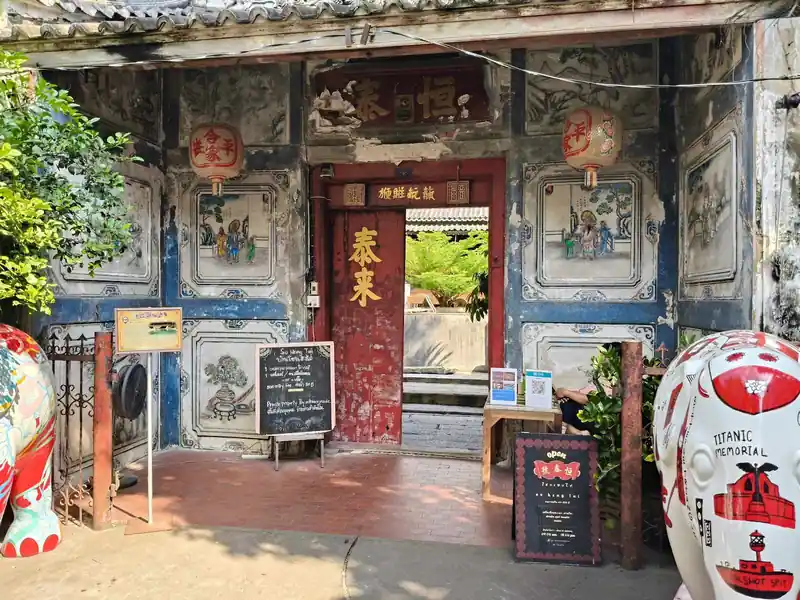
So Heng Tai House
A 300-Year-Old Chinese Ancestral Courtyard Where Tourists Now Bungee Jump Into the Family Pool -- So Heng Tai House is a Hokkien-style Chinese courtyard mansion built roughly three hundred years ago by immigrant traders who arrived in Bangkok during the reign of King Rama I, and it remains inhabited today by the eighth generation of the same family, making it one of the oldest continuously family-owned homes in the city. The open-air central courtyard, traditionally used for collecting rainwater and for ancestor-worship ceremonies honoring the family's Chinese forebears, now doubles as a swimming pool where visitors pay to try indoor bungee jumping, plunging on a bungee cord into the same enclosed space where the family has burned incense for their ancestors for three centuries. The current generation runs this unusual combination themselves, turning their own ancestral home into both a living family residence and an adventure sport venue, so that the courtyard where devotion to the dead was once performed now echoes with the screams of tourists in free fall.
Jim Thompson House
A Silk Revivalist's Home, Built from Six Relocated Teak Houses, Ending in an Unsolved Disappearance -- Jim Thompson was an American architect and former wartime intelligence officer who settled in Bangkok after World War II and is credited with reviving Thailand's declining silk-weaving industry into an internationally recognized export. His house, completed in 1959, was not built new but assembled from six traditional teak houses bought from different parts of central Thailand and reconstructed on this site, reversing the usual orientation of Thai houses so the best rooms faced the klong canal rather than the street. In 1967, Thompson vanished without a trace while walking in Malaysia's Cameron Highlands; no body, evidence, or confirmed explanation was ever found, and the disappearance remains officially unsolved, adding a layer of mystery to the collection of Southeast Asian art he left behind.
Bangkok Art and Culture Centre (BACC)
A Museum that Exists Because Activists Fought a Mall for the Land -- The Bangkok Art and Culture Centre occupies a site at the Pathumwan intersection, directly across from Siam Discovery and MBK Center, that for years was earmarked for yet another shopping mall before a sustained public campaign by artists and civic groups pushed the Bangkok Metropolitan Administration to instead build a contemporary art space on the land. The center finally opened in 2008 after roughly a decade of advocacy, delay, and political wrangling over its funding and purpose. Its building wraps nine floors around a central spiral atrium, a layout explicitly designed to reference the ramp of the Guggenheim Museum in New York, and it operates independently of government art institutions, giving it more latitude to show contemporary and sometimes politically pointed Thai work than state-run museums.
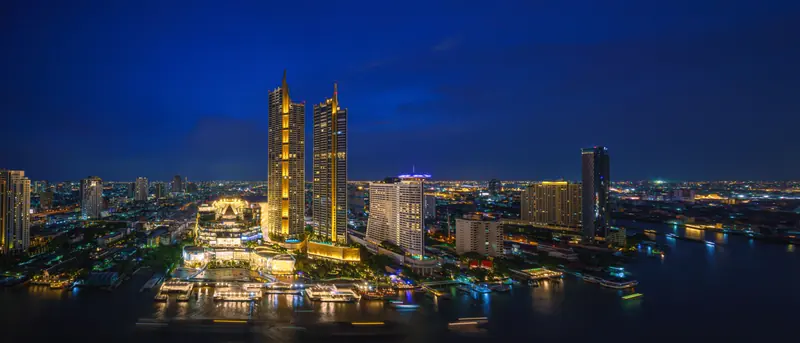
ICONSIAM
A Mall Built to Revive Bangkok's Less-Developed River Bank, with a Floating Market Indoors -- ICONSIAM opened in 2018 on the Thonburi side of the Chao Phraya River, a bank that had historically developed more slowly than the Bangkok side across the water, and its construction was explicitly framed by its developers as a joint-venture effort to draw investment and foot traffic toward that side of the river. Among its retail floors, the mall recreates an indoor floating market, SookSiam, with vendors in boats and stalls modeled on Thailand's regional markets, compressing produce and crafts from across the country into a single climate-controlled space. The project is now counted among the largest riverside developments in Southeast Asia, its scale intended less to compete with other Bangkok malls than to anchor a wider redevelopment of the Thonburi riverfront.
Asok Skywalk
A Walkway Built to Tame Bangkok's Most Congested Intersection -- Asok Skywalk is a segment of Bangkok's growing network of elevated pedestrian walkways, built to connect the Asok BTS Skytrain station directly with the Sukhumvit MRT subway interchange across the street without forcing pedestrians to cross at ground level through one of the city's most notoriously congested intersections. The walkway forms part of a broader strategy, repeated at several other BTS-MRT interchange points across Bangkok, to stitch together the city's elevated rail and underground systems with covered, air-conditioned pedestrian bridges that bypass street-level traffic entirely. For a city built around canals long before cars and still struggling with some of Southeast Asia's worst traffic, these skywalks function as a kind of second, elevated street grid layered above the first, letting commuters move between transit lines, office towers, and shopping centers almost without ever touching the pavement below.
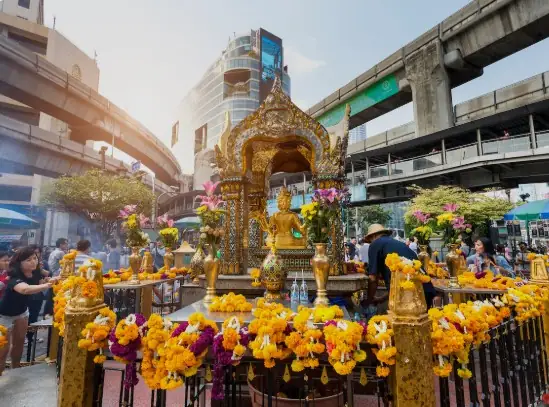
Erawan Shrine
A Shrine Built to Appease Bad Luck, Now Known for Hired Dancers and a 2015 Bombing -- The Erawan Shrine, dedicated to the four-faced Hindu creator god Brahma, known in Thai as Phra Phrom, was erected in 1956 after a string of construction accidents and worker injuries during the building of the adjacent Erawan Hotel; astrologers attributed the mishaps to bad spiritual timing in the hotel's foundation, and the shrine was installed to correct it, after which the construction problems reportedly stopped. The shrine became known for visitors who, upon having a wish granted, hire classical Thai dancers to perform at the site as a form of thanks, a transactional ritual now continuously staged throughout the day. In 2015 a bomb exploded at the shrine, killing more than twenty people in an attack whose motive and perpetrators were never definitively established, after which the shrine was repaired and reopened within weeks.
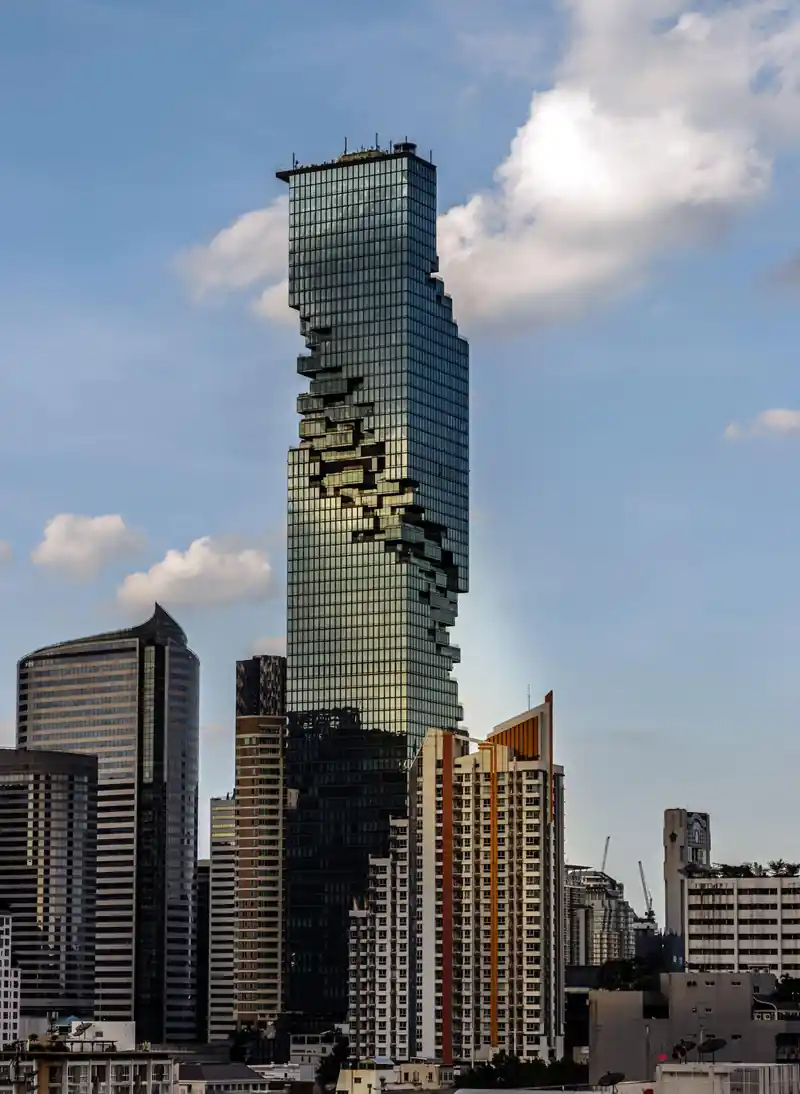
Mahanakhon SkyWalk
A Skyscraper Deliberately Designed to Look Unfinished -- King Power Mahanakhon's exterior is wrapped in a distinctive 'pixelated' pattern of jutting and receding glass-box units, a facade that gives the tower the appearance of a giant pixelated ribbon still being peeled away, a deliberate design choice rather than a construction defect. When it topped out in 2016, it briefly held the title of Thailand's tallest building before being surpassed by a newer tower just a few years later. Its SkyWalk observation deck occupies the upper floors and includes a glass floor section that lets visitors look straight down more than 300 meters to the street below, along with an open-air Skybar on the roof that is among the highest rooftop bars in the world. The building anchors the Silom financial district's skyline alongside the elevated BTS Skytrain line that runs past its base.
Lumphini Park
A Park Named After Buddha's Birthplace, Donated by a King, Now Home to Giant Monitor Lizards -- Lumphini Park takes its name from Lumbini in present-day Nepal, the birthplace of the Buddha, a naming choice made when King Rama VI donated this royal land for public use in the early 20th century, creating Bangkok's first public park. Today the park is as well known for its resident population of Asian water monitor lizards, some growing well over a meter long, as for its green space itself; the lizards roam freely along the lake's edges and have become an unofficial symbol of the park, equally beloved and startling to first-time visitors. Set apart from the traffic and density of the surrounding Silom and Sathorn business districts, the park functions as one of the few places where Bangkok's air and noise noticeably change.
Asiatique The Riverfront
A 19th-Century Trading Port Repurposed into a Riverside Night Market -- Asiatique The Riverfront occupies the former docks and warehouses of the Danish East Asiatic Company, a trading firm that operated a major import-export port on this stretch of the Chao Phraya River from the late 1800s, handling teak and rice exports that once anchored Bangkok's international trade. When the development opened in 2012, planners kept the industrial scale of the original warehouse structures and restored the port's old clock tower as a centerpiece, rather than demolishing the site for an entirely new building. The result is a shopping and dining complex that layers modern retail directly onto more than a century of shipping history, with the Chao Phraya still running past it exactly as it did when cargo boats, not tourists, were the main traffic.
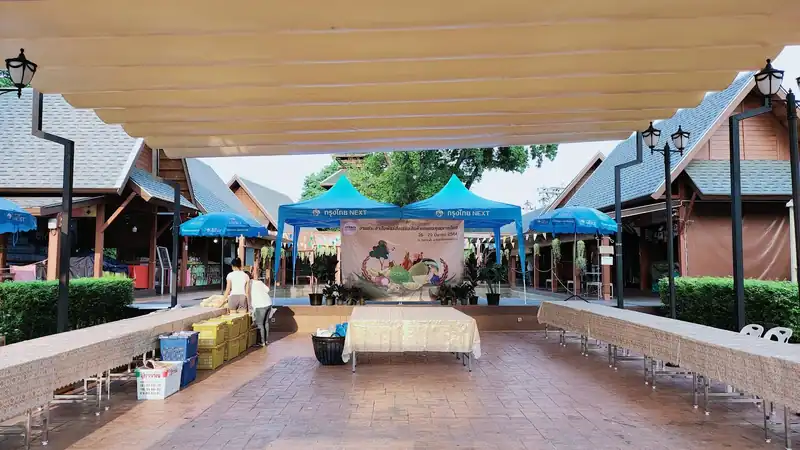
Or Tor Kor Market
One of the World's Best Food Markets, Overlooked Because It Sits Across the Street From a More Famous One -- Or Tor Kor Market has repeatedly been named among the best fresh food markets on the planet by international food publications, praised for its immaculately clean stalls, pristine seafood displays, and some of the highest-quality Thai produce, ready-to-eat dishes, and tropical fruit available anywhere in Bangkok, favored by professional chefs and serious home cooks over flashier tourist markets. Yet it sits almost literally across the street from Chatuchak Weekend Market, one of the largest and most visited markets in the world, whose sheer scale and reputation pulls the overwhelming majority of tourist foot traffic, leaving Or Tor Kor as the market locals quietly prefer while visitors crowd into its far more chaotic neighbor across the road. The two markets function almost like inverse images of each other within sight of one another, one world-famous and touristy, the other critically acclaimed and comparatively empty of tourists, separated by nothing more than a single street.
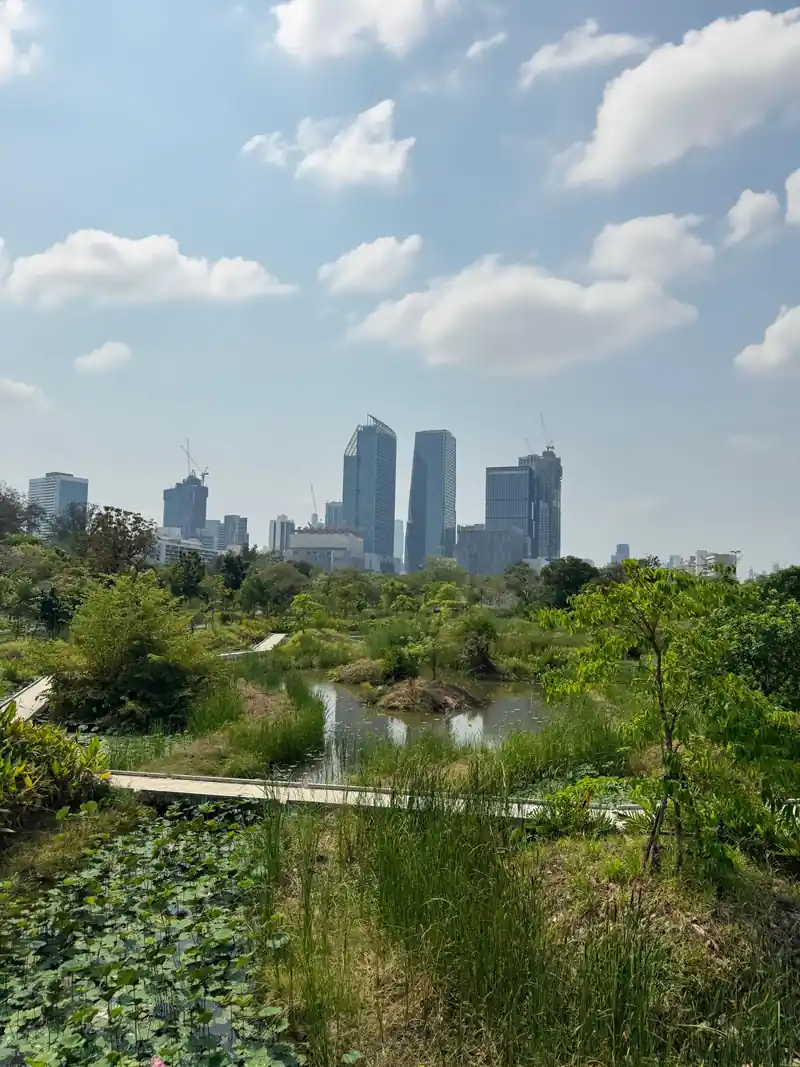
Benjakitti Forest Park
A Park Grown on the Ashes of a State Cigarette Factory -- Benjakitti Forest Park occupies land that once held the Thailand Tobacco Monopoly's cigarette manufacturing complex, a state-run factory that operated in the heart of the city for decades before being relocated and the site repurposed as green space beginning in the 1990s. The park expanded significantly in a major phase completed in 2022, adding a wetland forest section built around reclaimed water-treatment ponds that now host boardwalks winding through planted mangrove and swamp forest species, an unusual piece of constructed wetland ecology for a central business district. It sits directly beside the Queen Sirikit National Convention Center, so the park functions as a green buffer between Bangkok's financial and exhibition district and the elevated Benjakitti Park skywalk that connects to Lumphini Park beyond it, part of a broader effort to stitch together the CBD's fragmented green spaces.
Chatuchak Weekend Market (also “JJ Market”)
A Market Born from a Government Policy to Consolidate Bangkok's Scattered Vendors -- Chatuchak Weekend Market traces its origin to 1942, when the Thai government under Prime Minister Plaek Phibunsongkhram ordered that every province hold a weekly market, intending to organize the informal vendors scattered across Bangkok's streets rather than let them operate independently. Over the following decades, these consolidated markets gradually moved and merged until settling at the current Chatuchak location in the 1980s, growing into one of the largest weekend markets in the world, with an estimated 15,000 stalls packed into a grid of numbered sections covering everything from antiques to live animals. What began as a bureaucratic effort to bring order to street vending became one of the most disorienting, maze-like shopping experiences in Southeast Asia.
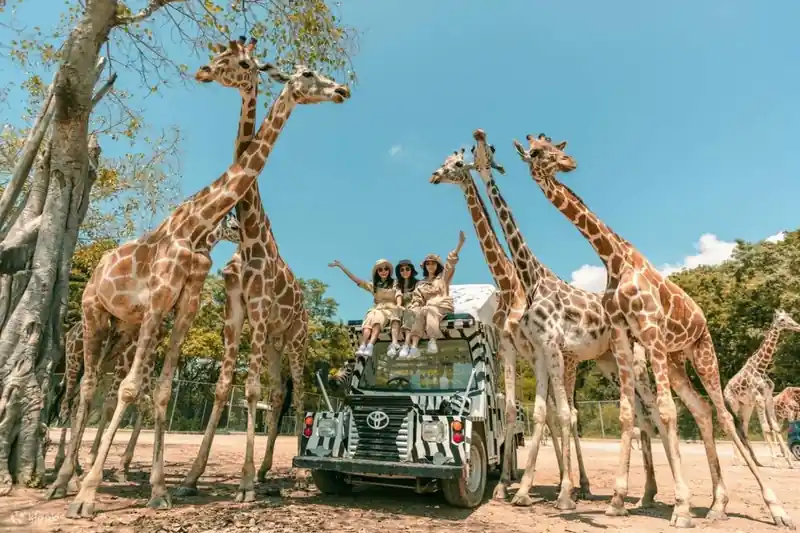
Safari World Bangkok
A Park Where Visitors Drive Their Own Car Past Free-Roaming Lions -- Safari World combines a drive-through safari park with a separate marine park on the same grounds, and its signature feature is that visitors can steer their own vehicle along a looped road through enclosures where lions, giraffes, zebras, and other large animals roam without cages or barriers between them and the cars, a format shared by only a handful of parks in Thailand. The marine park section runs separate dolphin and orangutan shows on a conventional stage format. The park has drawn repeated scrutiny from animal welfare organizations over training methods and enclosure conditions for its show animals, controversy that has shadowed its operations even as it remains one of Bangkok's longest-running wildlife attractions, open since 1988 on the eastern edge of the city.
