Bangkok Recommended Course

Gold Buddha, Neon Dragons, and a 300-Year-Old Courtyard Where Descendants Still Live

Gold Buddha, Neon Dragons, and a 300-Year-Old Courtyard Where Descendants Still Live β€” Bangkok: Yaowarat Road (Chinatown Bangkok) β†’ Wat Traimit (Temple of the Golden Buddha) β†’ So Heng Tai House.

⏱ Total Duration: 3h 11m πŸ“ 3 Stops 🚢 Total Route Distance: 781 m
Follow Route on iOS App Follow Route on Android App
Gold Buddha, Neon Dragons, and a 300-Year-Old Courtyard Where Descendants Still Live
Interactive Route Map

Course Route Map (3 Stops · 3h 11m)

Step-by-Step Route

Course Itinerary & Walking / Transit Directions

Tap any landmark to check full opening hours, admission fees, and nearby spots.

Yaowarat Road (Chinatown Bangkok)

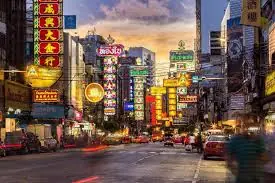
A Chinatown Born because the King Wanted the Land for his Palace -- Yaowarat Road is the spine of Bangkok's Chinatown, but the Chinese merchant community settled here not by choice so much as by relocation: when King Rama I founded Bangkok as the new capital in 1782, the Chinese traders who had been living on the chosen palace site were moved downriver to the Sampheng area, which grew into today's Yaowarat district. The street became, and remains, a center of gold trading, with shopfront after shopfront of gold shops reflecting a historical pattern in which Chinese merchant families kept their wealth in gold jewelry, both as a display of status and as a portable store of value that could survive political upheaval. At night the road transforms into one of the densest street-food corridors in the city, built on the same commercial foundation the relocated traders laid more than two centuries ago.
πŸ•’ Open daily (public street) Food stalls mainly active in the evening 🎟 Free Place Guide →
🚢 Walking 2 min · 115 m
Wat Traimit (Temple of the Golden Buddha)

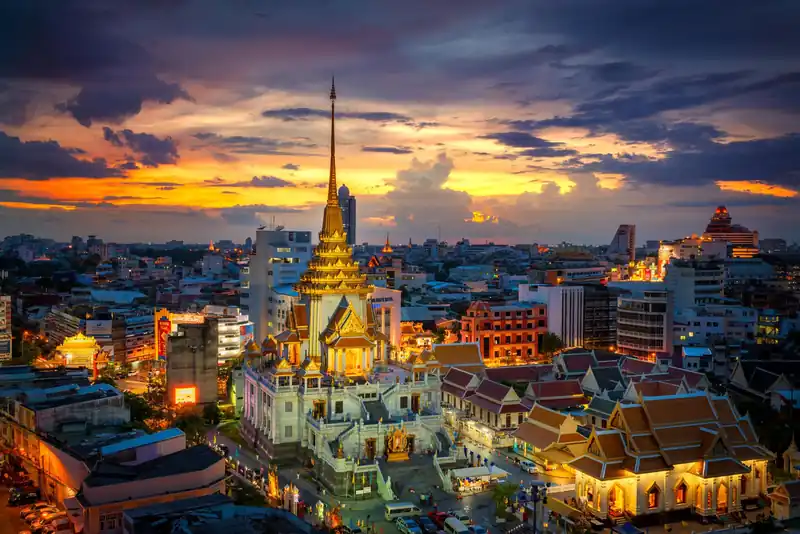
A Five-and-a-Half-Ton Gold Buddha That Hid Inside Plaster for Two Centuries -- Wat Traimit's main attraction is a seated Buddha image cast from roughly 5.5 tons of solid gold, but for most of its known history the statue was coated in a thick shell of stucco and colored glass, giving it the appearance of an unremarkable plaster image. Historians believe the disguise was deliberately applied, likely to protect the gold from looting during the Burmese sack of Ayutthaya in the 18th century, and it worked so well that the statue's true nature was forgotten for generations. The secret came out by accident in 1955, when workers moving the statue to a new building dropped it from a crane; the plaster cracked on impact, and gold gleamed through the fracture. It remains the largest solid-gold Buddha statue in the world.

πŸ•’ 08:00 – 17:00 🎟 40 THB (Golden Buddha hall) Place Guide →
🚢 Walking 9 min · 666 m
So Heng Tai House

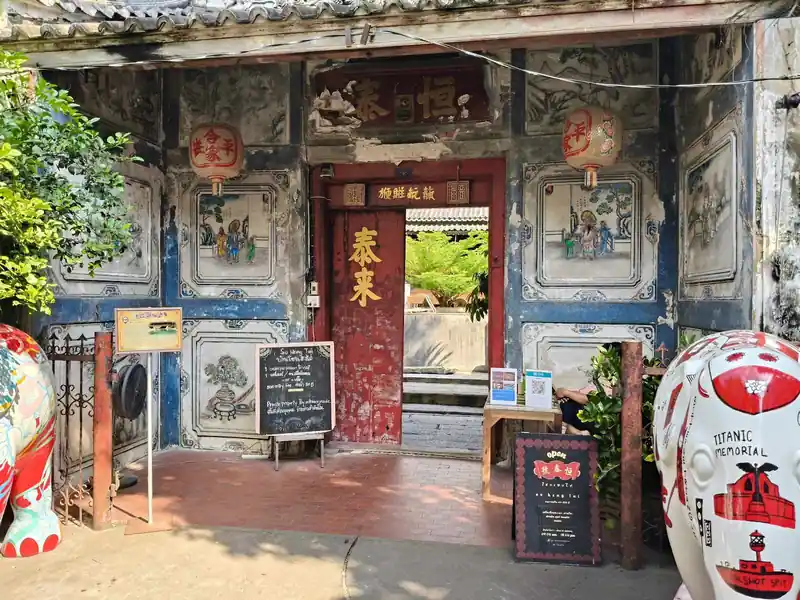
A 300-Year-Old Chinese Ancestral Courtyard Where Tourists Now Bungee Jump Into the Family Pool -- So Heng Tai House is a Hokkien-style Chinese courtyard mansion built roughly three hundred years ago by immigrant traders who arrived in Bangkok during the reign of King Rama I, and it remains inhabited today by the eighth generation of the same family, making it one of the oldest continuously family-owned homes in the city. The open-air central courtyard, traditionally used for collecting rainwater and for ancestor-worship ceremonies honoring the family's Chinese forebears, now doubles as a swimming pool where visitors pay to try indoor bungee jumping, plunging on a bungee cord into the same enclosed space where the family has burned incense for their ancestors for three centuries. The current generation runs this unusual combination themselves, turning their own ancestral home into both a living family residence and an adventure sport venue, so that the courtyard where devotion to the dead was once performed now echoes with the screams of tourists in free fall.

πŸ•’ Open daily 🎟 Free Place Guide →
More Itineraries

Other Recommended Courses in Bangkok

Back to Bangkok Guide →
⏱ 3h 18m 3 Stops

Emerald and Gold Inside the Walls of the Kingdom's Holiest Square Mile

Wat Phra Kaew (Temple of the Emerald Buddha) β†’ Grand Palace β†’ Wat Pho

⏱ 5h 58m 5 Stops

From Pocket-Sized Faith to a Golden Mount Rising Over the Old City

Amulet Market Bangkok β†’ Bangkok National Museum β†’ Wat Saket (Golden Mount) β†’ Wat Ratchanatdaram (Loha Prasat – Metal Castle) β†’ Wat Suthat Thepwararam

⏱ 2h 21m 2 Stops

Across the River, from the Temple of Dawn to a Portuguese Catholic Village

Wat Arun (Temple of Dawn) β†’ Santa Cruz Church Kudi Chin

⏱ 3h 21m 3 Stops

Marble, Teak, and a King Who Built Siam to Look Western

Wat Benchamabophit (The Marble Temple) β†’ Ananta Samakhom Throne Hall β†’ Vimanmek Mansion

⏱ 2h 20m 2 Stops

Two Markets Facing Each Other, One for Tourists, One for Everyone Else

Chatuchak Weekend Market (also β€œJJ Market”) β†’ Or Tor Kor Market

⏱ 3h 44m 3 Stops

Silk, Spirits, and Contemporary Art Along Bangkok's Busiest Sidewalks

Jim Thompson House β†’ Erawan Shrine β†’ Bangkok Art and Culture Centre (BACC)

⏱ 2h 28m 2 Stops

Two Parks Breathing Space Into a City Built on Concrete

Lumphini Park β†’ Benjakitti Forest Park

⏱ 2h 23m 2 Stops

Crossing the City Above the Traffic, from One Glass Walkway to the Next

Asok Skywalk β†’ Mahanakhon SkyWalk

⏱ 2h 22m 2 Stops

Two Riverfronts Reinvented as Shopping Destinations, Linked by Boat and Train

Asiatique The Riverfront β†’ ICONSIAM

Plan & Navigate Your Trip with MyGuide

Explore 1,500+ cities, 10,000+ landmarks, step-by-step walking & transit itineraries, and chat with verified local tour hosts in 16 languages.