Grand Palace
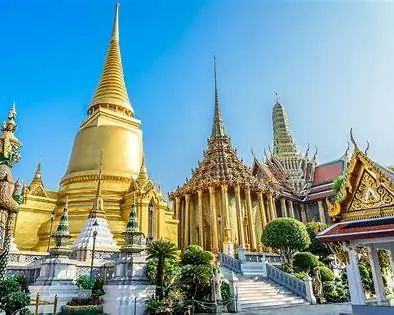
A Palace Built to Announce a New Capital, Mixing Thai Temple Architecture with European Throne Halls -- The Grand Palace complex was built in 1782 when King Rama I moved the Siamese capital across the river from Thonburi to Bangkok, and its grounds still house Wat Phra Kaew, the temple of the Emerald Buddha, the kingdom's most sacred image. While the oldest buildings follow traditional Thai temple design, later 19th-century kings added European-style halls with domed roofs and columned facades, a deliberate blending that signaled Siam's modernization and its engagement with Western powers without ceding its own throne. The complex served as the official royal residence for roughly 150 years, and even though the king no longer lives there, it remains the ceremonial center of the monarchy, hosting coronations and state functions.
Visitor Information & Practical Details
- Place NameGrand Palace
- AddressNa Phra Lan Rd, Phra Nakhon, Bangkok, Thailand
- Opening HoursOpen daily 08:30–15:30 approx. (hours subject to change due to royal ceremonies)
- Admission / PriceApprox. 500 THB for foreign visitors (current standard ticket price)
- Phone+66-2-623-5500
- Official Websitehttps://www.royalgrandpalace.th/en/home
- GPS Coordinates13.75010, 100.49200
Best Itinerary Visiting Grand Palace
Combine Grand Palace with nearby landmarks using our step-by-step walking and transit route.
Places Near Grand Palace
Build your own custom walking route in the MyGuide app by combining these nearby stops.
Wat Phra Kaew (Temple of the Emerald Buddha)
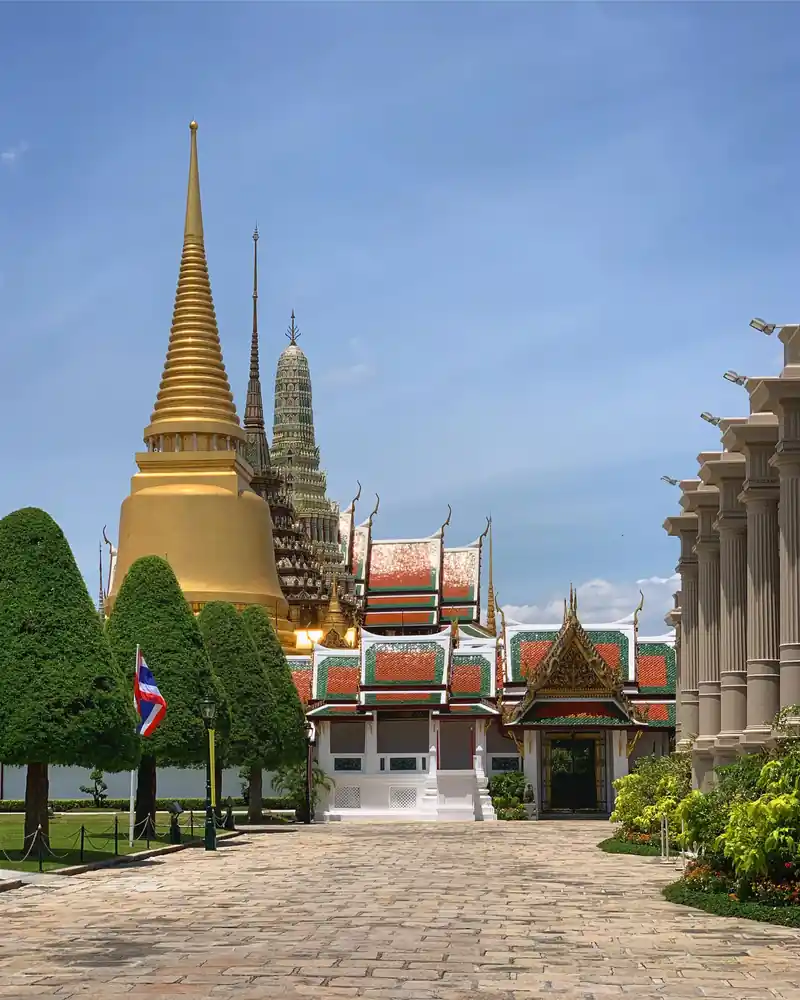
A Jade Statue the King Himself Re-Dresses Three Times a Year -- Despite its name, the Emerald Buddha enshrined at Wat Phra Kaew is carved not from emerald but from a single block of green jasper or jadeite, and its early history is as uncertain as its material: the most repeated legend places its discovery in 1434 in Chiang Rai, when lightning cracked open an unremarkable stucco stupa to reveal the green image hidden inside. The statue then passed through Lampang, Chiang Mai, Laos, and Vientiane over centuries of wars and royal successions before arriving in Bangkok in 1784. Today it sits at the ceremonial center of the Thai monarchy: the king personally presides over a ritual three times a year, at the change of each season, to switch the statue's gold costume between its summer, rainy-season, and winter sets.
Wat Pho
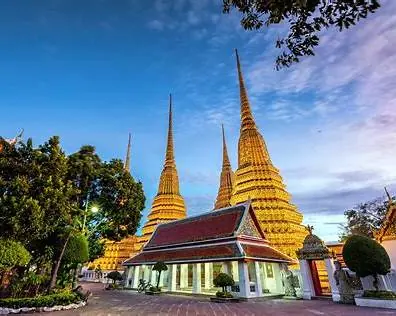
Older Than Bangkok Itself, and the Birthplace of Traditional Thai Massage Education -- Wat Pho existed as a temple on this site before Bangkok became the capital in 1782, making it one of the city's oldest structures, and its grounds hold a reclining Buddha measuring 46 meters long and 15 meters high, so large that visitors walk alongside it rather than viewing it from a distance. Beyond its statuary, the temple functions as Thailand's traditional center for teaching Thai massage, a role formalized under King Rama III, who had medical and massage texts inscribed on stone tablets throughout the complex; UNESCO later recognized this inscribed body of knowledge as part of the Memory of the World. The massage school still operating on the grounds today traces its lineage directly back to that royal-era documentation effort.
Amulet Market
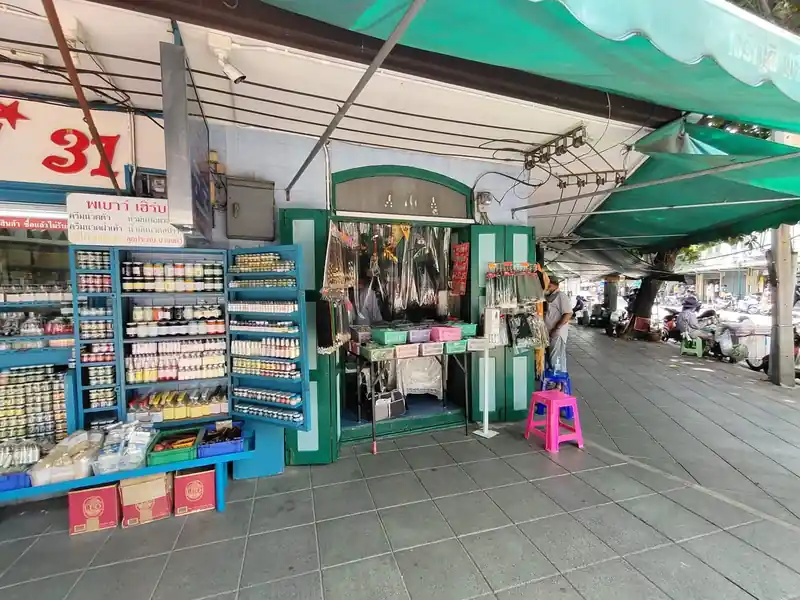
A Street Market Where Tiny Clay Talismans Sell for More Than Fine Art -- The Amulet Market sprawls through the narrow lanes beside Wat Mahathat and Thammasat University, a dense warren of stalls where vendors sell phra kruang, small Buddhist amulets believed to grant protection, luck, or wealth to whoever carries them, examined by collectors through jeweler's loupes with the same intensity usually reserved for appraising gemstones. Most amulets sell for a few hundred baht, but rare examples, especially older pieces blessed by famous monks decades or centuries ago, can trade for sums running into the millions of baht, placing this cramped, unglamorous street market among the most valuable per-square-meter trading floors in the city, hidden in plain sight next to one of Thailand's most sacred temples. Buyers here range from monks and taxi drivers seeking everyday spiritual protection to serious collectors chasing specific molds and monk-blessings the way others chase vintage watches, making the market a rare place where religious devotion and speculative investment trade in the exact same tiny objects.
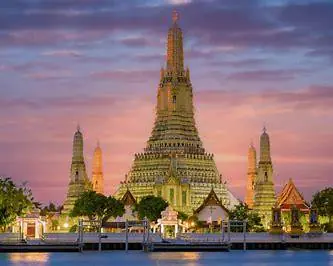
Wat Arun (Temple of Dawn)
Named for the God of Dawn, Decorated with Broken Chinese Porcelain Used as Ship Ballast -- Wat Arun takes its name from Aruna, the Hindu god of dawn, yet despite the name it is not necessarily best viewed at sunrise -- many visitors find the temple's silhouette most striking from across the river at sunset, when its central prang catches the fading light. The spires are covered entirely in fragments of Chinese porcelain and seashells, a decorative technique born of practicality: Chinese ships arriving in Bangkok once used porcelain as ballast, and once unloaded, the broken or surplus pieces were donated to the temple rather than discarded. What looks like an elaborate ceramic mosaic designed from the start was actually assembled piecemeal from material that would otherwise have gone to waste.
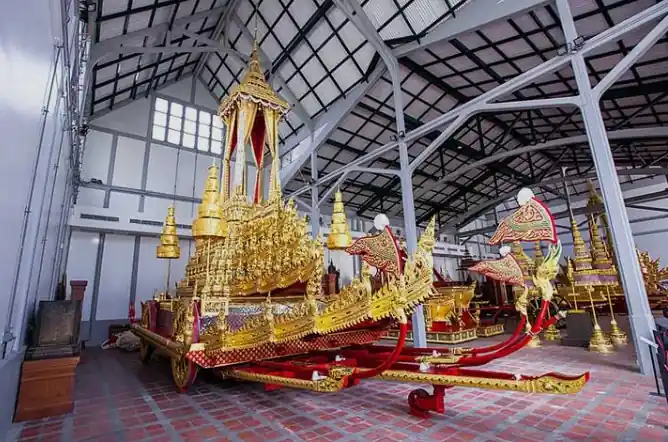
Bangkok National Museum
Thailand's Largest Museum, Housed in a Palace Built for a Rival 'Second King' -- The Bangkok National Museum occupies the former Wang Na, or Front Palace, a complex built in the late 18th century to house the Siamese monarchy's 'second king,' a formal deputy ruler position that existed alongside the main king during the early Chakri dynasty before being abolished in 1885. After the position ended, the palace grounds were converted into Thailand's national museum, now the largest in the country, holding collections that range from prehistoric artifacts to Buddhist sculpture. Among its most striking holdings are the royal funeral chariots, elaborately carved and gilded wooden vehicles built to carry the bodies of deceased kings and queens in cremation processions, still brought out of storage and used for state funerals today.
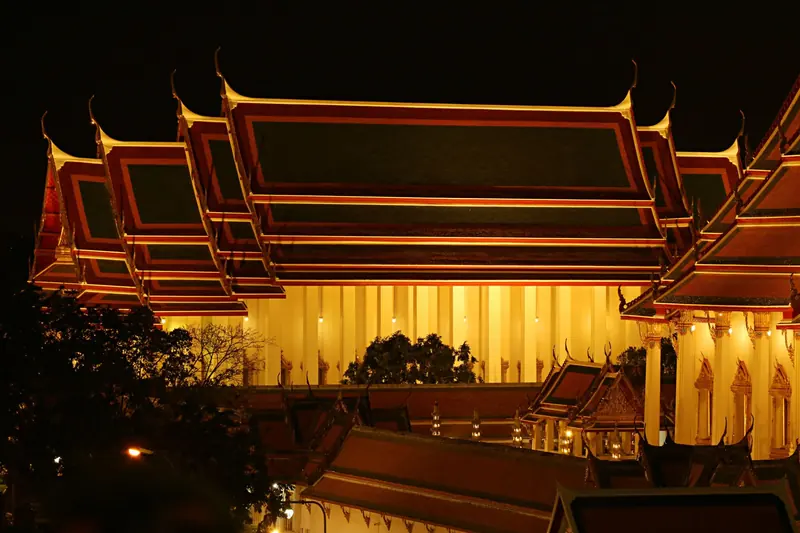
Wat Suthat Thepwararam
A Towering Swing that was Banned after it Killed Too Many Participants -- In front of Wat Suthat stands the Sao Ching Cha, a pair of tall red teak pillars that once held Thailand's giant ceremonial swing, used in an annual Brahminic ritual called the Triyampawai. In the ceremony, participants swung on a long rope and attempted to grab a bag of silver coins with their teeth from a pole some 15 meters in the air, a feat that produced a steady toll of fatal falls over the years. King Rama VII finally banned the swinging portion of the ceremony in the 1930s after yet another death, leaving the towering red frame standing as a monument to a tradition too dangerous to continue. The temple behind it houses one of Thailand's largest Buddha images and one of its most important collections of Thai mural paintings, overshadowed in most visitors' memories by the empty swing frame out front.
