Wat Benchamabophit (The Marble Temple)
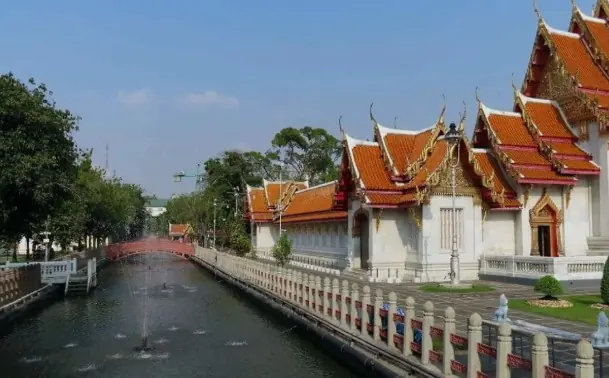
The Only Major Bangkok Temple Built from Italian Marble -- Wat Benchamabophit was commissioned by King Rama V in the late 19th century after his tours of Europe, and he deliberately broke with tradition by having the entire ordination hall clad in white Carrara marble imported from Italy rather than the plastered brick typical of Thai temple construction, earning it the common name the Marble Temple. The building layers European engineering onto a Thai temple form: its windows are fitted with stained glass depicting scenes from Buddhist cosmology rather than Christian iconography, and its courtyard gallery houses over fifty Buddha images cast or copied from historic originals across Thailand, assembled as a kind of study collection of regional styles. The temple remains closely tied to the royal family, serving as the site of royal cremations and ceremonies.
Visitor Information & Practical Details
- Place NameWat Benchamabophit (The Marble Temple)
- Address69 Rama V Rd, Dusit, Bangkok 10300, Thailand
- Opening Hours08:00 – 17:30
- Admission / Price50 THB
- PhoneNot listed
- Official Websitehttps://www.tourismthailand.org/Attraction/wat-benchamabophit
- GPS Coordinates13.76672, 100.51411
Best Itinerary Visiting Wat Benchamabophit (The Marble Temple)
Combine Wat Benchamabophit (The Marble Temple) with nearby landmarks using our step-by-step walking and transit route.
Places Near Wat Benchamabophit (The Marble Temple)
Build your own custom walking route in the MyGuide app by combining these nearby stops.
Ananta Samakhom Throne Hall
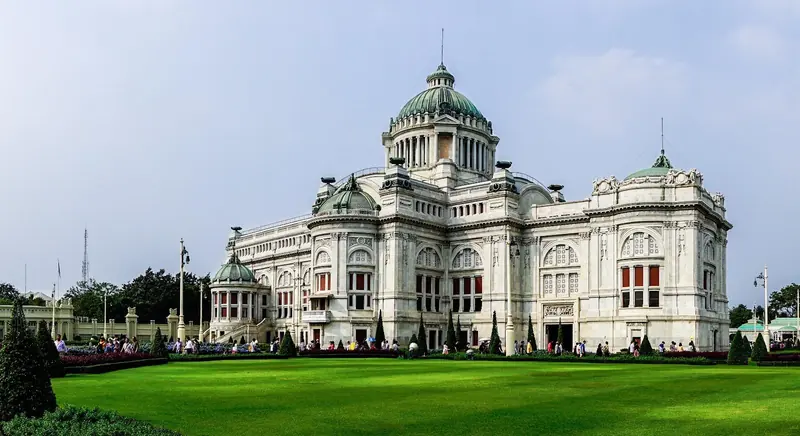
A Thai Royal Throne Hall Deliberately Built to Look Western, as a Defense Against Colonization -- Ananta Samakhom Throne Hall was commissioned by King Rama V and completed in 1915, an Italian Renaissance-style domed marble hall built using imported Carrara marble and designed by Italian architects, a building that looks, at first glance, as though it could stand in Rome or Vienna rather than Bangkok. The choice was deliberate and strategic rather than purely aesthetic: built during an era when Britain and France were actively carving up Southeast Asia into colonies, Rama V and his successors used European-style architecture, European-educated advisors, and a modernized government apparatus to present Siam as already civilized and modern by Western standards, making the kingdom harder to justify colonizing. The strategy worked, at least in part, since Thailand remains the only country in Southeast Asia never formally colonized by a European power, meaning this marble hall, built to resemble someone else's monarchy, stands today as physical evidence of a deliberate political performance that helped keep the kingdom independent.
Vimanmek Mansion
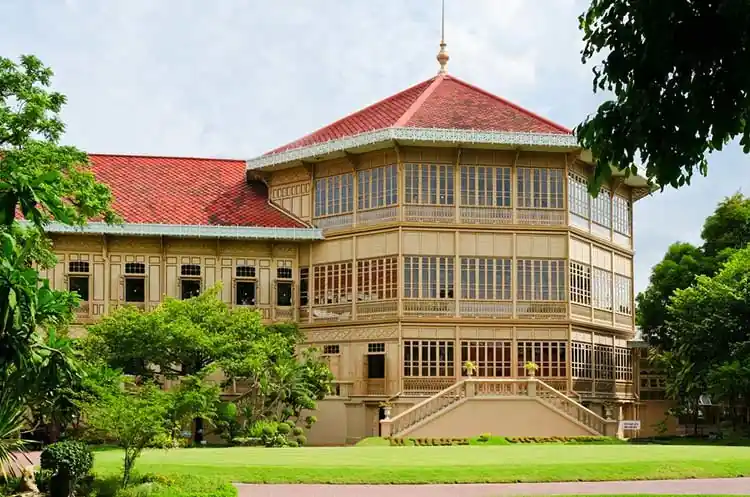
The World's Largest Golden Teak Building, Assembled Without a Single Nail, and Also a Royal Residence that Once Floated Down a River -- Vimanmek Mansion was built in 1901 for King Rama V entirely out of golden teak wood, making it the largest teak building on Earth, and its construction relies not on a single nail but on traditional wooden joinery, with pegged and interlocking joints holding together three stories and dozens of rooms. The building itself has a history of movement rather than permanence, originally constructed on Koh Si Chang island, then entirely dismantled piece by piece, floated up the Chao Phraya River by barge, and reassembled on its current site in Dusit, meaning this royal residence physically migrated across Thailand before it ever hosted a single resident. King Rama V reportedly used it as his primary residence for several years while overseeing the construction of nearby Dusit Palace, before moving on, leaving behind a building that is simultaneously a carpentry marvel, a piece of relocated architecture, and today a museum of royal history.
Wat Ratchanatdaram (Loha Prasat – Metal Castle)
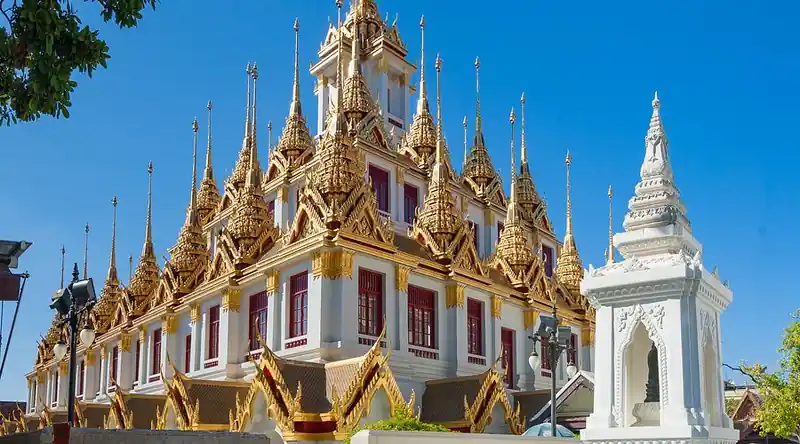
One of Only Three Metal Castles Ever Built, and the Only One Still Standing -- The multi-tiered spire rising from Wat Ratchanatdaram is called the Loha Prasat, or Metal Castle, and belongs to an extremely rare building type: structures built almost entirely of metal rather than stone or brick, of which only three are recorded in history, in Sri Lanka, India, and Thailand, with the Thai example the only one still intact today. Commissioned by King Rama III in the 1840s, the structure rises through several receding tiers topped by 37 metal spires, a number chosen to represent the 37 virtues a Buddhist practitioner cultivates on the path to enlightenment. A narrow internal staircase spirals up through the tiers to a viewing platform near the top, one of the few points in old Bangkok where visitors can climb inside a centuries-old religious monument rather than simply view it from outside.
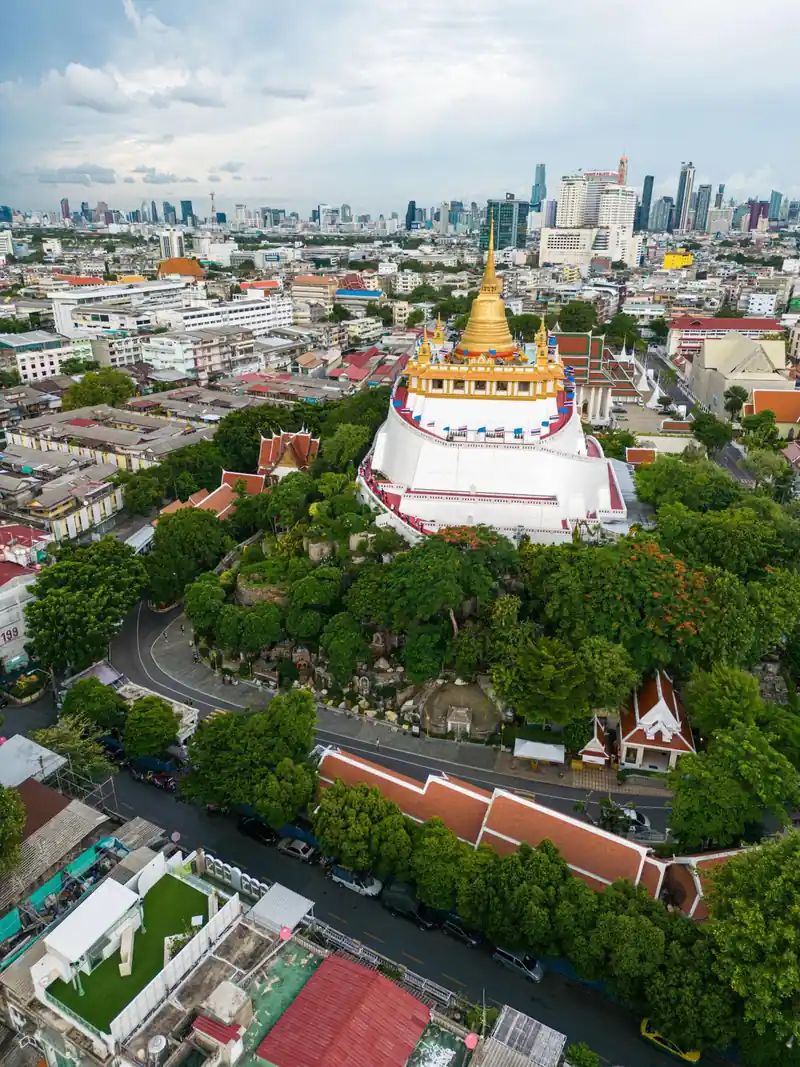
Wat Saket (Golden Mount)
A Golden Mount Born from a Construction Collapse, Rebuilt into a Religious Landmark -- The Golden Mount at Wat Saket is an artificial hill, not a natural one, and its origin traces to a construction failure: King Rama III ordered a large chedi built here in the early 1800s, but the soft Bangkok soil could not support the structure's weight, and it collapsed into a mound of brick and plaster rather than standing as planned. Rather than clear the debris, later builders under Rama IV and Rama V built directly on top of the ruined mound, eventually topping it with a golden chedi that now holds a relic of the Buddha said to have been given by the Indian government. Visitors climb 318 steps spiraling around the hill to reach the summit, which offers one of the few unobstructed panoramic views over Bangkok's older districts.
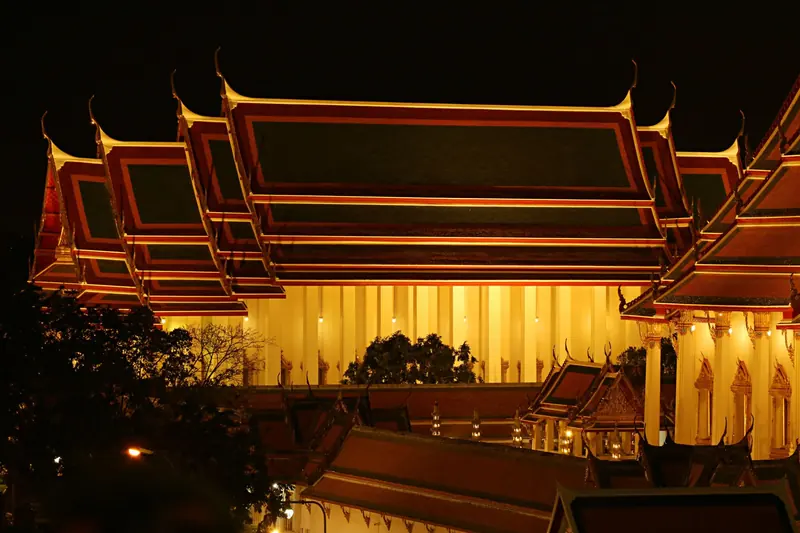
Wat Suthat Thepwararam
A Towering Swing that was Banned after it Killed Too Many Participants -- In front of Wat Suthat stands the Sao Ching Cha, a pair of tall red teak pillars that once held Thailand's giant ceremonial swing, used in an annual Brahminic ritual called the Triyampawai. In the ceremony, participants swung on a long rope and attempted to grab a bag of silver coins with their teeth from a pole some 15 meters in the air, a feat that produced a steady toll of fatal falls over the years. King Rama VII finally banned the swinging portion of the ceremony in the 1930s after yet another death, leaving the towering red frame standing as a monument to a tradition too dangerous to continue. The temple behind it houses one of Thailand's largest Buddha images and one of its most important collections of Thai mural paintings, overshadowed in most visitors' memories by the empty swing frame out front.
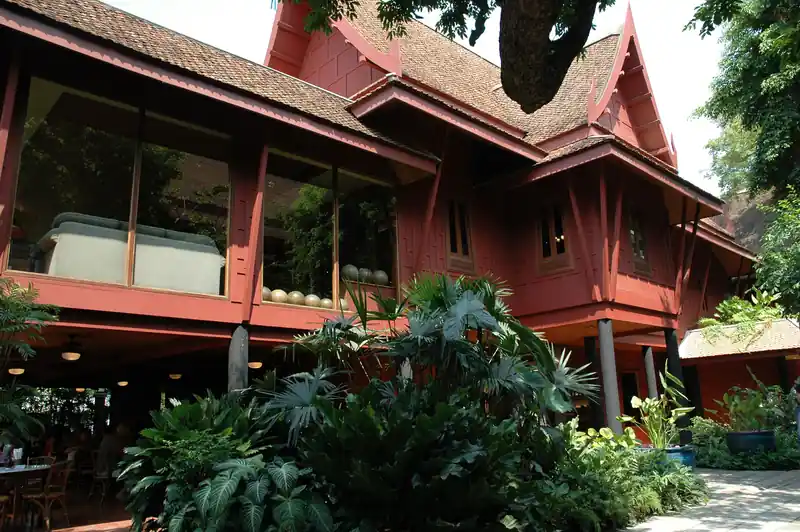
Jim Thompson House
A Silk Revivalist's Home, Built from Six Relocated Teak Houses, Ending in an Unsolved Disappearance -- Jim Thompson was an American architect and former wartime intelligence officer who settled in Bangkok after World War II and is credited with reviving Thailand's declining silk-weaving industry into an internationally recognized export. His house, completed in 1959, was not built new but assembled from six traditional teak houses bought from different parts of central Thailand and reconstructed on this site, reversing the usual orientation of Thai houses so the best rooms faced the klong canal rather than the street. In 1967, Thompson vanished without a trace while walking in Malaysia's Cameron Highlands; no body, evidence, or confirmed explanation was ever found, and the disappearance remains officially unsolved, adding a layer of mystery to the collection of Southeast Asian art he left behind.
