ICONSIAM
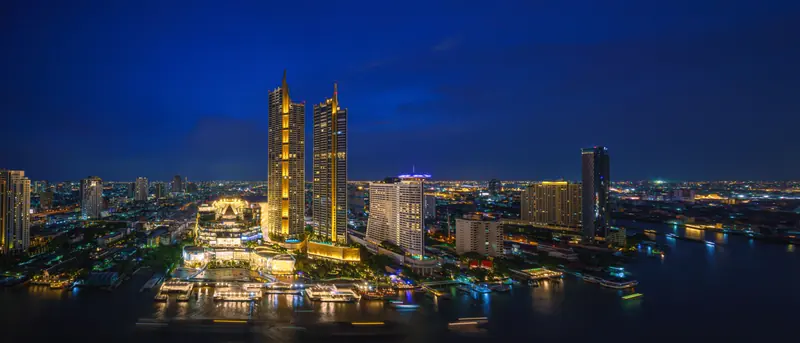
A Mall Built to Revive Bangkok's Less-Developed River Bank, with a Floating Market Indoors -- ICONSIAM opened in 2018 on the Thonburi side of the Chao Phraya River, a bank that had historically developed more slowly than the Bangkok side across the water, and its construction was explicitly framed by its developers as a joint-venture effort to draw investment and foot traffic toward that side of the river. Among its retail floors, the mall recreates an indoor floating market, SookSiam, with vendors in boats and stalls modeled on Thailand's regional markets, compressing produce and crafts from across the country into a single climate-controlled space. The project is now counted among the largest riverside developments in Southeast Asia, its scale intended less to compete with other Bangkok malls than to anchor a wider redevelopment of the Thonburi riverfront.
Visitor Information & Practical Details
- Place NameICONSIAM
- Address299 Charoen Nakhon Rd, Khlong Ton Sai, Khlong San, Bangkok 10600, Thailand
- Opening Hours10:00 – 22:00
- Admission / PriceFree
- Phone+66 2 495 7000
- Official Websitehttps://www.iconsiam.com
- GPS Coordinates13.72674, 100.50981
Best Itinerary Visiting ICONSIAM
Combine ICONSIAM with nearby landmarks using our step-by-step walking and transit route.
Places Near ICONSIAM
Build your own custom walking route in the MyGuide app by combining these nearby stops.
So Heng Tai House
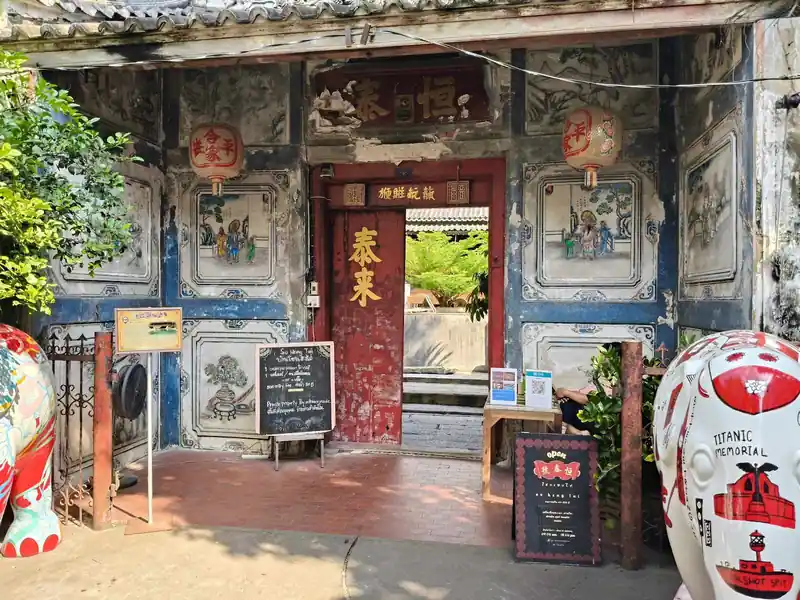
A 300-Year-Old Chinese Ancestral Courtyard Where Tourists Now Bungee Jump Into the Family Pool -- So Heng Tai House is a Hokkien-style Chinese courtyard mansion built roughly three hundred years ago by immigrant traders who arrived in Bangkok during the reign of King Rama I, and it remains inhabited today by the eighth generation of the same family, making it one of the oldest continuously family-owned homes in the city. The open-air central courtyard, traditionally used for collecting rainwater and for ancestor-worship ceremonies honoring the family's Chinese forebears, now doubles as a swimming pool where visitors pay to try indoor bungee jumping, plunging on a bungee cord into the same enclosed space where the family has burned incense for their ancestors for three centuries. The current generation runs this unusual combination themselves, turning their own ancestral home into both a living family residence and an adventure sport venue, so that the courtyard where devotion to the dead was once performed now echoes with the screams of tourists in free fall.
Yaowarat Road (Chinatown Bangkok)
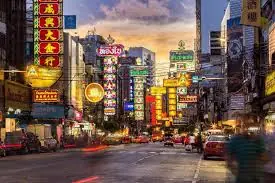
A Chinatown Born because the King Wanted the Land for his Palace -- Yaowarat Road is the spine of Bangkok's Chinatown, but the Chinese merchant community settled here not by choice so much as by relocation: when King Rama I founded Bangkok as the new capital in 1782, the Chinese traders who had been living on the chosen palace site were moved downriver to the Sampheng area, which grew into today's Yaowarat district. The street became, and remains, a center of gold trading, with shopfront after shopfront of gold shops reflecting a historical pattern in which Chinese merchant families kept their wealth in gold jewelry, both as a display of status and as a portable store of value that could survive political upheaval. At night the road transforms into one of the densest street-food corridors in the city, built on the same commercial foundation the relocated traders laid more than two centuries ago.
Wat Traimit (Temple of the Golden Buddha)
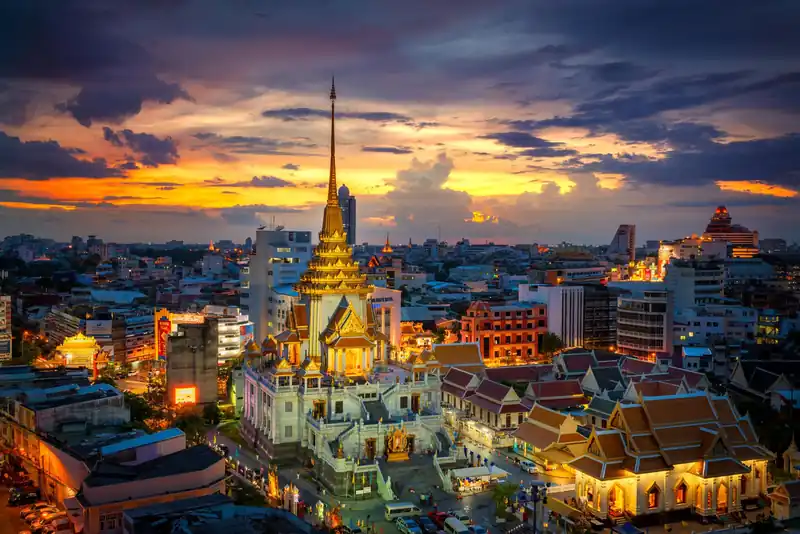
A Five-and-a-Half-Ton Gold Buddha That Hid Inside Plaster for Two Centuries -- Wat Traimit's main attraction is a seated Buddha image cast from roughly 5.5 tons of solid gold, but for most of its known history the statue was coated in a thick shell of stucco and colored glass, giving it the appearance of an unremarkable plaster image. Historians believe the disguise was deliberately applied, likely to protect the gold from looting during the Burmese sack of Ayutthaya in the 18th century, and it worked so well that the statue's true nature was forgotten for generations. The secret came out by accident in 1955, when workers moving the statue to a new building dropped it from a crane; the plaster cracked on impact, and gold gleamed through the fracture. It remains the largest solid-gold Buddha statue in the world.
Mahanakhon SkyWalk
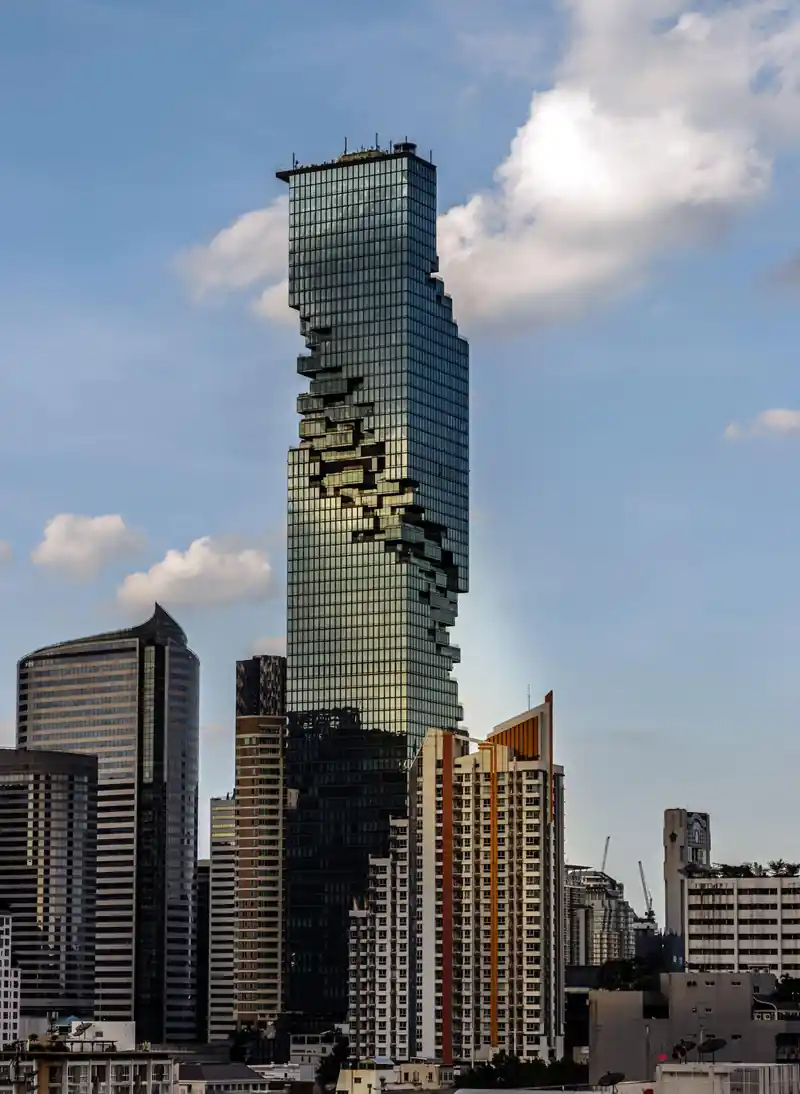
A Skyscraper Deliberately Designed to Look Unfinished -- King Power Mahanakhon's exterior is wrapped in a distinctive 'pixelated' pattern of jutting and receding glass-box units, a facade that gives the tower the appearance of a giant pixelated ribbon still being peeled away, a deliberate design choice rather than a construction defect. When it topped out in 2016, it briefly held the title of Thailand's tallest building before being surpassed by a newer tower just a few years later. Its SkyWalk observation deck occupies the upper floors and includes a glass floor section that lets visitors look straight down more than 300 meters to the street below, along with an open-air Skybar on the roof that is among the highest rooftop bars in the world. The building anchors the Silom financial district's skyline alongside the elevated BTS Skytrain line that runs past its base.
Santa Cruz Church
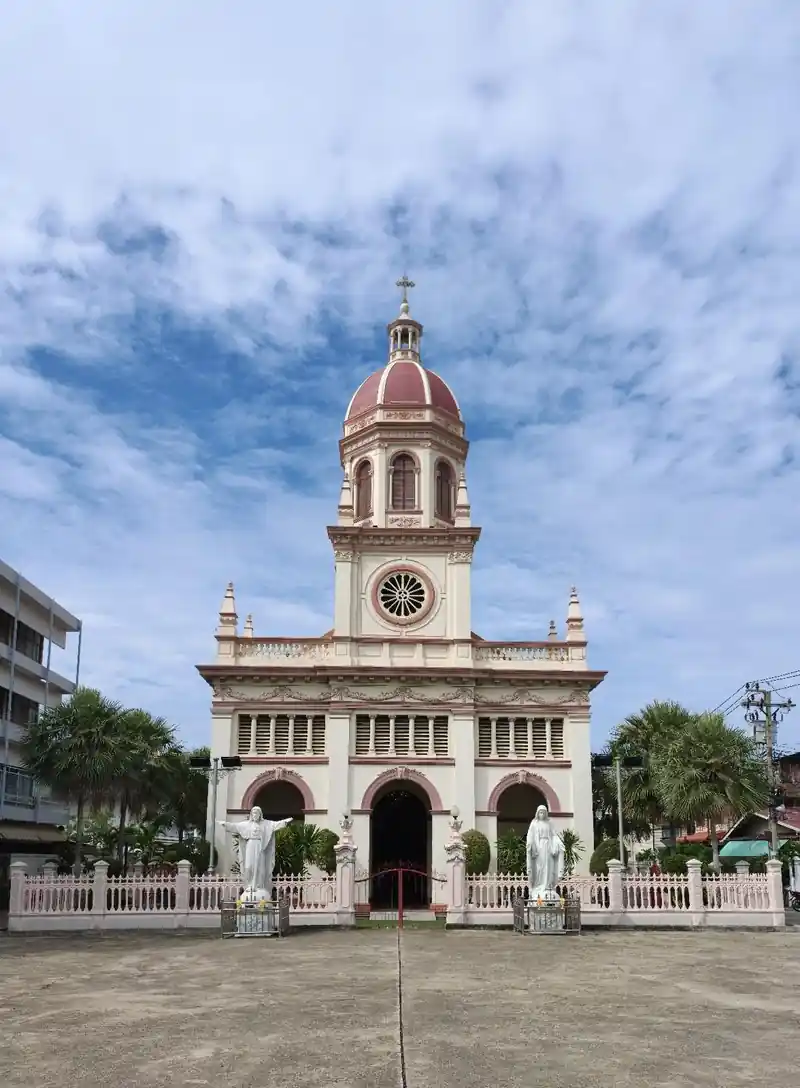
A 300-Year-Old Portuguese Cake Still Baked in a Catholic Quarter of a Buddhist Capital -- Santa Cruz Church anchors the Kudi Chin neighborhood, Thailand's oldest Catholic parish, established in the late 18th century on land granted by Thai King Taksin to Portuguese-descended soldiers who had fought alongside him against Burmese invaders after the fall of Ayutthaya, their reward a riverside plot where they could build their own church and keep their own faith inside an overwhelmingly Buddhist kingdom. Their descendants still live in the neighborhood today, and the community's signature food tradition, a dense, chewy cake called khanom farang kudi chin baked in a wood-fired brick oven using a recipe passed down largely unchanged since the Portuguese traders who first settled along the Chao Phraya in the 16th and 17th centuries, survives as one of the few living culinary links in Thailand to the earliest European contact with the kingdom, baked in the shadow of a church built by soldiers rewarded with religious freedom for fighting someone else's war.
Asiatique The Riverfront
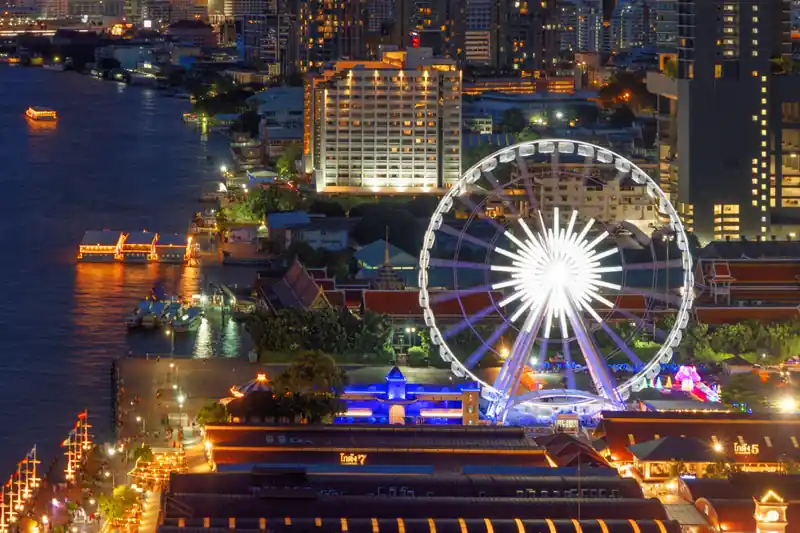
A 19th-Century Trading Port Repurposed into a Riverside Night Market -- Asiatique The Riverfront occupies the former docks and warehouses of the Danish East Asiatic Company, a trading firm that operated a major import-export port on this stretch of the Chao Phraya River from the late 1800s, handling teak and rice exports that once anchored Bangkok's international trade. When the development opened in 2012, planners kept the industrial scale of the original warehouse structures and restored the port's old clock tower as a centerpiece, rather than demolishing the site for an entirely new building. The result is a shopping and dining complex that layers modern retail directly onto more than a century of shipping history, with the Chao Phraya still running past it exactly as it did when cargo boats, not tourists, were the main traffic.
