Musee d'Orsay
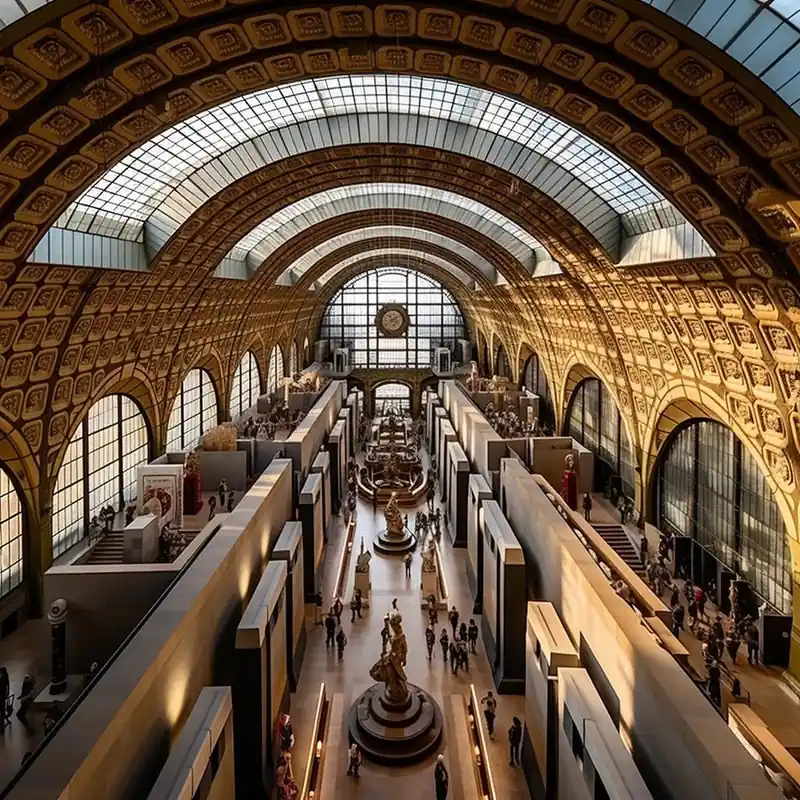
The Musee d'Orsay in Paris is the greatest collection of Impressionist and Post-Impressionist art in the world — a magnificent museum housed in a converted Beaux-Arts railway station on the banks of the Seine whose soaring glass roof, ornate ironwork, and monumental spaces provide a spectacular setting for the greatest concentration of works by Monet, Renoir, Degas, Pissarro, Sisley, Manet, Van Gogh, Gauguin, Cezanne, Seurat, and their contemporaries that can be found anywhere on earth. The museum occupies the former Gare d'Orsay, built for the 1900 Paris Universal Exhibition, whose operational life as a railway station ended in 1939 and which fell into disrepair until its conversion into a museum in 1986 — the transformation is one of the most successful museum conversions in history, with the station's original architecture preserved and celebrated while the spaces have been reorganized to create a series of galleries that move visitors through the development of Western art from 1848 to 1914. The Impressionist collection on the top floor — natural light flooding through the glass roof, the works arranged to show the development of the movement from its origins in Barbizon painting through its flowering in the canvases of the 1870s and 1880s to the Post-Impressionist explorations of Cezanne and Van Gogh — is one of the most extraordinary sequences of gallery rooms in any museum in the world, a sustained encounter with the greatest period of innovation in the history of Western painting. Among its greatest individual works are Manet's Olympia and Dejeuner sur l'herbe, Van Gogh's Self-Portrait, Whistler's Arrangement in Grey and Black No. 1 (Whistler's Mother), and Renoir's Dance at Le Moulin de la Galette.
Visitor Information & Practical Details
- Place NameMusee d'Orsay
- Address1 Rue de la Legion d'Honneur, 75007 Paris, France
- Opening HoursTue-Sun 9:30am-6pm (Thu until 9:45pm), closed Mon
- Admission / Pricehttps://www.musee-orsay.fr/en/visit
- Phone+33140494814
- Official Websitehttps://www.musee-orsay.fr
- GPS Coordinates48.85996, 2.32656
Best Itinerary Visiting Musee d'Orsay
Combine Musee d'Orsay with nearby landmarks using our step-by-step walking and transit route.
Places Near Musee d'Orsay
Build your own custom walking route in the MyGuide app by combining these nearby stops.
Louvre Museum
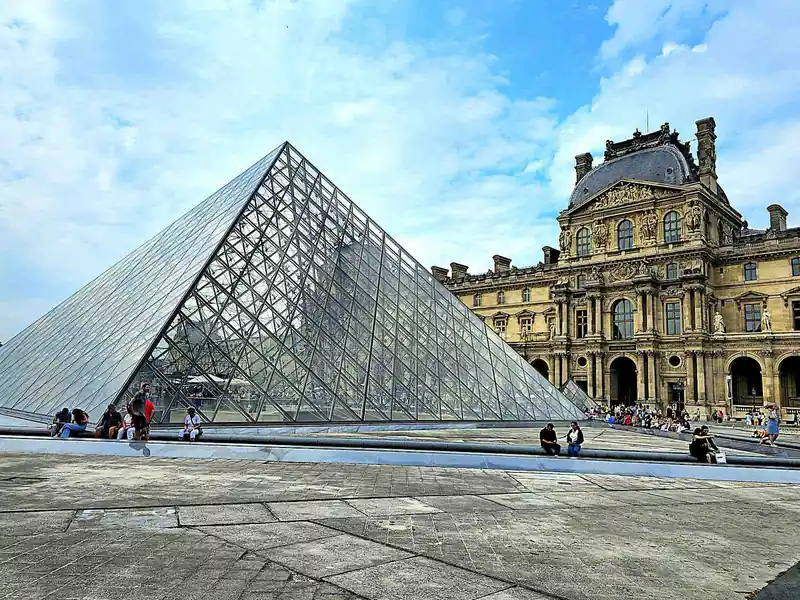
The Louvre Museum in Paris is the largest art museum in the world and one of the greatest cultural institutions in human history — a former royal palace whose vast galleries contain some 380,000 works of art spanning 8,000 years of human civilization, from prehistoric artifacts and ancient Egyptian masterpieces to the greatest paintings of the Renaissance, Baroque, and neoclassical periods, including Leonardo da Vinci's Mona Lisa, the Venus de Milo, and Winged Victory of Samothrace, making it the single most concentrated collection of cultural achievement anywhere on earth. The museum's history spans eight centuries — from its origins as a medieval fortress built by Philip II in the late 12th century, through its transformation into a royal palace under Francis I and subsequent centuries of expansion and embellishment, to its revolutionary-era conversion into a public museum in 1793, making it one of the first great public art museums in the world. The iconic glass pyramid designed by I.M. Pei, added to the main courtyard in 1989, caused controversy when it was built but is now beloved as the principal entrance to the museum and as a symbol of the productive dialogue between ancient history and modern architecture that defines the Louvre's character as an institution. The Mona Lisa, Leonardo da Vinci's small panel painting of an unidentified Florentine noblewoman, is the most visited work of art in the world — a crowd of hundreds gathers around it at any hour of the museum's operation, drawn by a combination of genuine artistic quality, centuries of scholarly attention, and the irresistible pull of its reputation as the most famous painting ever made. With over 9 million visitors annually, the Louvre is the most visited museum in the world.
Saint-Germain-des-Pres
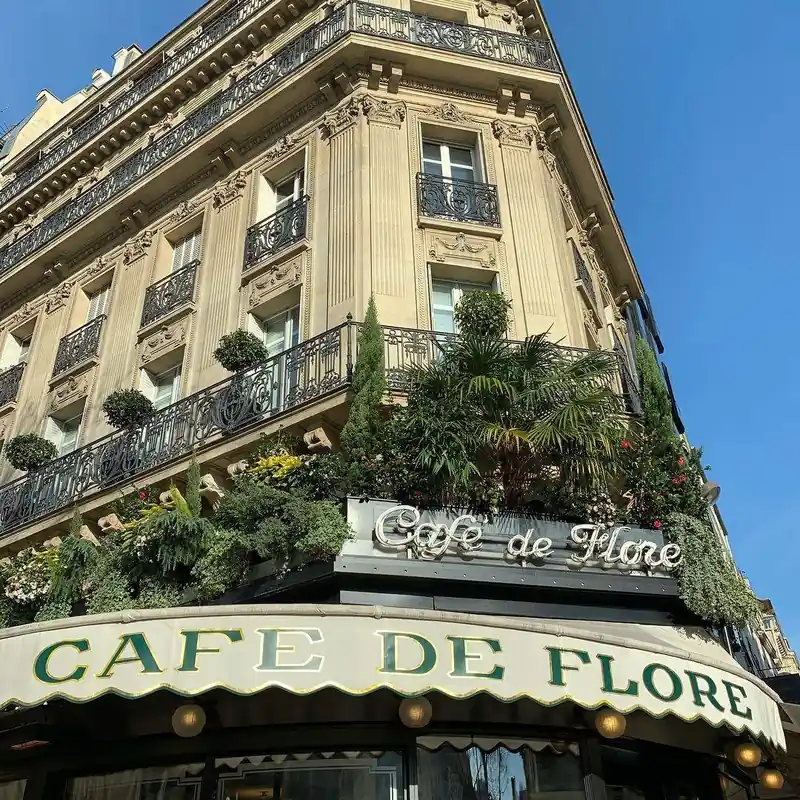
Saint-Germain-des-Pres is the legendary intellectual and artistic heart of Paris — a neighborhood on the Left Bank whose cafes, bookshops, art galleries, and ancient abbey have made it one of the most celebrated addresses in the history of Western culture, synonymous with the existentialist philosophy that Jean-Paul Sartre and Simone de Beauvoir developed at corner tables in the Cafe de Flore and Les Deux Magots in the years after World War II. The neighborhood's intellectual tradition stretches back centuries — Voltaire, Rousseau, and other Enlightenment philosophers gathered in the cafes of Saint-Germain, and in the early 20th century the neighborhood became the center of the Paris art world when Picasso, Matisse, and other modernist artists settled in its studios. The jazz clubs of Saint-Germain became legendary in the 1950s and 1960s, when American musicians including Miles Davis, Chet Baker, and Sidney Bechet found appreciative audiences in the neighborhood's smoky basement clubs, creating a Franco-American jazz culture that was central to the postwar cultural renaissance of Paris. Today Saint-Germain-des-Pres has become one of the most fashionable and expensive neighborhoods in Paris — its historic cafes now serve tourists and well-heeled locals, its bookshops compete with luxury fashion boutiques, and its galleries show works priced for collectors rather than starving artists — but the neighborhood retains a distinct intellectual atmosphere and its ancient Romanesque abbey church, one of the oldest in Paris, remains a serene oasis in the midst of the busy streets.
Musee Rodin
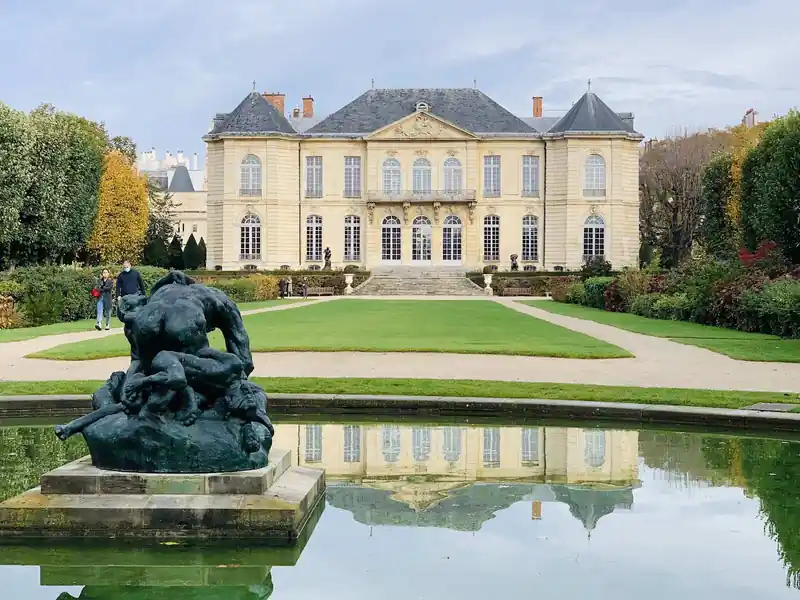
The Musee Rodin in Paris is one of the most beautiful and intimate museum experiences in the world — a magnificent 18th-century mansion set in a lush sculpture garden that houses the greatest collection of works by Auguste Rodin, the sculptor who revolutionized Western art in the late 19th century and whose powerfully expressive bronze and marble figures redefined what sculpture could communicate about the human condition. The museum occupies the Hotel Biron, a gracious rococo mansion in the 7th arrondissement where Rodin rented studios in the final decade of his life, surrounded by a three-hectare garden that is one of the loveliest outdoor spaces in Paris — a formal French garden of clipped hedges, rose arbors, and reflective pools where Rodin's most famous works are displayed in the open air, including The Thinker, The Gates of Hell, The Burghers of Calais, and Balzac, each set in the garden's greenery where natural light and seasonal change create constantly shifting contexts for these extraordinary sculptures. Inside the mansion, the collection traces the full arc of Rodin's career from his early academic works through the revolutionary pieces of his mature period — The Kiss, The Age of Bronze, and the hundreds of studies and preparatory works that reveal the extraordinary creative process behind his masterpieces. The museum also preserves works by Camille Claudel, Rodin's student, collaborator, and lover, whose own sculptural genius is increasingly recognized as having been unjustly overshadowed by her relationship with the more famous artist.
Palais-Royal Garden
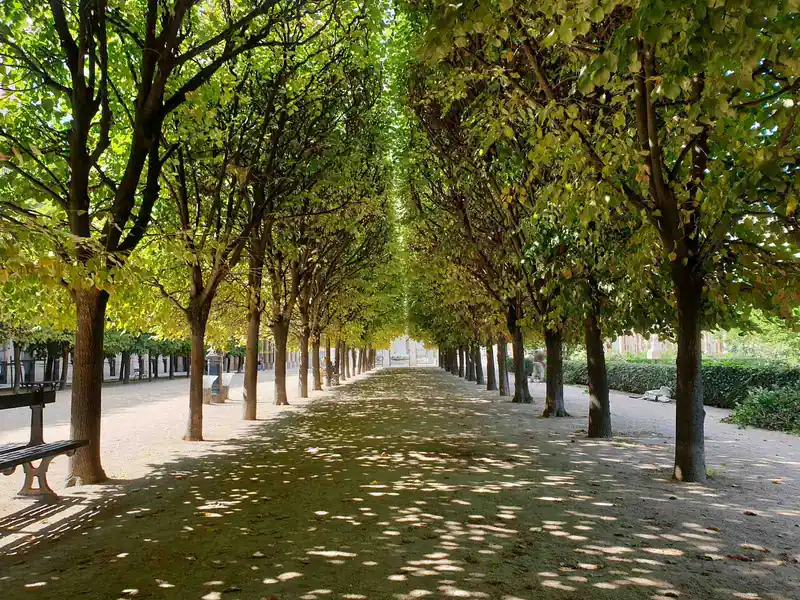
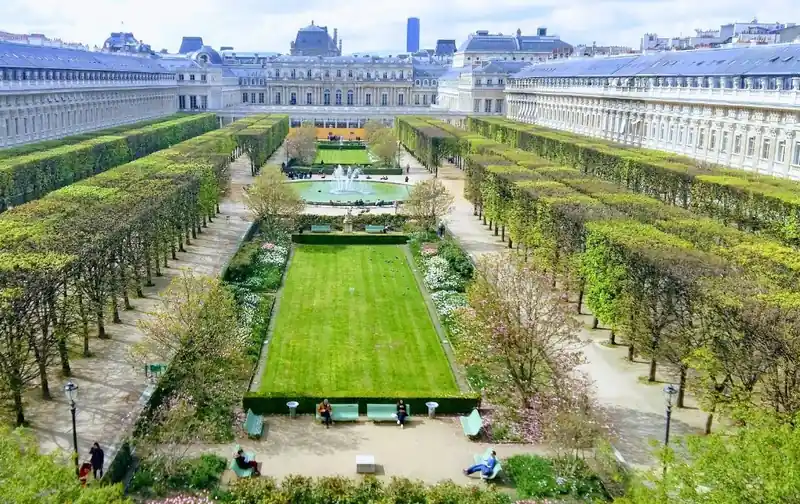
Tucked directly behind the Louvre and laid out in the 17th century for Cardinal Richelieu before passing to the royal family, the Palais-Royal Garden is a rectangular formal garden enclosed on three sides by uniform arcaded galleries that once housed some of Paris's most fashionable shops, gambling dens, and cafes, making the complex a center of Parisian social and political life in the 18th century, including gatherings in its cafes that helped spark the storming of the Bastille in 1789. Today the arcades hold a quieter mix of antique dealers, perfumers, and small boutiques, while the garden itself, lined with clipped lime trees, a central fountain, and rose beds, offers one of the most sheltered and peaceful green spaces in central Paris, largely unknown to visitors who pass right by its unassuming entrances. At the courtyard nearest the Comedie-Francaise, the sculptor Daniel Buren's 1986 installation of black-and-white striped columns of varying heights, known as Les Deux Plateaux, remains a favorite spot for children to climb and photographers to frame, a piece of contemporary public art set against 17th-century stone.
Palais-Royal Garden
Palais-Royal Garden is a refined and elegant courtyard garden in central Paris, known for its symmetrical layout, peaceful atmosphere, and the iconic black-and-white striped columns of the Colonnes de Buren, offering a quiet and artistic escape just steps away from the busy city streets.
Opera Garnier
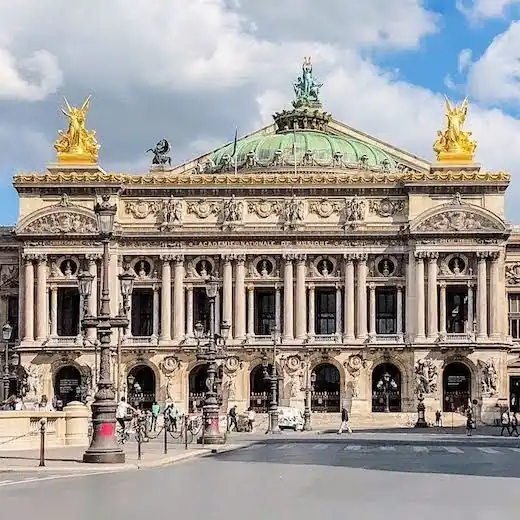
The Opera Garnier (Palais Garnier) is the most opulent theatre building in the world and the supreme achievement of Second Empire architecture — a magnificent palace of the arts built between 1861 and 1875 by the architect Charles Garnier whose Grand Staircase, Grand Foyer, auditorium, and facade represent the highest expression of 19th-century French decorative arts, combining marble, gilded bronze, painted ceilings, crystal chandeliers, and elaborately carved stone in an interior of such concentrated luxury that even in an era of extravagant public buildings it was recognized as something extraordinary. The opera was commissioned by Napoleon III as part of Baron Haussmann's comprehensive rebuilding of Paris, and Garnier won the competition for its design at the age of 35 with a proposal that rejected the severe neoclassicism of his competitors in favor of an eclectic synthesis of styles that Garnier called Napoleon III style — a combination of Baroque exuberance, Renaissance grandeur, and 19th-century theatrical fantasy that proved immediately controversial and enduringly beloved. The Grand Staircase is perhaps the most famous single room in any theatre building in the world — a double staircase rising through a space of marble columns, gilded balustrades, and painted ceilings where the audience itself becomes part of the spectacle as they ascend to their boxes, the whole arrangement conceived by Garnier as a theatre in which the social rituals of the opera-going public would be performed as conspicuously as the performances on stage. The building is perhaps most famous internationally through Gaston Leroux's 1910 novel The Phantom of the Opera, which used its underground lake, labyrinthine backstage passages, and Gothic atmosphere as the setting for one of the most enduringly popular romantic horror stories in literature.
