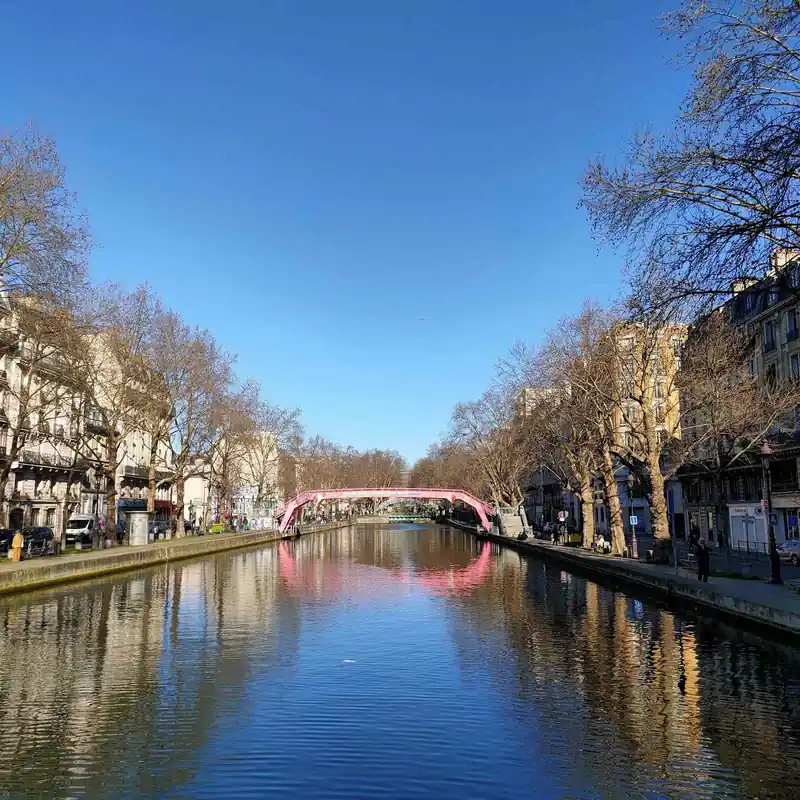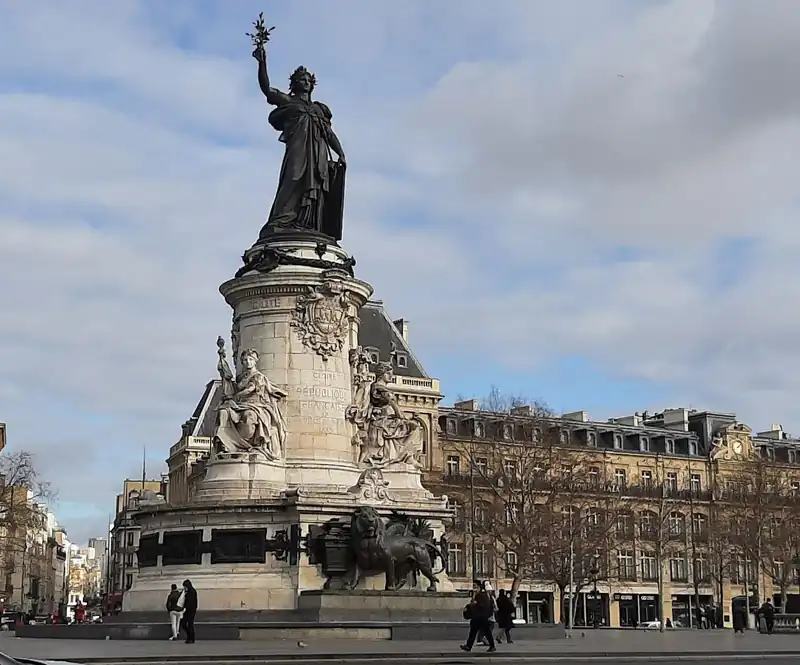
Created in the 1850s when Baron Haussmann's renovation of Paris cut wide new boulevards through the city, Place de la Republique is one of the largest squares in Paris, anchored by a towering bronze statue of Marianne, the female personification of the French Republic, holding an olive branch and standing atop a pedestal ringed by allegorical reliefs of Liberty, Equality, and Fraternity and guarded by bronze lions. Unveiled in 1883, the monument replaced an earlier plan for an equestrian statue of Louis XIV and deliberately consolidated the square's identity as a symbol of republican, rather than royal, France. Since the late 20th century the square has become the default staging ground for the country's largest political demonstrations, spontaneous vigils, and national mourning gatherings, its open plaza large enough to hold tens of thousands and its central statue serving as a natural focal point and meeting spot. Beyond its political role, the square today functions as a busy transit hub and pedestrianized public space with a large reflecting pool, informal seating, and easy access on foot to the trendy bars and canal-side cafes of the surrounding 10th and 11th arrondissements.