ArcdeTriomphe
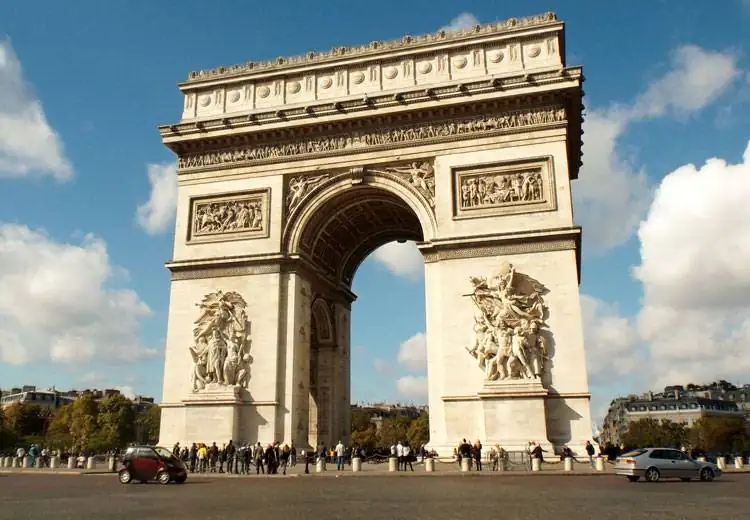
The Arc de Triomphe is one of Paris’s most famous monuments, built to honor those who fought for France, and it stands at the center of a major traffic circle at the end of the Champs-Élysées, offering visitors panoramic views of the city from its rooftop.
Visitor Information & Practical Details
- Place NameArcdeTriomphe
- AddressPlace Charles de Gaulle, 75008 Paris, France
- Opening Hours10:00–22:30 (varies seasonally)
- Admission / Pricehttps://www.paris-arc-de-triomphe.fr/en/visit/practical-information
- Phone+33155377377
- Official Websitehttps://www.paris-arc-de-triomphe.fr/
- GPS Coordinates48.87394, 2.29505
Best Itinerary Visiting ArcdeTriomphe
Combine ArcdeTriomphe with nearby landmarks using our step-by-step walking and transit route.
Places Near ArcdeTriomphe
Build your own custom walking route in the MyGuide app by combining these nearby stops.
ChampsÉlysées
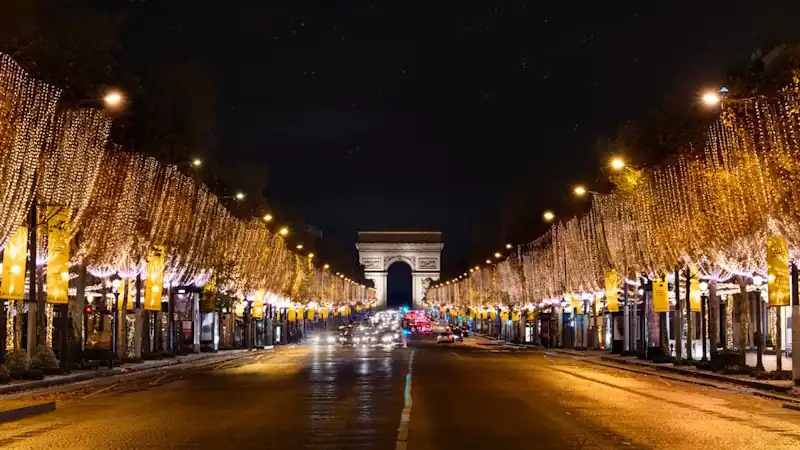
Champs-Élysées is one of the most famous avenues in the world, stretching from Place de la Concorde to the Arc de Triomphe, and it is known for its luxury shops, theaters, cafés, and vibrant atmosphere that represents the elegance and energy of Paris.
Palais de Chaillot
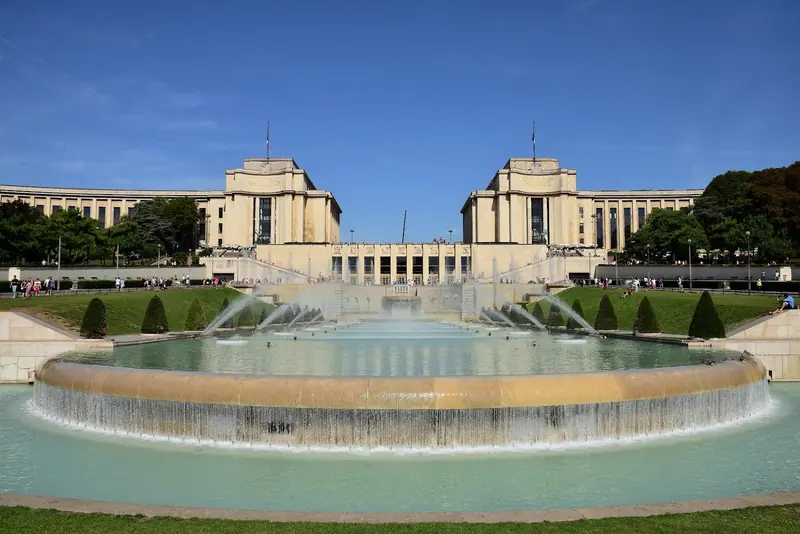
The Palais de Chaillot on the Trocadero hill in Paris offers what is widely regarded as the single finest view of the Eiffel Tower in the entire city — the sweeping terrace between the palace's two curved wings frames the tower perfectly across the Seine, creating an iconic vista that has made the Trocadero esplanade one of the most photographed locations in the world and an obligatory stop for every visitor to Paris. Built for the 1937 World's Fair on the site of an earlier palace constructed for the 1878 exposition, the Palais de Chaillot is a masterwork of Art Deco architecture whose monumental scale, golden inscriptions, and graceful curves make it one of the finest examples of the interwar architectural style in France. The palace houses several of Paris's most important museums — the Cite de l'Architecture et du Patrimoine, with its extraordinary collection of architectural casts and models documenting the history of French building; the Musee de l'Homme, exploring human evolution and cultural diversity; and the Musee National de la Marine, dedicated to French naval history — making Chaillot a cultural destination of remarkable breadth beyond its celebrated view. The fountains and pools of the Trocadero gardens cascade down the hillside toward the Seine, and at night the illuminated fountains create a spectacular foreground for the glittering Eiffel Tower, making the Trocadero one of the great nocturnal spectacles of Paris.
EiffelTower
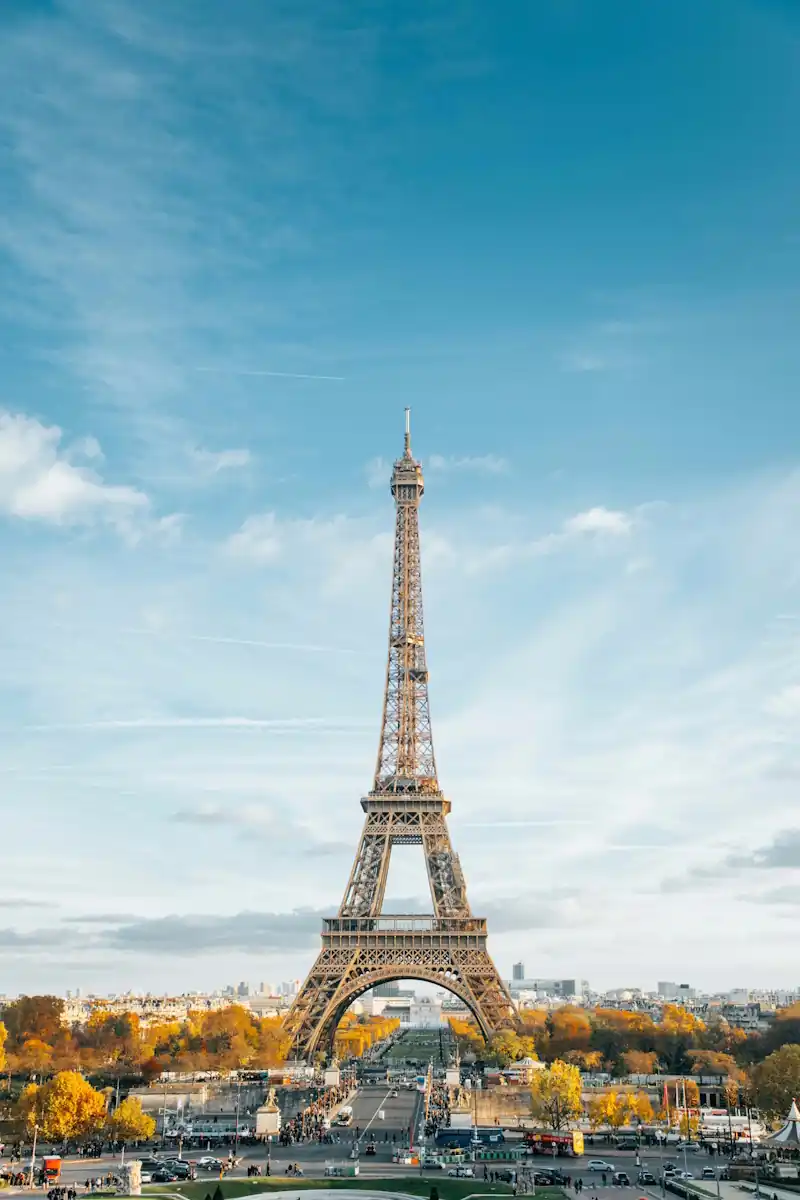
The Eiffel Tower is the most iconic landmark in Paris and one of the most famous monuments in the world, originally built for the 1889 Exposition Universelle and now admired for its elegant iron structure, panoramic city views, and unforgettable presence on the Paris skyline.
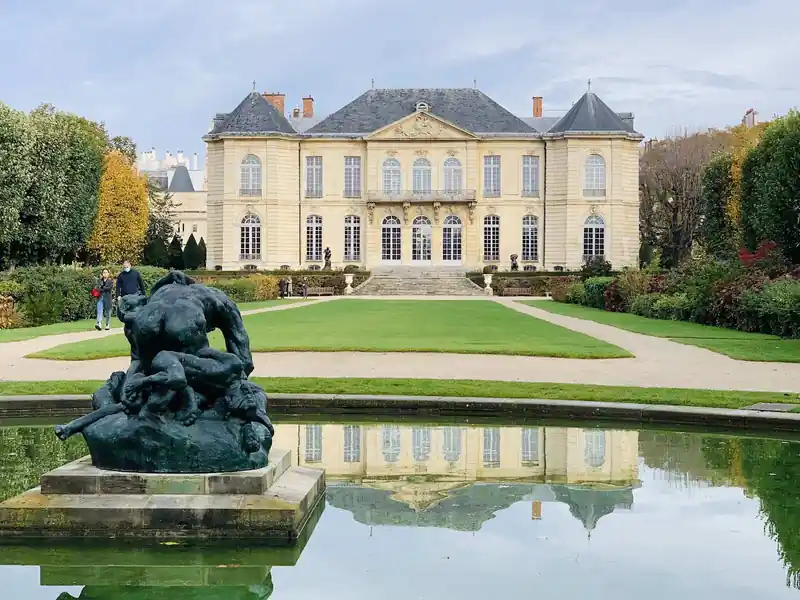
Musee Rodin
The Musee Rodin in Paris is one of the most beautiful and intimate museum experiences in the world — a magnificent 18th-century mansion set in a lush sculpture garden that houses the greatest collection of works by Auguste Rodin, the sculptor who revolutionized Western art in the late 19th century and whose powerfully expressive bronze and marble figures redefined what sculpture could communicate about the human condition. The museum occupies the Hotel Biron, a gracious rococo mansion in the 7th arrondissement where Rodin rented studios in the final decade of his life, surrounded by a three-hectare garden that is one of the loveliest outdoor spaces in Paris — a formal French garden of clipped hedges, rose arbors, and reflective pools where Rodin's most famous works are displayed in the open air, including The Thinker, The Gates of Hell, The Burghers of Calais, and Balzac, each set in the garden's greenery where natural light and seasonal change create constantly shifting contexts for these extraordinary sculptures. Inside the mansion, the collection traces the full arc of Rodin's career from his early academic works through the revolutionary pieces of his mature period — The Kiss, The Age of Bronze, and the hundreds of studies and preparatory works that reveal the extraordinary creative process behind his masterpieces. The museum also preserves works by Camille Claudel, Rodin's student, collaborator, and lover, whose own sculptural genius is increasingly recognized as having been unjustly overshadowed by her relationship with the more famous artist.
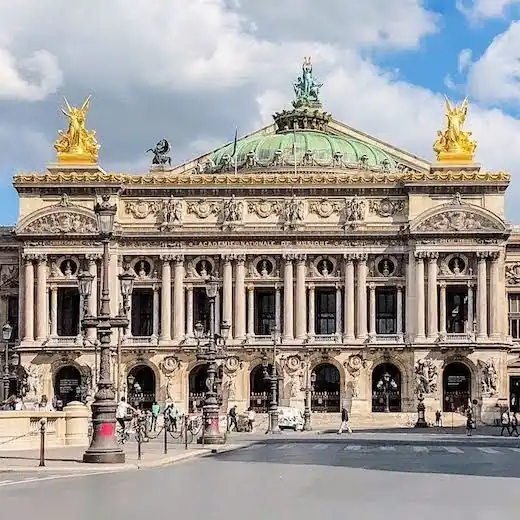
Opera Garnier
The Opera Garnier (Palais Garnier) is the most opulent theatre building in the world and the supreme achievement of Second Empire architecture — a magnificent palace of the arts built between 1861 and 1875 by the architect Charles Garnier whose Grand Staircase, Grand Foyer, auditorium, and facade represent the highest expression of 19th-century French decorative arts, combining marble, gilded bronze, painted ceilings, crystal chandeliers, and elaborately carved stone in an interior of such concentrated luxury that even in an era of extravagant public buildings it was recognized as something extraordinary. The opera was commissioned by Napoleon III as part of Baron Haussmann's comprehensive rebuilding of Paris, and Garnier won the competition for its design at the age of 35 with a proposal that rejected the severe neoclassicism of his competitors in favor of an eclectic synthesis of styles that Garnier called Napoleon III style — a combination of Baroque exuberance, Renaissance grandeur, and 19th-century theatrical fantasy that proved immediately controversial and enduringly beloved. The Grand Staircase is perhaps the most famous single room in any theatre building in the world — a double staircase rising through a space of marble columns, gilded balustrades, and painted ceilings where the audience itself becomes part of the spectacle as they ascend to their boxes, the whole arrangement conceived by Garnier as a theatre in which the social rituals of the opera-going public would be performed as conspicuously as the performances on stage. The building is perhaps most famous internationally through Gaston Leroux's 1910 novel The Phantom of the Opera, which used its underground lake, labyrinthine backstage passages, and Gothic atmosphere as the setting for one of the most enduringly popular romantic horror stories in literature.
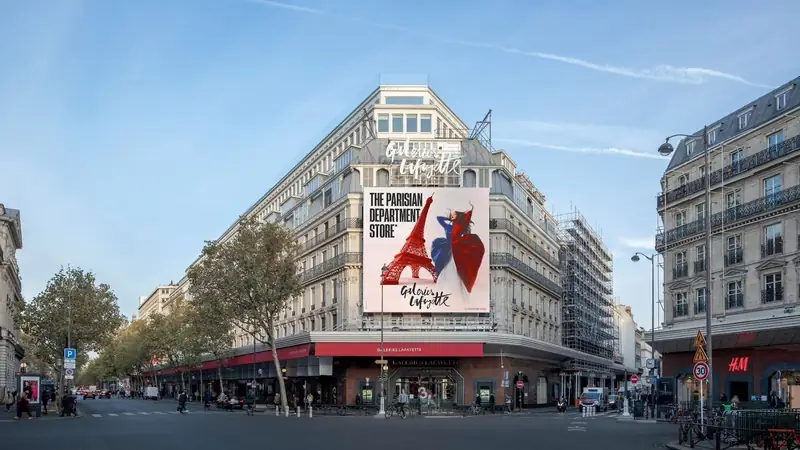
Galeries Lafayette Haussmann
Founded in 1893 as a small haberdashery shop and expanded into its current flagship location beside the Opera Garnier in the early 20th century, Galeries Lafayette Haussmann is one of the most architecturally striking department stores in the world, built around a soaring Belle Epoque atrium topped by a stained-glass dome roughly 43 meters overhead, installed in 1912 in an Art Nouveau style of swirling ironwork and colored glass that remains the store's centerpiece regardless of the fashions sold beneath it. Spread across multiple connected buildings and floors devoted to womenswear, menswear, gourmet food, and luxury brands, the store has functioned since its founding as a showcase for French fashion and craftsmanship as much as a retail destination, and its window displays at Christmas remain a Parisian tradition drawing crowds regardless of whether they intend to shop. A free rooftop terrace, accessible without any purchase required, offers one of the more unexpected panoramic views in central Paris, looking directly across at the gilded dome of the Opera Garnier and out toward the rooftops of the surrounding grand boulevards.
