Montparnasse Cemetery
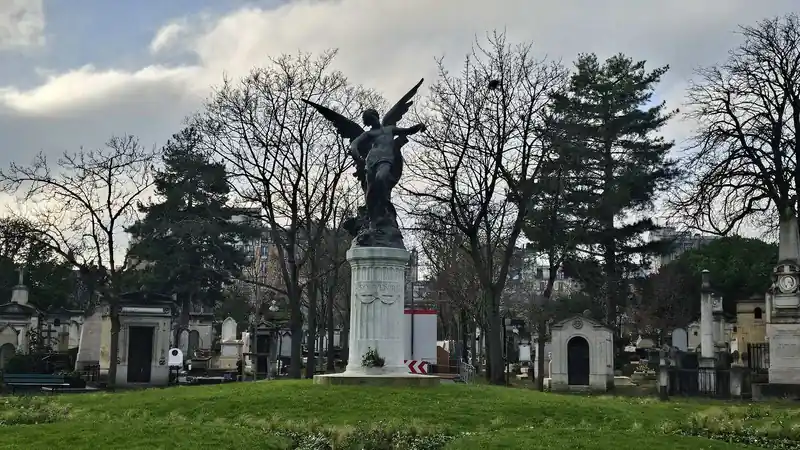
Opened in 1824 on the southern edge of central Paris as one of the city's grand 19th century cemeteries, Montparnasse Cemetery grew alongside the Left Bank's identity as an intellectual and artistic quarter, and its winding tree-lined pathways now hold the graves of an unusually dense concentration of writers, philosophers, and artists rather than aristocracy or clergy. Jean-Paul Sartre and Simone de Beauvoir share a single simple grave, still visited by admirers leaving metro tickets and small notes, while nearby lie the poet Charles Baudelaire, the playwright Samuel Beckett, the photographer Man Ray, and the singer Serge Gainsbourg, whose grave is regularly covered in cabbages, cigarette packets, and metro tickets left by fans referencing his songs. The cemetery's most theatrical monument is a bronze sculpture by Niki de Saint Phalle marking the grave of critic Ricardo Menon, while a working windmill, a relic of the area's rural past before Montparnasse was absorbed into the city, still stands near the cemetery's edge. Unlike the more visited Pere Lachaise across town, Montparnasse remains comparatively quiet, offering a more intimate walk through the resting places of some of the 20th century's most influential minds.
Visitor Information & Practical Details
- Place NameMontparnasse Cemetery
- Address3 Boulevard Edgar Quinet, 75014 Paris, France
- Opening HoursOpen daily (check locally)
- Admission / PriceFree
- PhoneNot listed
- Official Websitehttps://en.wikipedia.org/wiki/Montparnasse_Cemetery
- GPS Coordinates48.83821, 2.32615
Best Itinerary Visiting Montparnasse Cemetery
Combine Montparnasse Cemetery with nearby landmarks using our step-by-step walking and transit route.
Places Near Montparnasse Cemetery
Build your own custom walking route in the MyGuide app by combining these nearby stops.
Tour Montparnasse
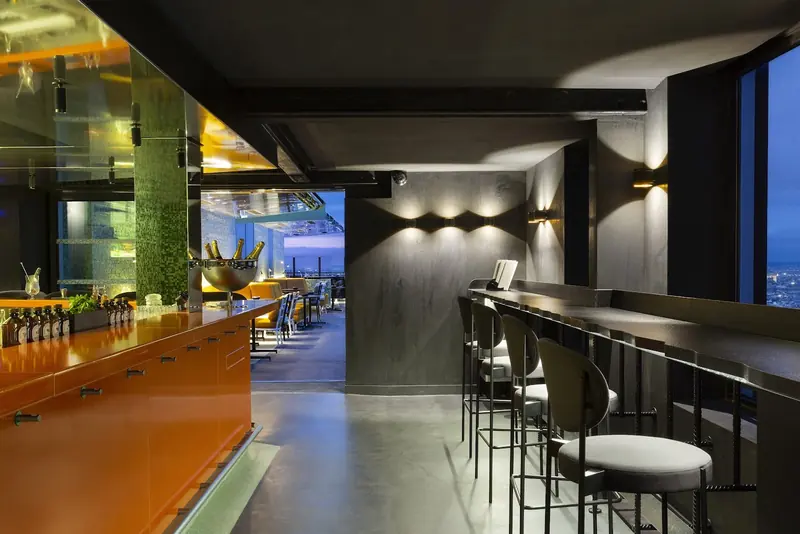
The Tour Montparnasse is Paris's tallest skyscraper and its most controversial building — a 210-meter glass-and-steel tower completed in 1973 that so shocked Parisians with its incongruous presence on the city's skyline that it prompted the city to ban further high-rise construction in central Paris, making it the last major tower built within the capital's historic core. Despite its contentious aesthetics, the Tour Montparnasse offers what many consider the best panoramic view of Paris available — from its 56th-floor observation deck and open-air rooftop terrace, visitors can see the entire city spread below in 360 degrees, including, crucially, the Eiffel Tower in all its glory — a view impossible from the tower itself, which can be seen from the Trocadero but not from its own summit. The view encompasses all of the great monuments of Paris — Notre-Dame, the Sacre-Coeur, the Louvre, the Grand Palais, the Arc de Triomphe — laid out across the city's gentle topography with the Seine winding through the center, and on clear days extends to the hills of Montmartre to the north, the Bois de Boulogne to the west, and the distant suburbs of the Ile-de-France. The tower also houses a popular bar and restaurant on its upper floors, making it a destination for dining with exceptional views, and its fast elevators reach the observation deck in just 38 seconds, making the transition from street level to the Paris skyline almost instantaneous.
Catacombs of Paris
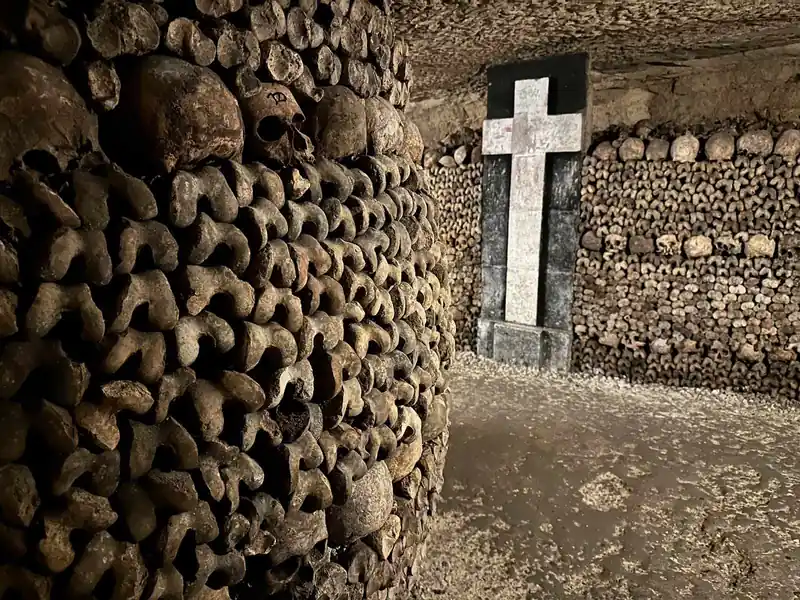
Opened to organized visits in 1874, the Catacombs of Paris occupy a small public section of a vast network of former limestone quarries tunneled beneath the city over centuries to supply the stone used to build much of Paris above, including Notre-Dame and the Louvre. In the late 18th century, as overflowing cemeteries in the city center became a public health crisis, authorities began the grim task of exhuming millions of skeletons and transporting them by torch-lit cart at night to these disused quarries, where workers eventually arranged the bones into decorative walls of stacked skulls and femurs rather than simply piling them, creating what became known as the Empire of the Dead. The public route winds roughly 1.5 kilometers through narrow, cool, dimly lit tunnels lined with the remains of an estimated six million Parisians, considerably more people than currently live in the city above, with carved inscriptions marking which cemetery each section of bones originally came from. Beyond the official tour, the wider unlit network of tunnels, known informally as the Catacombs by urban explorers even though only a fraction actually contains bones, has developed its own semi-legendary subculture of illegal exploration, though the public museum route remains the only legal and safe way to experience this singular underground monument.
Luxembourg Gardens
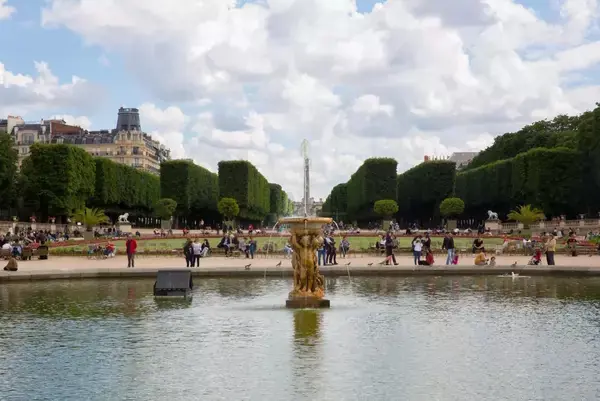
Luxembourg Gardens is one of the most beloved parks in Paris, known for its beautifully maintained lawns, fountains, statues, and the Luxembourg Palace, offering a relaxing environment where visitors can stroll, sit by the pond, and experience everyday Parisian life in a scenic setting.
Pantheon
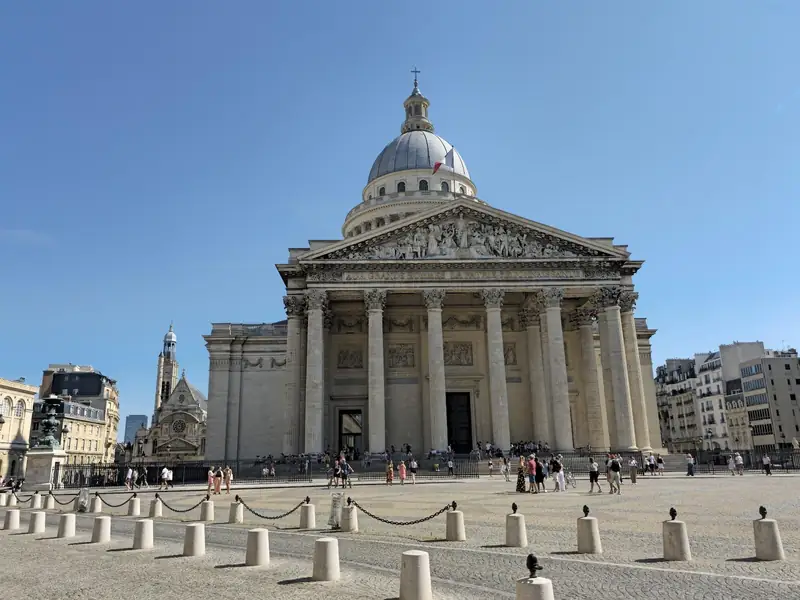
Commissioned by King Louis XV as a church dedicated to Sainte-Genevieve, the patron saint of Paris, and completed in the years just before the Revolution, the Pantheon was converted almost immediately into a secular mausoleum for France's great citizens, a purpose it has served, with a few political reversals back to a church and forward again, ever since. Its vast neoclassical dome and columned portico, modeled on Rome's own Pantheon and St. Paul's Cathedral in London, shelter a crypt holding the remains of Voltaire, Rousseau, Victor Hugo, Emile Zola, Marie Curie (the first woman interred there on her own merit), and resistance figures Jean Moulin and, more recently, Josephine Baker. Inside, a working reproduction of Leon Foucault's original 1851 pendulum still swings from the dome, the experiment that first offered visual proof of the Earth's rotation to a watching public. The building's motto carved above the entrance, 'Aux grands hommes, la patrie reconnaissante' (To great men, a grateful homeland), sums up its enduring role as France's secular hall of national memory.
Panthéon
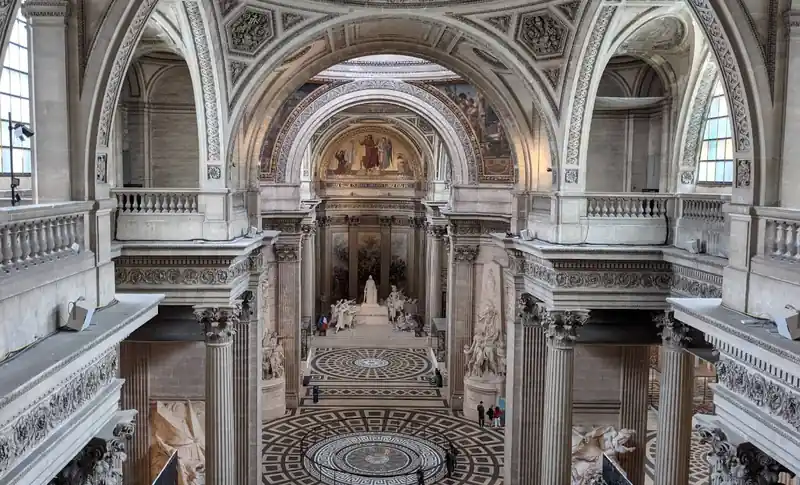
The Panthéon is a grand neoclassical monument in Paris originally built as a church and later transformed into a mausoleum honoring some of France’s most distinguished figures, featuring a massive dome, impressive frescoes, and the famous Foucault pendulum that demonstrates the rotation of the Earth.
Saint-Germain-des-Pres
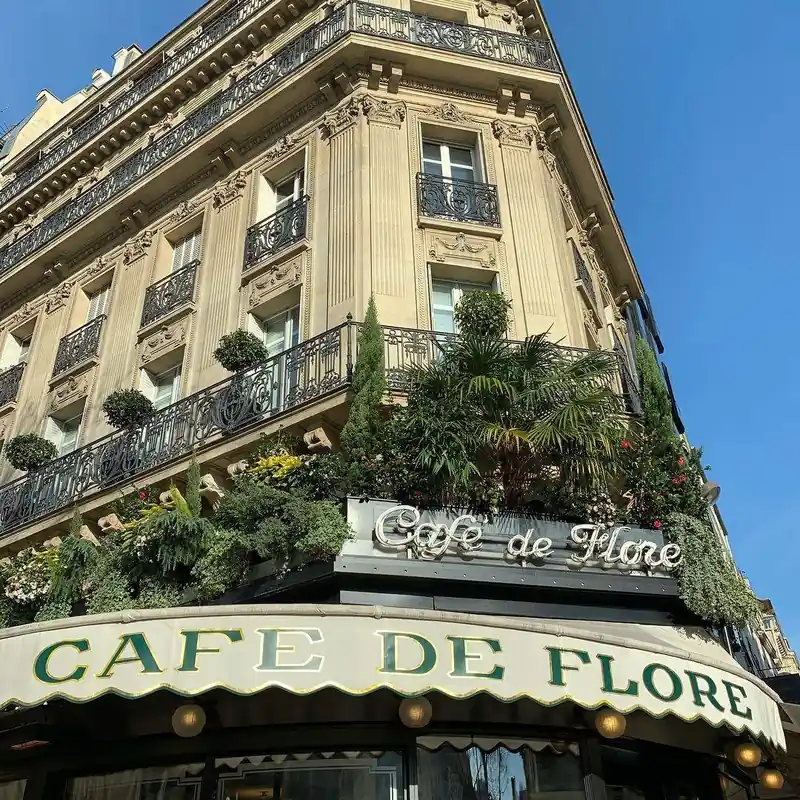
Saint-Germain-des-Pres is the legendary intellectual and artistic heart of Paris — a neighborhood on the Left Bank whose cafes, bookshops, art galleries, and ancient abbey have made it one of the most celebrated addresses in the history of Western culture, synonymous with the existentialist philosophy that Jean-Paul Sartre and Simone de Beauvoir developed at corner tables in the Cafe de Flore and Les Deux Magots in the years after World War II. The neighborhood's intellectual tradition stretches back centuries — Voltaire, Rousseau, and other Enlightenment philosophers gathered in the cafes of Saint-Germain, and in the early 20th century the neighborhood became the center of the Paris art world when Picasso, Matisse, and other modernist artists settled in its studios. The jazz clubs of Saint-Germain became legendary in the 1950s and 1960s, when American musicians including Miles Davis, Chet Baker, and Sidney Bechet found appreciative audiences in the neighborhood's smoky basement clubs, creating a Franco-American jazz culture that was central to the postwar cultural renaissance of Paris. Today Saint-Germain-des-Pres has become one of the most fashionable and expensive neighborhoods in Paris — its historic cafes now serve tourists and well-heeled locals, its bookshops compete with luxury fashion boutiques, and its galleries show works priced for collectors rather than starving artists — but the neighborhood retains a distinct intellectual atmosphere and its ancient Romanesque abbey church, one of the oldest in Paris, remains a serene oasis in the midst of the busy streets.
