Sainte-Chapelle
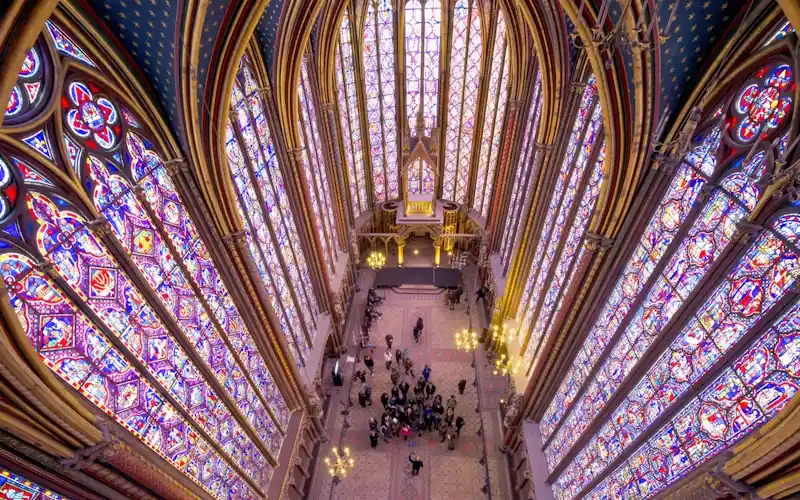
Sainte-Chapelle is a stunning Gothic chapel famous for its towering stained glass windows that fill the interior with vibrant colors and light, originally built to house religious relics, and it offers one of the most visually striking and intimate architectural experiences in Paris.
Visitor Information & Practical Details
- Place NameSainte-Chapelle
- Address10 Boulevard du Palais, 75001 Paris, France
- Opening HoursTypically 09:00–19:00 (seasonal variation)
- Admission / Pricehttps://www.sainte-chapelle.fr/en/visit/practical-information#rates
- Phone+33153406080
- Official Websitehttps://www.sainte-chapelle.fr/
- GPS Coordinates48.85551, 2.34501
Best Itinerary Visiting Sainte-Chapelle
Combine Sainte-Chapelle with nearby landmarks using our step-by-step walking and transit route.
Places Near Sainte-Chapelle
Build your own custom walking route in the MyGuide app by combining these nearby stops.
NotreDameCathedral
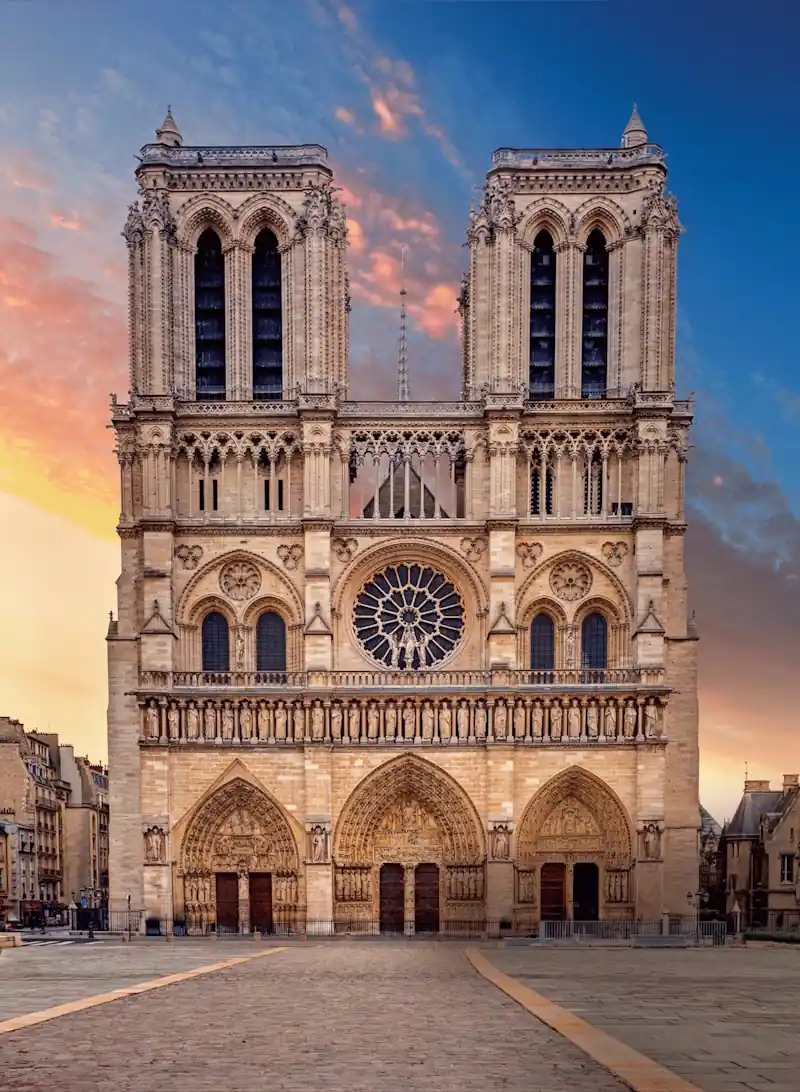
Notre-Dame Cathedral is one of the finest examples of French Gothic architecture, famous for its twin towers, intricate sculptures, and stunning stained glass windows, and it remains a symbol of Paris’s history, resilience, and cultural heritage despite the devastating fire in 2019.
Centre Pompidou
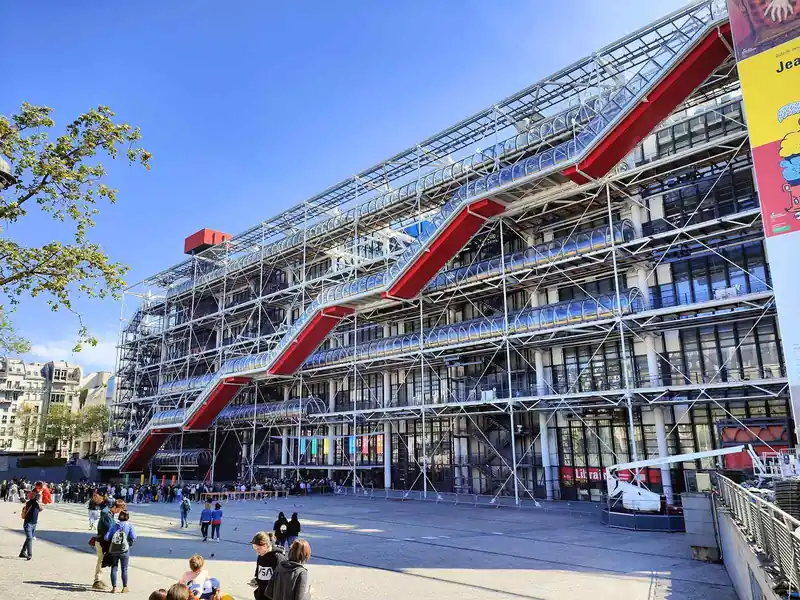
Opened in 1977 and named for President Georges Pompidou, who championed the project, the Centre Pompidou startled Paris on arrival with its inside-out architecture: structural beams, escalators, and color-coded service pipes (blue for air, green for water, yellow for electricity, red for movement) run along the exterior rather than being hidden inside, a radical design by architects Renzo Piano and Richard Rogers that freed the interior into vast, column-free, endlessly reconfigurable exhibition floors. That interior houses the Musee National d'Art Moderne, one of the largest collections of 20th and 21st century art in the world, spanning Matisse, Picasso, Kandinsky, and generations of contemporary practice, alongside a major public library and a lively plaza out front that has long attracted street performers and skateboarders. The building's exposed escalator tube, climbing diagonally up the facade in a transparent glass caterpillar, doubles as an informal observation deck, offering one of the more surprising rooftop panoramas over the Right Bank rooftops toward Sacre-Coeur.
Louvre Museum
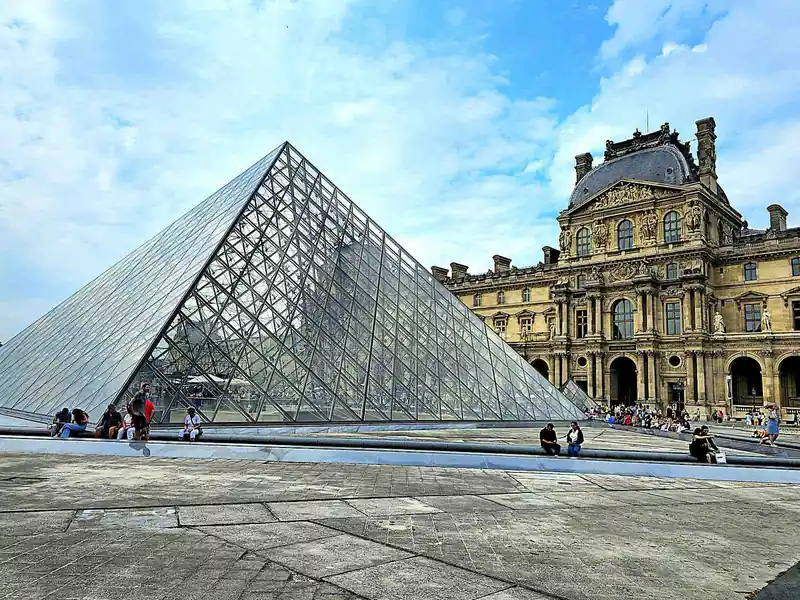
The Louvre Museum in Paris is the largest art museum in the world and one of the greatest cultural institutions in human history — a former royal palace whose vast galleries contain some 380,000 works of art spanning 8,000 years of human civilization, from prehistoric artifacts and ancient Egyptian masterpieces to the greatest paintings of the Renaissance, Baroque, and neoclassical periods, including Leonardo da Vinci's Mona Lisa, the Venus de Milo, and Winged Victory of Samothrace, making it the single most concentrated collection of cultural achievement anywhere on earth. The museum's history spans eight centuries — from its origins as a medieval fortress built by Philip II in the late 12th century, through its transformation into a royal palace under Francis I and subsequent centuries of expansion and embellishment, to its revolutionary-era conversion into a public museum in 1793, making it one of the first great public art museums in the world. The iconic glass pyramid designed by I.M. Pei, added to the main courtyard in 1989, caused controversy when it was built but is now beloved as the principal entrance to the museum and as a symbol of the productive dialogue between ancient history and modern architecture that defines the Louvre's character as an institution. The Mona Lisa, Leonardo da Vinci's small panel painting of an unidentified Florentine noblewoman, is the most visited work of art in the world — a crowd of hundreds gathers around it at any hour of the museum's operation, drawn by a combination of genuine artistic quality, centuries of scholarly attention, and the irresistible pull of its reputation as the most famous painting ever made. With over 9 million visitors annually, the Louvre is the most visited museum in the world.
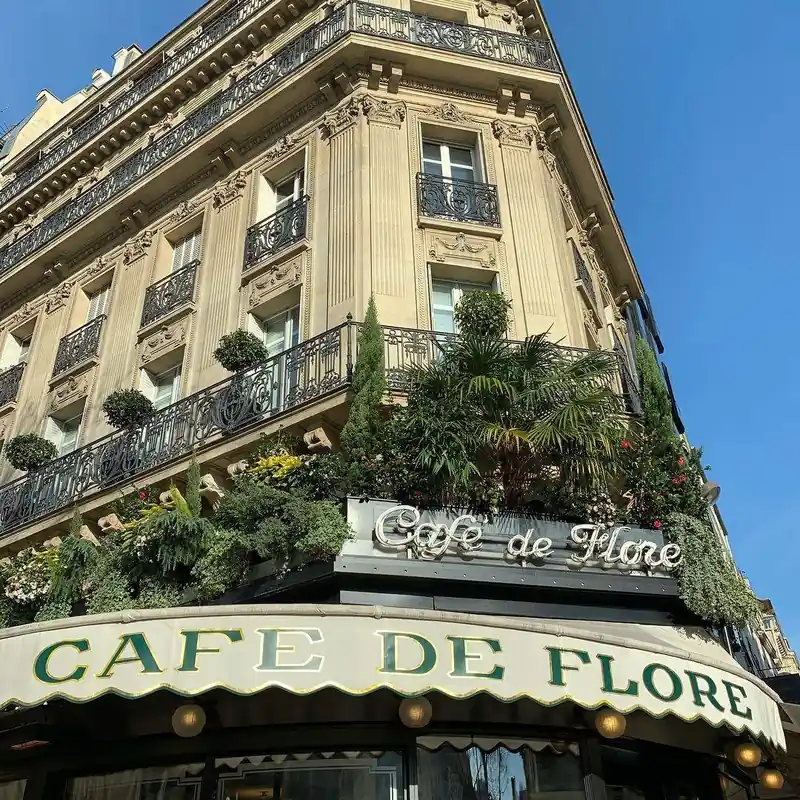
Saint-Germain-des-Pres
Saint-Germain-des-Pres is the legendary intellectual and artistic heart of Paris — a neighborhood on the Left Bank whose cafes, bookshops, art galleries, and ancient abbey have made it one of the most celebrated addresses in the history of Western culture, synonymous with the existentialist philosophy that Jean-Paul Sartre and Simone de Beauvoir developed at corner tables in the Cafe de Flore and Les Deux Magots in the years after World War II. The neighborhood's intellectual tradition stretches back centuries — Voltaire, Rousseau, and other Enlightenment philosophers gathered in the cafes of Saint-Germain, and in the early 20th century the neighborhood became the center of the Paris art world when Picasso, Matisse, and other modernist artists settled in its studios. The jazz clubs of Saint-Germain became legendary in the 1950s and 1960s, when American musicians including Miles Davis, Chet Baker, and Sidney Bechet found appreciative audiences in the neighborhood's smoky basement clubs, creating a Franco-American jazz culture that was central to the postwar cultural renaissance of Paris. Today Saint-Germain-des-Pres has become one of the most fashionable and expensive neighborhoods in Paris — its historic cafes now serve tourists and well-heeled locals, its bookshops compete with luxury fashion boutiques, and its galleries show works priced for collectors rather than starving artists — but the neighborhood retains a distinct intellectual atmosphere and its ancient Romanesque abbey church, one of the oldest in Paris, remains a serene oasis in the midst of the busy streets.
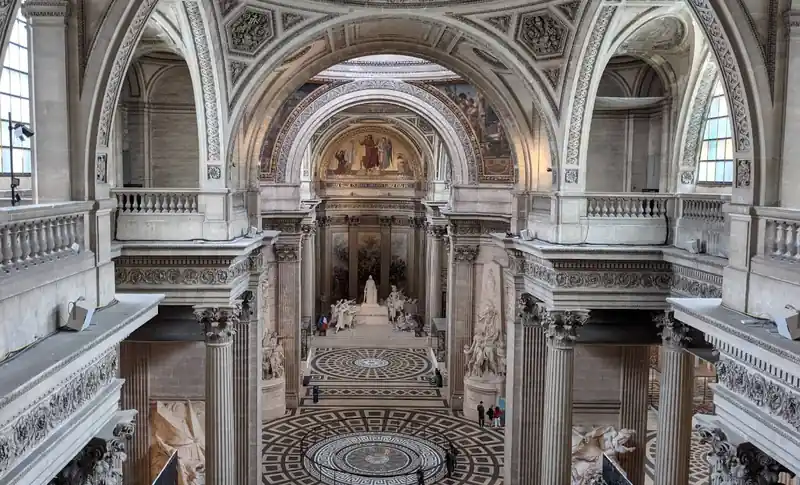
Panthéon
The Panthéon is a grand neoclassical monument in Paris originally built as a church and later transformed into a mausoleum honoring some of France’s most distinguished figures, featuring a massive dome, impressive frescoes, and the famous Foucault pendulum that demonstrates the rotation of the Earth.
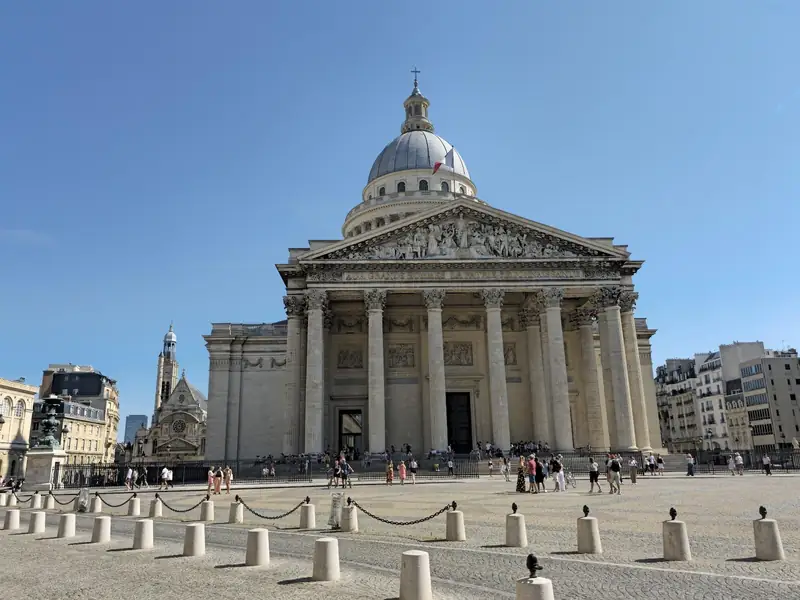
Pantheon
Commissioned by King Louis XV as a church dedicated to Sainte-Genevieve, the patron saint of Paris, and completed in the years just before the Revolution, the Pantheon was converted almost immediately into a secular mausoleum for France's great citizens, a purpose it has served, with a few political reversals back to a church and forward again, ever since. Its vast neoclassical dome and columned portico, modeled on Rome's own Pantheon and St. Paul's Cathedral in London, shelter a crypt holding the remains of Voltaire, Rousseau, Victor Hugo, Emile Zola, Marie Curie (the first woman interred there on her own merit), and resistance figures Jean Moulin and, more recently, Josephine Baker. Inside, a working reproduction of Leon Foucault's original 1851 pendulum still swings from the dome, the experiment that first offered visual proof of the Earth's rotation to a watching public. The building's motto carved above the entrance, 'Aux grands hommes, la patrie reconnaissante' (To great men, a grateful homeland), sums up its enduring role as France's secular hall of national memory.
