British Museum, London
The British Museum is one of the world’s largest and most comprehensive museums, dedicated to human history, art, and culture. Its collection includes millions of objects from ancient civilizations across the globe.
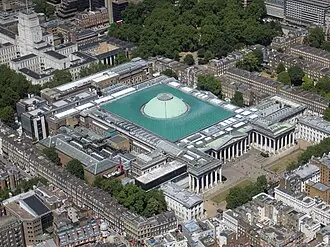
Visitor Information & Practical Details
- Place NameBritish Museum, London
- AddressGreat Russell Street, London WC1B 3DG, United Kingdom
- Opening Hours10:00 – 17:00 (Fridays until 20:30)
- Admission / PriceFree (special exhibitions require a separate paid ticket)
- Phone+442073238000
- Official Websitehttps://www.britishmuseum.org/
- GPS Coordinates51.52033, -0.12806
Best Itinerary Visiting British Museum, London
Combine British Museum, London with nearby landmarks using our step-by-step walking and transit route.
Places Near British Museum, London
Build your own custom walking route in the MyGuide app by combining these nearby stops.
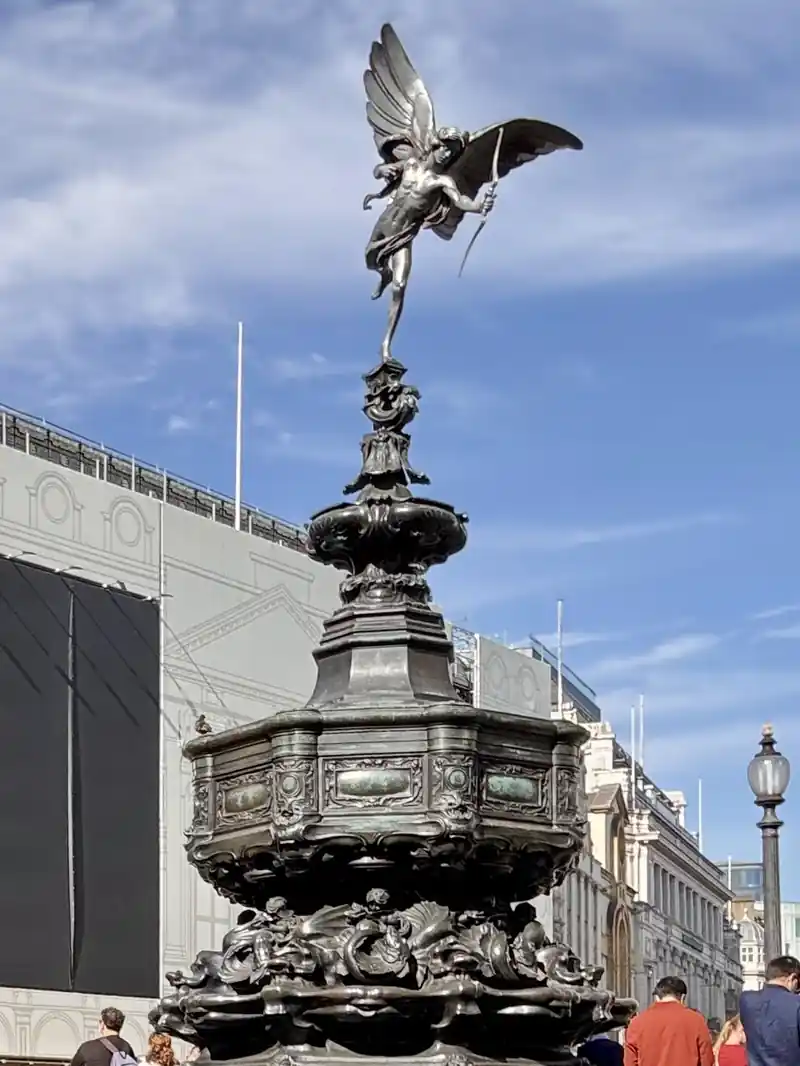
Piccadilly Circus
Piccadilly Circus is one of the most famous road junctions in the world and the beating commercial heart of London's West End — a busy public space where five major streets converge in a swirl of traffic, neon advertising screens, and perpetual crowds that have made it the Times Square of London, the place where the city's entertainment district announces itself most emphatically. The circus — from the Latin word for circle — was created in 1819 as part of John Nash's grand replanning of central London, forming a junction between Regent Street and Piccadilly, and quickly became one of the most fashionable addresses in the city, lined with theatres, restaurants, hotels, and shops catering to the wealthy residents of Mayfair and St James's to the west. The iconic illuminated advertising screens on the curved building on the north side — the Monico building and its successors — have been a feature of Piccadilly Circus since the 1890s, when the first electric advertising signs appeared, and the constantly changing billboards have become as associated with London as the red double-decker buses and black taxis that stream through the junction. At the centre of the circus stands the Shaftesbury Memorial Fountain, known universally as the Eros statue, designed by Alfred Gilbert and erected in 1893 to commemorate the philanthropist Lord Shaftesbury — the winged aluminium figure was one of the first statues to be cast in aluminium and has become one of the most photographed landmarks in London. The surrounding area includes the Criterion Theatre, the Trocadero entertainment complex, and Theatreland stretching along Shaftesbury Avenue to the northeast.
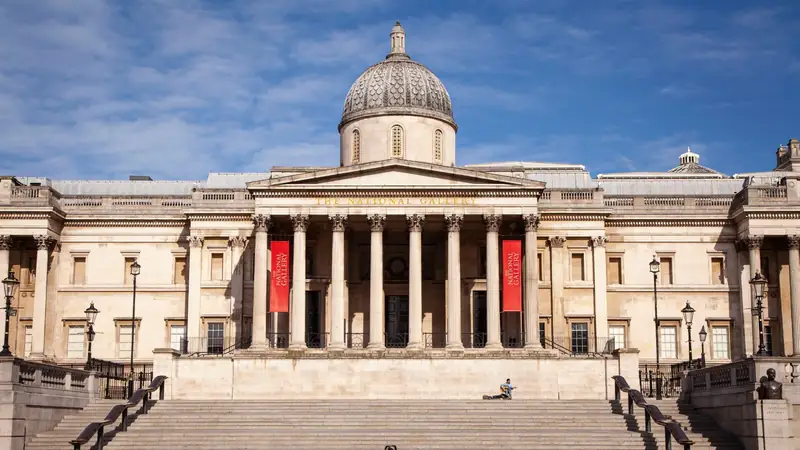
National Gallery, London
The National Gallery houses one of the greatest collections of Western European paintings in the world. It includes masterpieces from artists such as Van Gogh, Leonardo da Vinci, and Turner.
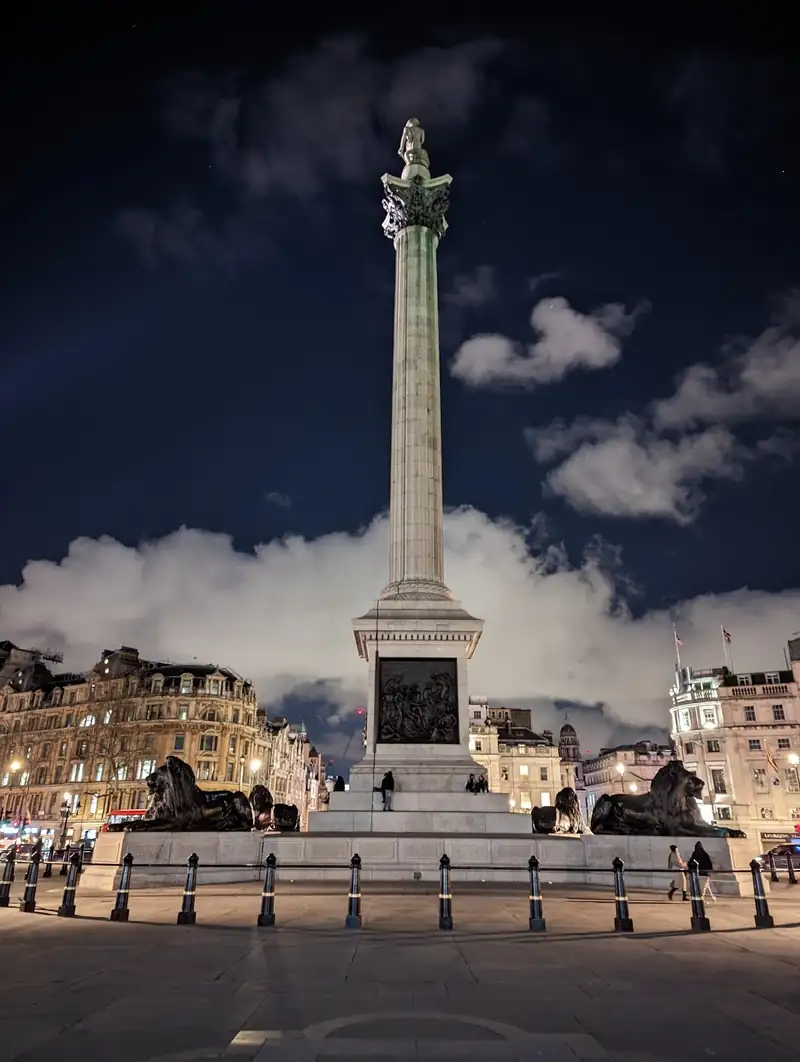
Trafalgar Square
Trafalgar Square is the most famous public square in Britain and the symbolic heart of London — a grand civic space at the very centre of the capital, dominated by the 52-metre Nelson's Column topped by the statue of Admiral Horatio Nelson, hero of the Battle of Trafalgar in 1805 where the British fleet decisively defeated the combined French and Spanish navies, flanked by four bronze lions and surrounded by fountains, statues, and the neoclassical facade of the National Gallery that closes the north side of the square. The square was designed by John Nash and completed in the 1840s as part of a comprehensive replanning of central London, occupying the site of the former Royal Mews and positioned at the junction of the Mall, Whitehall, the Strand, and Charing Cross Road — the exact geographic and symbolic centre of London from which all distances in the capital are traditionally measured, the zero point of the city's road network. Trafalgar Square has been the traditional gathering place for London's great public events — New Year's Eve celebrations, political demonstrations, victory celebrations after major sporting events, and the annual Christmas tree donated by Norway in gratitude for British support during World War II. The four plinths at the corners of the square were intended to carry equestrian statues, but the fourth plinth remained empty for over a century and since 1999 has hosted a rotating programme of contemporary art commissions, making it one of the most prominent public art spaces in the world. The National Gallery on the north side contains one of the greatest collections of Western European paintings in the world, with masterpieces by Leonardo, Raphael, Rembrandt, Velazquez, Turner, and Van Gogh accessible free of charge.
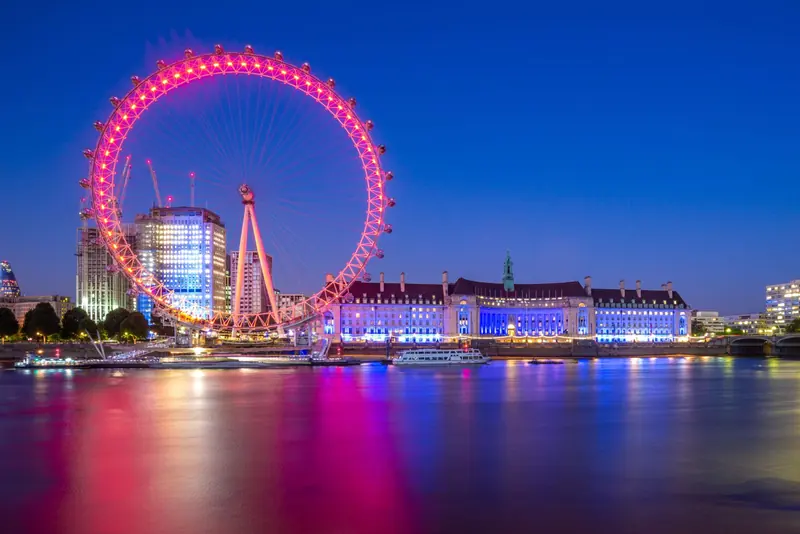
London Eye, London
The London Eye is a giant observation wheel on the South Bank of the River Thames. It offers panoramic views of central London and is one of the most popular modern attractions in the city.
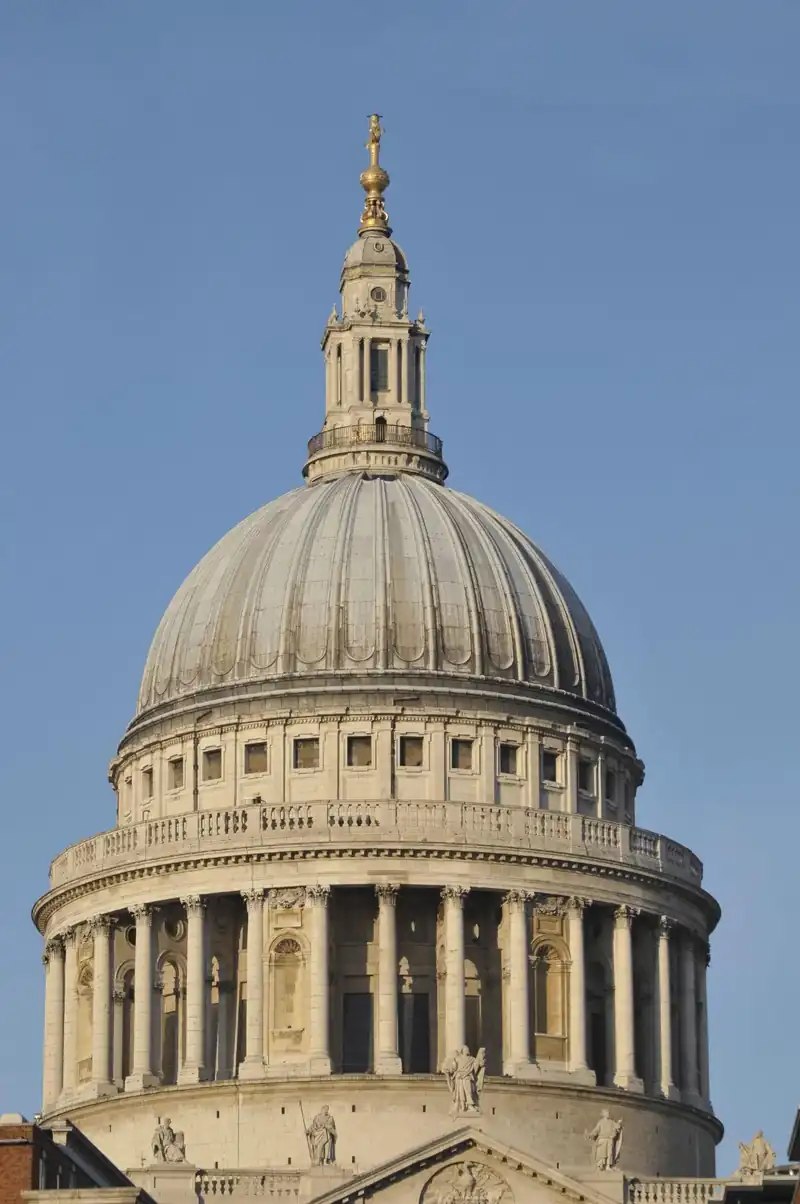
St Paul’s Cathedral, London
St Paul’s Cathedral is an iconic Anglican cathedral famous for its large dome and its role in major national events. It is one of the most important religious and architectural landmarks in London.
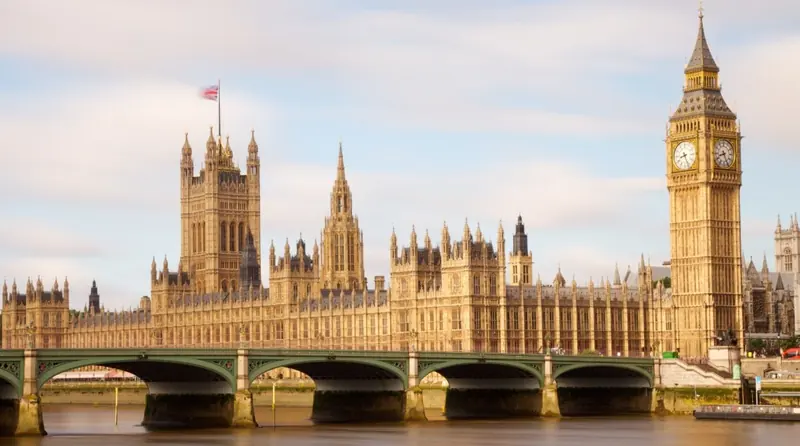
Big Ben, London
Big Ben is the nickname for the Great Bell of the Elizabeth Tower at the Palace of Westminster. It is one of the most iconic landmarks in London and a symbol of the United Kingdom.
